Alternative Diamond Engagement Rings: Why Modern Couples Are Rewriting the Rules
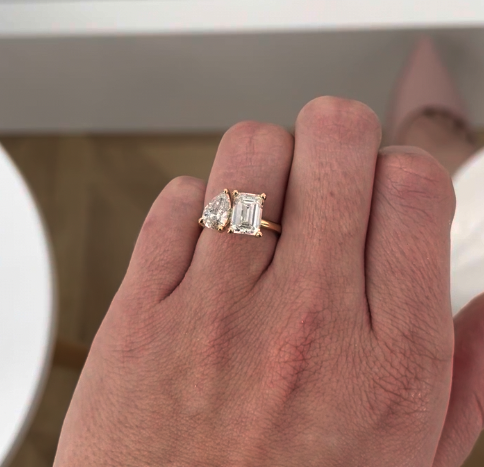
For much of the twentieth century, engagement rings followed a remarkably narrow script. A round brilliant diamond, set prominently in a solitaire, became the default symbol of commitment across much of the Western world. This convention was so widely accepted that deviation was often framed as unusual or even risky. Yet as attitudes towards marriage, identity and self-expression have evolved, so too has the language of engagement rings.
Today, alternative diamond engagement rings are no longer niche. They are increasingly chosen by couples who want their ring to reflect individuality rather than conformity. This shift is not a rejection of diamonds themselves, but a reimagining of how diamonds can be cut, set and worn.
Understanding why alternative designs have gained traction requires looking at broader cultural change. Engagement rings sit at the intersection of tradition and personal meaning. As the balance between those two forces shifts, design naturally follows.
Historically, the dominance of the round brilliant diamond was not inevitable. Earlier engagement rings were far more varied in form and stone choice. Coloured gemstones, mixed metals and symbolic motifs were common long before the modern solitaire became widespread.
Art historical research from the Victoria and Albert Museum shows that pre-twentieth-century engagement rings often reflected personal taste, family heritage or symbolic meaning rather than a standardised aesthetic. The idea that one shape or setting represented the correct choice is a relatively modern construct.
The rise of the solitaire ring was closely tied to industrialisation and global marketing. Advances in cutting technology made round brilliants more accessible, while coordinated advertising campaigns reinforced a singular vision of what an engagement ring should look like. Over time, this vision became deeply embedded in popular culture.
In recent decades, however, that narrative has begun to loosen. Sociological analysis published by the Pew Research Center highlights how younger generations prioritise personal identity and values over inherited norms. Engagement rings have become a natural outlet for this shift.
Alternative diamond engagement rings appeal because they offer familiarity without repetition. Diamonds remain central, but they are presented through different shapes, proportions and design philosophies. This balance allows couples to honour tradition while expressing something distinctly their own.
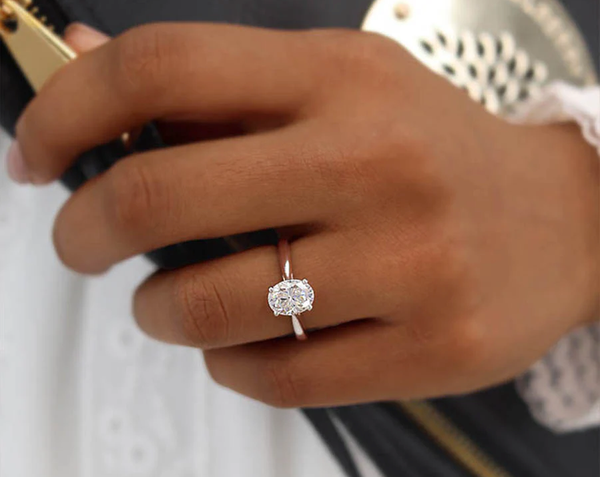
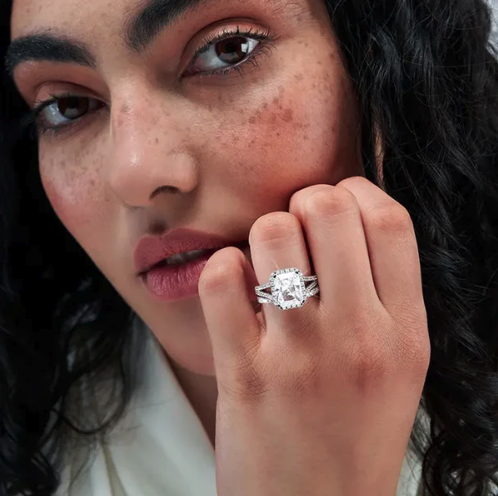
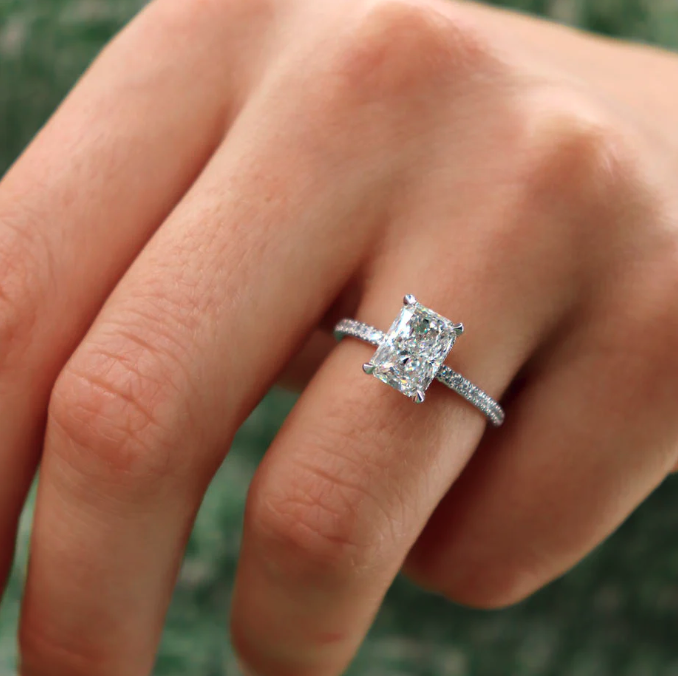
One of the most visible changes has been the growing popularity of non-round diamond shapes. Elongated cuts, geometric forms and asymmetrical designs feel aligned with contemporary aesthetics influenced by architecture, fashion and modern art. These shapes often feel intentional rather than default, suggesting considered choice.
Fashion commentary in Vogue has noted that modern luxury increasingly values originality over recognisability. In this context, alternative diamond shapes feel aspirational rather than unconventional. They signal confidence and self-awareness.
Another factor driving this movement is the evolving role of the engagement ring itself. It is no longer viewed solely as a ceremonial object reserved for special occasions. Many wearers expect their ring to integrate seamlessly into everyday life. Comfort, durability and practicality matter as much as visual impact.
Design analysis from Dezeen has explored how contemporary jewellery increasingly borrows from architectural principles. Clean lines, structural clarity and thoughtful proportions resonate with wearers who value design integrity. Alternative engagement rings often reflect these principles more strongly than traditional solitaires.
The appeal of alternative designs is also tied to storytelling. A ring with an unusual silhouette or setting invites curiosity. It becomes a conversation piece rather than a symbol that blends into a familiar visual landscape. This narrative quality adds emotional depth.
Cultural coverage in The Guardian has discussed how modern consumers gravitate towards objects that feel meaningful rather than prescribed. Engagement rings, as highly symbolic items, are particularly subject to this desire for authenticity.
Importantly, choosing an alternative design does not signal rejection of diamonds. Instead, it reflects a broader understanding of what diamonds can be. Advances in cutting and setting technology have expanded creative possibilities dramatically, allowing designers to explore forms that were once impractical.
Educational resources from the Gemological Institute of America explain how modern precision cutting enables diamonds to perform beautifully across a wide range of shapes. This technical progress has given designers freedom to prioritise proportion, balance and character alongside brilliance.
Another reason alternative diamond engagement rings resonate today is their adaptability. Many designs sit comfortably alongside wedding bands without requiring rigid matching. This flexibility aligns with modern approaches to marriage, where individuality and partnership coexist rather than compete.
Fashion and lifestyle reporting in Elle has observed that contemporary bridal jewellery increasingly reflects personal style rather than ceremonial expectation. Rings are chosen to complement how someone dresses, works and lives, rather than how tradition dictates they should appear.
There is also a growing awareness of how engagement rings function as long-term objects. Unlike fashion jewellery, these rings are worn daily for decades. Designs that feel timeless yet distinctive are often preferred over those tied to a specific era or trend.
Economic analysis in the Financial Times has highlighted how luxury purchases are increasingly evaluated through the lens of longevity and personal value. Buyers want pieces that feel relevant not just today, but in ten or twenty years’ time.
Alternative diamond engagement rings often meet this criterion precisely because they are less tied to a single dominant trend. Their appeal lies in proportion, craftsmanship and design clarity rather than fashion cycles.
The concept of alternative design also intersects with changing gender expectations. Engagement rings are no longer designed solely with one archetype in mind. As proposals become more collaborative and inclusive, rings are chosen to reflect a wider range of identities and preferences.
Cultural commentary in Harper’s Bazaar has noted that engagement jewellery now exists within a broader conversation about self-expression. The ring becomes part of an individual’s visual language rather than a uniform symbol.
This evolution has encouraged couples to engage more deeply with the design process. Rather than selecting from a narrow set of options, they explore shapes, proportions and settings that feel right for them. This intentionality often results in rings that feel deeply personal.
Exploring alternative diamond engagement rings reflects this shift towards thoughtful choice. Diamonds remain central, but their presentation evolves to meet modern expectations around individuality, comfort and design.
There is also a future-facing aspect to this movement. As cultural definitions of marriage continue to expand, engagement rings will likely follow suit. Alternative designs feel adaptable rather than fixed, capable of evolving alongside changing values.
Historical perspective reinforces this idea. Engagement rings have never been static. They have always reflected the priorities of their time, from symbolic motifs in the medieval period to the rise of the solitaire in the twentieth century. Today’s alternative designs are simply the latest chapter in that ongoing story.
Museum research from the British Museum highlights how jewellery traditions continuously adapt while retaining core symbolism. The engagement ring’s ability to evolve without losing meaning is precisely what has allowed it to endure.
In this context, alternative diamond engagement rings do not represent a departure from tradition, but a return to its deeper roots. They acknowledge that meaning is not fixed by form, but shaped by intention.
As modern couples redefine what commitment looks like, the jewellery that represents it naturally follows. Rings become less about meeting expectations and more about expressing shared values.
Alternative designs offer space for that expression. They allow diamonds to be worn in ways that feel personal, contemporary and confident.
In a world where individuality is increasingly valued, the engagement ring becomes not just a symbol of love, but a reflection of identity.
And that is why alternative diamond engagement rings are not a passing trend, but a natural evolution of a tradition that has always been shaped by the people who wear it.