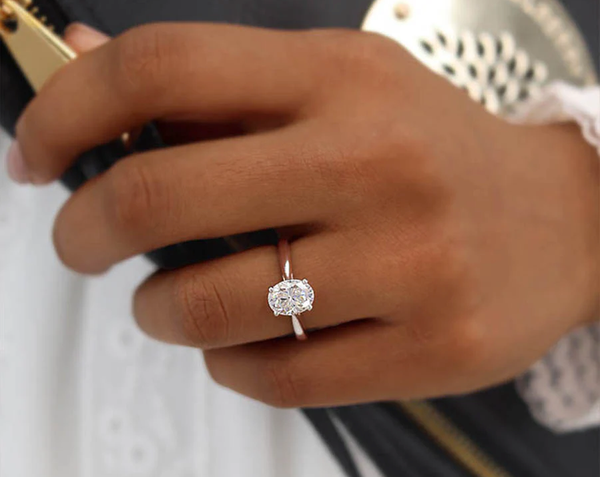
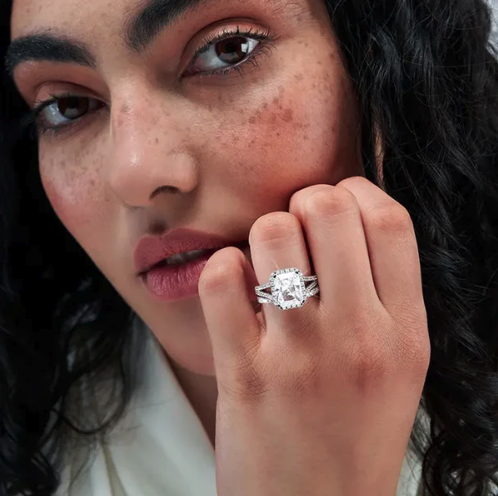
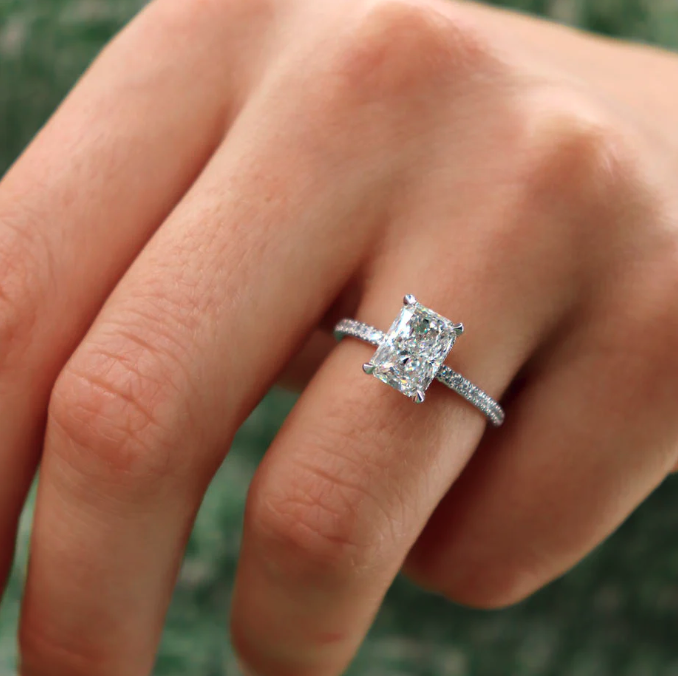
Are Engagement Rings Becoming Less Diamond-Focused? UK Search Trends
For decades, the diamond engagement ring has been treated as an unquestioned standard. Its dominance was so complete that alternatives were rarely framed as equal choices, but as deviations from the norm. In recent years, however, subtle shifts in behaviour, language and search activity suggest that this certainty may be softening. In the UK, engagement rings are no longer automatically synonymous with diamonds, and digital behaviour offers compelling evidence of change.
The most revealing indicator of shifting preference is search behaviour. Unlike marketing campaigns or editorial trends, search data reflects what people privately consider, research and compare. When UK consumers type questions into search engines, they reveal curiosity before commitment. Increasingly, those questions point beyond the diamond.
UK search trends over the past five years show steady growth in queries related to alternative engagement ring stones, ethical sourcing and non-traditional designs. Terms such as “sapphire engagement ring,” “emerald engagement ring,” “lab grown diamond ring” and “non diamond engagement ring UK” have all seen noticeable increases. While diamonds remain dominant overall, the direction of travel is clear.
According to Google Trends, searches for “lab grown engagement ring” in the UK have risen sharply since 2019, with seasonal spikes now closely mirroring traditional diamond search peaks. This suggests that alternatives are no longer niche curiosities, but mainstream considerations occurring at the same decision-making stage as diamonds.
One reason diamonds are being reconsidered is changing attitudes towards value. Younger UK buyers are more likely to question long-held assumptions about what an engagement ring should cost and represent. Coverage by The Financial Times has explored how millennials and Gen Z approach luxury purchases with greater scrutiny, often prioritising transparency, ethics and perceived fairness over inherited norms.
This shift does not necessarily signal rejection of diamonds, but it does suggest a reframing. Rather than being the default, diamonds are increasingly evaluated alongside other options. That evaluation alone represents a cultural change.
Ethics play a central role in this reassessment. Awareness of the diamond supply chain has grown considerably in the UK, driven by investigative journalism and documentary coverage. Articles published by The Guardian have examined environmental impact, labour practices and the limitations of certification schemes, prompting consumers to ask questions that previous generations rarely considered.
As a result, many UK buyers now search for reassurance before committing. Queries related to “ethical engagement rings,” “conflict free diamonds UK” and “sustainable engagement rings” have increased steadily. In many cases, these searches lead consumers to alternatives such as lab-grown diamonds or coloured gemstones, which are perceived as offering greater transparency.
Lab-grown diamonds occupy a particularly interesting position in UK search behaviour. While they are still diamonds by composition, they represent a psychological shift away from traditional diamond narratives. Search data shows that many consumers explicitly compare lab-grown and mined diamonds, often alongside price considerations.
Editorial analysis in BBC Future has highlighted how lab-grown diamonds challenge long-standing ideas about rarity and value. For UK couples focused on symbolism rather than resale, this challenge is not a deterrent but an attraction. The meaning of the ring becomes less about scarcity and more about intention.
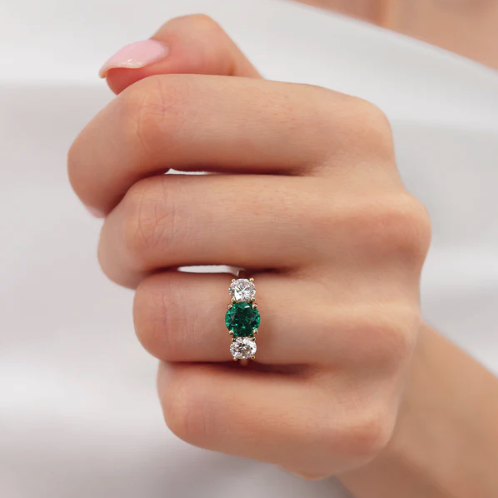
Coloured gemstones also feature prominently in evolving search trends. Sapphire engagement rings, in particular, have seen sustained interest in the UK. This is not entirely new. Sapphires have historical royal associations, most notably through Princess Diana’s engagement ring, now worn by Catherine, Princess of Wales. Coverage by Vogue UK has frequently referenced this legacy when discussing the enduring appeal of coloured stones.
However, current interest in sapphires appears less tied to royalty and more to individuality. Search terms increasingly include phrases such as “unique engagement ring UK” and “alternative engagement ring ideas,” suggesting that buyers are actively seeking distinction rather than tradition.
Emeralds, rubies and even less conventional stones such as morganite and aquamarine also appear in rising search queries. While these stones remain less common than diamonds, their growing visibility in UK search data indicates widening acceptance.
Another driver behind the shift is lifestyle compatibility. Diamonds, particularly in certain cuts and settings, are sometimes perceived as impractical for daily wear. UK buyers researching engagement rings frequently include terms related to durability, maintenance and comfort. This has led some to consider stones and settings better suited to their routines.
Jewellery experts interviewed by The Telegraph have noted that modern engagement ring buyers are far more concerned with wearability than previous generations. Rings are expected to integrate seamlessly into everyday life rather than serve purely as symbolic objects.
Social media has amplified this practical lens. While Instagram and Pinterest remain influential, their role has evolved. Instead of dictating trends, they now function as comparison tools. UK consumers scroll through real-world examples, noticing how different stones age, scratch or fit into daily routines.
Interestingly, search trends also show increased interest in vintage and antique engagement rings. Queries related to “vintage engagement ring UK” and “antique engagement ring” have grown steadily. This suggests that some buyers are moving away from diamonds not towards novelty, but towards history.
Antique rings often feature old-cut diamonds or coloured stones set in styles no longer mass-produced. For UK buyers drawn to sustainability and individuality, these rings offer both. Features in Country Life have highlighted how antique jewellery appeals to those seeking authenticity over uniformity.
Price sensitivity also plays a role. While diamonds remain expensive, alternatives often offer larger visual impact at lower cost. UK buyers searching for “engagement ring budget UK” increasingly encounter content comparing diamonds with coloured gemstones and lab-grown options. This comparison naturally broadens consideration.
However, it would be inaccurate to suggest that diamonds are losing their appeal entirely. Search data still shows that “diamond engagement ring” remains the most searched term in this category. What has changed is context. Diamonds are no longer searched in isolation, but alongside alternatives.
This coexistence is significant. It reflects a market in transition rather than decline. Diamonds are being repositioned as one option among many, rather than the inevitable choice.
Jewellery retailers have responded accordingly. UK jewellers increasingly showcase mixed collections, presenting diamonds alongside coloured gemstones and lab-grown stones without hierarchy. This merchandising shift reinforces consumer behaviour rather than leading it.
Editorial coverage in Harper’s Bazaar UK has reflected this pluralism, framing engagement rings as expressions of personal narrative rather than adherence to tradition. This editorial framing influences how consumers search, compare and decide.
The language used in searches also reveals changing psychology. Phrases like “should an engagement ring be a diamond” and “do engagement rings have to be diamonds” appear with increasing frequency. These are not transactional queries, but reflective ones. They signal cultural questioning rather than rejection.
In the UK, where engagement ring traditions have historically been less rigid than in some other markets, this questioning feels particularly resonant. British buyers often prioritise understatement, meaning and practicality over display. The shift away from diamond centrality aligns with these values.
Ultimately, UK search trends suggest not that diamonds are disappearing, but that they are being contextualised differently. The engagement ring is becoming less about compliance and more about choice. Diamonds remain powerful symbols, but they are no longer unquestioned.
As digital behaviour continues to shape purchasing journeys, this evolution is likely to deepen. Engagement rings are becoming more personal, more values-driven and more diverse. The diamond is still part of the story, but it is no longer the whole story.
For UK couples navigating this decision, the data tells a reassuring story. There is no single correct choice, only informed ones. And increasingly, those choices begin not with tradition, but with a search bar.