Diamonds and Step-Inspired Brilliant Shapes: How Geometry Shaped Modern Diamond Cutting
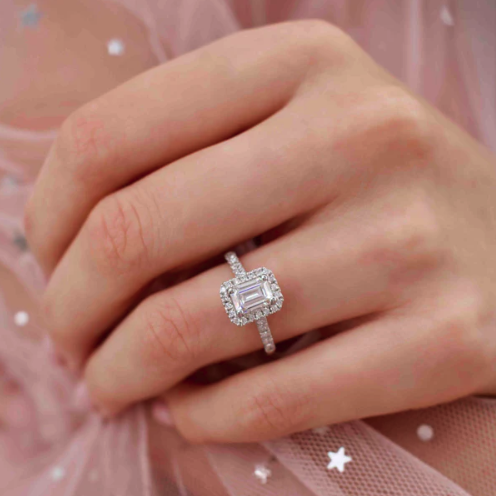
Diamond cutting has always reflected the values of its time. From early efforts to preserve weight to modern techniques designed to maximise light performance, every cut tells a story about technology, taste and how beauty is understood. Step-inspired brilliant diamond shapes sit at a fascinating intersection within this history. They combine the clarity and structure of step cuts with the optical liveliness associated with brilliant faceting, creating diamonds that feel both considered and contemporary.
To understand why these shapes resonate so strongly today, it is necessary to look back at how diamond cuts evolved and how differing philosophies of beauty shaped their development.
The earliest diamond cuts were dictated almost entirely by limitation. Before the advent of modern cutting tools, diamonds were shaped to follow their natural crystal form. Point cuts and table cuts prioritised durability and weight retention over sparkle. Light behaviour was a secondary concern, largely because cutters lacked the precision required to manipulate it.
As techniques improved during the Renaissance, cutters began to experiment with symmetry. Facets were arranged more deliberately, and the idea that a diamond could interact with light in a controlled way began to take hold. This period laid the groundwork for the emergence of step cuts.
Step cuts are defined by long, parallel facets that descend in stages towards the centre of the stone. Rather than breaking light into flashes, these facets create broad reflections that move slowly across the surface. The effect is often described as hall-of-mirrors like, emphasising transparency, depth and calmness.
Educational material from the Gemological Institute of America explains that step cuts prioritise clarity and colour because their open facets make inclusions and tonal variation more visible. This characteristic contributed to their early association with refinement and discernment.
By the nineteenth century, step cuts had become firmly established, particularly in elongated forms. These shapes aligned with architectural influences of the time, favouring proportion and order over ornamentation. The emerald cut, developed initially for emeralds and later adapted for diamonds, became one of the most recognisable expressions of this approach.
While step cuts emphasised structure, brilliant cuts emerged from a different pursuit. Their development was driven by the desire to enhance sparkle. By introducing triangular and kite-shaped facets arranged radially, cutters could increase the amount of light reflected back to the viewer’s eye.
The modern round brilliant cut, refined in the early twentieth century, represented the culmination of this philosophy. It was engineered to maximise fire and scintillation, producing rapid flashes of light that became synonymous with romance and glamour.
For much of the twentieth century, these two cutting styles were positioned as opposites. Step cuts were associated with elegance, restraint and intellect. Brilliant cuts were associated with emotion, celebration and visual impact. Buyers were often encouraged to choose one aesthetic over the other.
Yet design history reveals that this division was never absolute.
During the Art Deco period, designers actively explored ways to merge geometric clarity with visual drama. Diamonds were cut and set to echo the era’s fascination with symmetry, modernity and progress. Step-based outlines were softened by more complex faceting, creating early examples of hybrid designs.
Collections and archives examined by the Victoria and Albert Museum illustrate how Art Deco jewellery balanced clean architectural lines with a desire for brilliance. Diamonds became expressions of both structure and movement, foreshadowing modern step-inspired brilliant shapes.
As cutting technology advanced, cutters gained greater control over facet placement and proportion. This precision made it possible to revisit step-based outlines and experiment with adding brilliance without losing structural integrity.
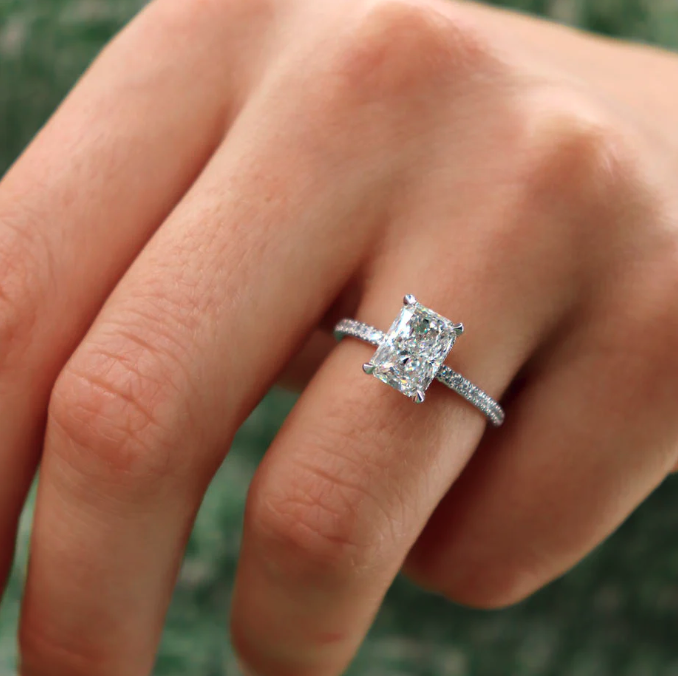
One result of this evolution was the development of modified step cuts and hybrid shapes. Designs such as radiant cuts and elongated cushions combined step-inspired geometry with brilliant-style facets, offering enhanced sparkle within a structured silhouette.
These shapes appealed to buyers who admired the elegance of step cuts but wanted greater light performance. They also reflected a broader cultural shift towards balance rather than extremes.
Fashion and jewellery commentary in Vogue has observed that contemporary preferences often favour pieces that blend historic elegance with modern energy. Step-inspired brilliant diamond shapes align naturally with this sensibility, offering restraint without austerity and sparkle without excess.
The renewed interest in step cut diamonds can be understood within this context. These shapes feel intentional rather than default, appealing to buyers who value clarity of design and depth of character.
Step-inspired brilliant cuts also benefit from modern cutting standards. Advances in computer modelling and laser cutting allow facets to be placed with extraordinary accuracy. This precision is essential when working with elongated facets, where even minor asymmetries become visible.
Insight from the International Gemological Institute highlights how contemporary cutters can now optimise light performance within step-based designs, achieving a balance that was difficult to realise in earlier eras.
This technical progress has expanded the creative vocabulary of diamond cutting. Step-inspired brilliant shapes are no longer compromises. They are deliberate expressions of a design philosophy that values harmony.
The appeal of these shapes is also tied to how jewellery is worn today. Diamonds are no longer reserved for formal occasions. Engagement rings, earrings and bracelets are integrated into everyday life. Cuts that feel calm, confident and adaptable resonate strongly in this environment.
Lifestyle reporting in The Guardian has explored how modern luxury is increasingly defined by longevity and wearability. Pieces that reveal their beauty gradually rather than demanding immediate attention tend to endure.
Step-inspired brilliant cuts embody this idea. Their light performance is more measured, creating depth rather than spectacle. This slower rhythm can feel reassuring, particularly for those drawn to understated luxury.
The psychological response to geometry also plays a role. Long, parallel facets create visual order and symmetry, which many people find calming. When combined with subtle brilliance, this order is enlivened rather than disrupted.
Research and exhibition commentary from institutions such as the Smithsonian National Museum of Asian Art have examined how repetition and balance influence aesthetic appreciation. The appeal of step-based geometry may lie in its ability to engage both intellect and emotion.
Historically, step cuts were often associated with formality and ceremony. Their quiet reflections suited evening wear and heirloom pieces. Step-inspired brilliant shapes challenge this association by offering greater versatility.
Fashion coverage in Elle has noted that contemporary jewellery buyers value pieces that transition seamlessly between settings. Diamonds that feel appropriate in both professional and personal contexts are particularly sought after.
Another factor driving interest in these shapes is individuality. As buyers move away from universal ideals, they gravitate towards cuts that feel distinctive without being unconventional. Step-inspired brilliant shapes occupy this middle ground.
They are recognisable, yet less ubiquitous than traditional round brilliants. Choosing them signals discernment rather than adherence to convention.
Economic commentary in the Financial Times has highlighted how modern luxury markets reward thoughtfulness. Consumers increasingly value pieces that demonstrate intention and design literacy, even when those qualities are subtle.
The historical lineage of step cuts also lends these shapes a sense of continuity. Their geometry connects modern diamonds to earlier periods of design, creating a dialogue between past and present. When paired with brilliant faceting, this heritage feels reinterpreted rather than nostalgic.
From an optical standpoint, step-inspired brilliant cuts offer a different experience of sparkle. Instead of rapid scintillation, light moves in broader planes, creating depth and presence. This quality appeals to those who prefer refinement over exuberance.
As diamond cutting continues to evolve, the boundary between step and brilliant will likely continue to blur. Designers will explore new ways to balance geometry and light, pushing the possibilities of form and performance.
What remains constant is the appeal of balance itself.
Step-inspired brilliant diamond shapes are not about choosing between structure and sparkle. They are about understanding how the two can coexist.
They reflect a future-facing approach to jewellery that values clarity, intention and longevity. Diamonds that reveal their beauty through proportion and precision feel particularly suited to modern life.
In an era defined by personal expression and considered choices, these shapes offer confidence without noise and elegance without rigidity.
They do not demand attention. They reward it.
And that quiet assurance is precisely why step-inspired brilliant diamond shapes continue to captivate, standing not as a trend, but as an evolution rooted firmly in history.