Discover the World of Alexandrite: History, Rarity and the Rise of Lab Grown Alternatives

Alexandrite occupies a singular position in the world of gemstones. Revered for its rarity, celebrated for its dramatic colour change and steeped in historical symbolism, it has long been considered one of the most intriguing stones ever discovered. In 2026, interest in alexandrite is growing once again, driven not only by its romantic past but also by the increasing availability of high quality lab grown alternatives that allow more people to experience its remarkable beauty.
The story of alexandrite begins in nineteenth century Russia, where it was first discovered in the Ural Mountains. According to historical records referenced by the Smithsonian National Museum of Natural History, the gemstone was found in 1830 near emerald mines, initially mistaken for emerald due to its green appearance in daylight. Its true nature became apparent only later, when the stone revealed a striking red hue under candlelight.
This dramatic colour change, from green to red, was unlike anything gemmologists had seen before. The phenomenon occurs due to the presence of chromium in the crystal structure and the way alexandrite absorbs and reflects different wavelengths of light. Daylight, rich in blue and green wavelengths, brings out the stone’s green tones, while incandescent or candlelight emphasises red and purple hues.
Scientific explanations published by the Gemological Institute of America describe alexandrite as a member of the chrysoberyl family, prized not only for its optical properties but also for its durability. With a hardness of 8.5 on the Mohs scale, alexandrite is well suited to fine jewellery, contributing to its long standing appeal.
The gemstone was named after the future Tsar Alexander II of Russia, and its discovery coincided with his coming of age. This association imbued alexandrite with national significance. Its red and green colours mirrored the military colours of Imperial Russia, further cementing its symbolic value.
Historical analysis from The British Museum highlights how alexandrite quickly became associated with royalty, power and prestige. Due to its extreme rarity, natural alexandrite was worn almost exclusively by the elite, reinforcing its reputation as a stone of status and exclusivity.
As Russian deposits became depleted towards the end of the nineteenth century, alexandrite all but disappeared from the market. Small quantities were later discovered in Sri Lanka, Brazil and East Africa, but stones of comparable quality to early Russian specimens remained exceptionally rare.
Gem trade reporting from National Geographic has explored how the scarcity of natural alexandrite elevated its mystique. Even today, fine quality natural alexandrite commands some of the highest prices per carat of any coloured gemstone.
This rarity also contributed to the stone’s reputation as almost mythical. Alexandrite became associated with transformation, duality and adaptability, themes reflected in both its colour changing nature and its historical journey.
Cultural commentary from The Victoria and Albert Museum has examined how gemstones with optical phenomena often attract symbolic meaning. Alexandrite’s ability to shift character depending on its environment has made it a powerful metaphor in jewellery design and storytelling.
For much of the twentieth century, alexandrite remained inaccessible to most buyers. Its scarcity and cost limited its presence to museums, private collections and high end auction houses. This began to change with advancements in gemstone synthesis.
Laboratory grown alexandrite emerged as a response to both rarity and demand. By replicating the natural conditions under which alexandrite forms, scientists were able to create stones with the same chemical composition and optical behaviour as their natural counterparts.
Technical explanations from Encyclopaedia Britannica outline how modern crystal growth techniques allow for precise control over colour and clarity. In the case of alexandrite, this has enabled the creation of stones that exhibit vivid and consistent colour change.
Among the most respected names in lab grown gemstones is Chatham Gemstones. Established in the 1930s, Chatham pioneered the development of laboratory grown emeralds and later expanded into other gemstones, including alexandrite. Their stones are grown, not manufactured, over many months, producing crystals with the same physical and optical properties as natural gems.
Industry analysis from Forbes has noted that lab grown gemstones have shifted perceptions of rarity and value. Rather than being seen as imitations, they are increasingly recognised as authentic alternatives that offer beauty, durability and transparency without the limitations of geological scarcity.
Lab grown alexandrite has played a particularly important role in reintroducing the gemstone to contemporary jewellery. Designers can now work with larger sizes, consistent colour change and predictable performance, opening creative possibilities that were previously unattainable.
Design commentary from Dezeen has explored how access to advanced materials influences modern jewellery aesthetics. With lab grown alexandrite, designers are free to explore bolder silhouettes and more experimental settings without the constraints imposed by rarity.
From a sustainability perspective, laboratory grown gemstones also address ethical and environmental concerns associated with mining. While natural alexandrite mining is limited, the broader shift towards lab grown stones reflects a growing awareness of responsible sourcing.
Environmental reporting from The Guardian has examined how laboratory growth reduces the ecological impact associated with traditional extraction. For many buyers, this alignment with ethical values enhances the emotional significance of their jewellery.
Importantly, the availability of lab grown alexandrite does not diminish the value of natural stones. Instead, it creates a clearer distinction between geological rarity and aesthetic experience. Natural alexandrite remains prized for its history and scarcity, while lab grown stones offer accessibility and consistency.
Auction coverage from Christie’s continues to demonstrate the enduring demand for exceptional natural alexandrite specimens. Their provenance and rarity ensure their place in the highest tiers of the gemstone market.
At the same time, lab grown alexandrite has found its own audience. It appeals to those drawn to the gemstone’s symbolism and beauty rather than its exclusivity. This reflects a broader shift in luxury, where meaning increasingly outweighs scarcity.
Market analysis from The Financial Times has observed that modern luxury consumers value narrative and alignment over traditional status markers. Alexandrite, with its layered history and transformative nature, fits naturally into this landscape.
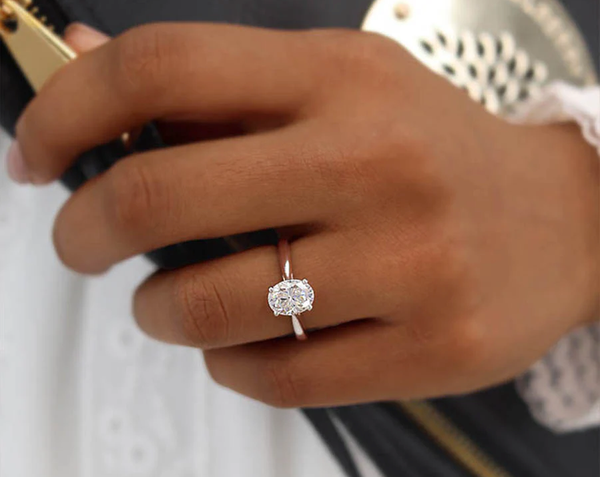
In jewellery, alexandrite is often chosen for rings, pendants and earrings where its colour change can be fully appreciated. Its durability makes it suitable for everyday wear, while its shifting hues ensure it never feels static or predictable.
Educational resources from Royal Collection Trust have highlighted how historical gemstone choices were often influenced by symbolism as much as beauty. Alexandrite’s resurgence reflects a renewed interest in stones that carry meaning beyond appearance.
Looking ahead, alexandrite’s future appears secure. Natural stones will remain rare and highly prized, while lab grown alternatives continue to expand access and creative expression. Together, they represent two sides of the same story.
Alexandrite’s journey from imperial Russia to modern laboratories mirrors broader changes in how gemstones are valued and understood. It is no longer defined solely by scarcity, but by the experience it offers.
In a world increasingly defined by change, adaptability and personal meaning, alexandrite feels remarkably relevant. Its ability to transform under different light is not just a physical property, but a metaphor for modern luxury itself.
To discover the world of alexandrite is to explore a gemstone that bridges history and innovation, rarity and accessibility, tradition and possibility.
And in 2026, that balance is exactly what makes alexandrite so compelling.