From Canary to Buttercup: How Fancy Yellow Diamond Shades Are Being Marketed Differently
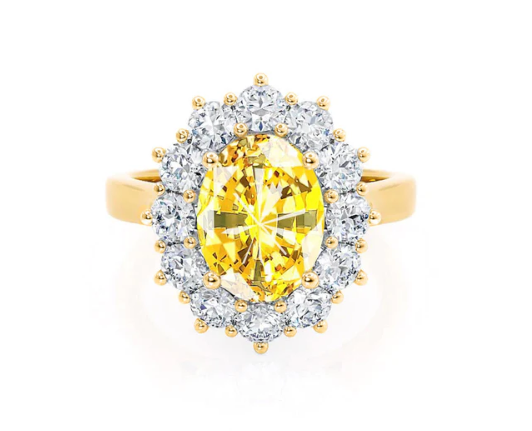
Fancy yellow diamonds have undergone a quiet but significant transformation in how they are described, positioned and sold. Once dominated by a narrow set of terms and expectations, yellow diamonds are now marketed through a far more nuanced and emotionally driven lens. As colour becomes a primary driver of engagement ring choice, the language surrounding yellow diamonds has expanded well beyond traditional grading terminology.
In today’s jewellery landscape, names such as canary, buttercup, lemon and champagne are not simply descriptors. They are marketing tools, cultural signals and emotional shortcuts. The way fancy yellow diamond shades are presented reflects broader changes in consumer behaviour, luxury branding and how colour itself is understood.
To understand why these distinctions matter, it is important to separate gemmological reality from commercial storytelling. Fancy yellow diamonds are formally graded using a strict colour scale that assesses hue, tone and saturation. However, the way those grades are translated for consumers is where modern marketing plays its most influential role.
According to guidance published by the Gemological Institute of America, yellow diamonds fall within the fancy colour range when their saturation exceeds the Z colour grade. From there, grades progress through Fancy Light, Fancy, Fancy Intense and Fancy Vivid. These classifications are technical, precise and designed for consistency within the trade.
Yet most consumers do not connect emotionally with technical saturation levels. They connect with imagery, mood and meaning. This gap between technical accuracy and emotional resonance has allowed marketing language to flourish.
Historically, the term canary diamond dominated popular understanding of yellow diamonds. The phrase became widely associated with high-profile stones and celebrity jewellery, particularly during the late twentieth century. Media coverage often used canary as a shorthand for any bright yellow diamond, regardless of its actual grading.
Cultural reporting in The New York Times has previously explored how canary diamonds became synonymous with glamour and wealth, largely due to their visibility on red carpets and in auction headlines. The term evoked boldness, rarity and status, even when applied loosely.
In contemporary marketing, however, canary has begun to feel limiting. It suggests a single, high-intensity shade, leaving little room for variation or personal preference. As engagement ring buyers increasingly seek individuality rather than hierarchy, the language around yellow diamonds has diversified.
This is where terms like buttercup have emerged.
Buttercup does not correspond to a formal gemmological grade. Instead, it is a lifestyle descriptor, evoking softness, warmth and approachability. Where canary suggests intensity and spectacle, buttercup suggests ease and natural beauty. This distinction is not accidental. It reflects a broader shift in luxury marketing away from dominance and towards intimacy.
Fashion and jewellery commentary in Vogue UK has noted a growing preference for colours that feel wearable and emotionally grounded rather than overtly dramatic. In this context, softer yellow diamond shades are increasingly framed as versatile, modern and quietly confident.
The rise of these softer descriptors coincides with changes in engagement ring aesthetics. Modern designs often favour balance over contrast. Rather than stark white metals and ultra-bright stones, there is growing interest in warmth, texture and subtle colour variation. Yellow diamonds that fall closer to Fancy Light or Fancy grades lend themselves naturally to this direction.
Marketing language has adapted accordingly. Instead of positioning deeper saturation as inherently superior, brands and media now emphasise suitability and mood. A buttercup yellow diamond is not presented as lesser than a canary diamond. It is presented as different.
This reframing is significant. It allows consumers to choose based on personal resonance rather than perceived rank.
Editorial analysis in The Guardian has explored how luxury consumption is increasingly driven by self-expression rather than status comparison. Colour choice, particularly in jewellery, has become a way of articulating personality rather than achievement. The diversification of yellow diamond descriptors mirrors this shift.
Alongside buttercup, other terms such as lemon, sunflower and honey have entered the marketing lexicon. Each evokes a slightly different emotional response. Lemon suggests freshness and brightness. Honey implies richness and depth. Sunflower sits somewhere between vibrancy and warmth.
None of these terms are technically precise, and that is precisely the point. They are designed to translate complex gemmological information into accessible, emotive language. In doing so, they lower barriers to engagement and broaden appeal.
Industry reporting in Business of Fashion has highlighted how modern luxury marketing increasingly relies on storytelling rather than specification. This approach is particularly effective with colour, which is inherently subjective.
Yellow diamonds present a unique opportunity in this regard. Unlike white diamonds, where grading differences can be difficult for the untrained eye to distinguish, colour differences in yellow diamonds are immediately visible. This visibility allows marketing language to anchor itself in lived experience rather than abstract metrics.
However, this evolution has also introduced new complexities. The proliferation of descriptive terms can create confusion if not grounded in transparency. A buttercup diamond from one retailer may differ significantly in saturation from another. Without clear reference to formal grading, consumers may struggle to compare like for like.
Educational resources from the International Gemological Institute stress the importance of understanding formal colour grades alongside marketing descriptors. While evocative language enhances engagement, it should not replace clarity.
This tension between storytelling and standardisation is not unique to yellow diamonds. It reflects a broader challenge within contemporary luxury. How to communicate expertise without alienating consumers. How to inspire without misleading.
The shift in yellow diamond marketing also reflects changes in how colour is valued culturally. Bright yellow was once associated with boldness and extroversion. Softer yellows are now framed as refined and modern. This mirrors trends in fashion, interiors and even graphic design.
Design analysis in Dezeen has documented a move towards warmer, more natural palettes across creative industries. The popularity of muted yellows, creams and ochres suggests a broader appetite for warmth without intensity. Yellow diamond marketing has followed suit.
Another factor influencing this evolution is the rise of lab grown diamonds. While lab grown and mined yellow diamonds share the same colour grading framework, lab grown stones have expanded access to a wider range of shades. This increased availability has encouraged more granular differentiation.
As consumers encounter yellow diamonds across a broader spectrum, marketing language has adapted to help navigate choice. Instead of funnelling buyers towards a single ideal, descriptors now support exploration.
Auction coverage in publications such as Christie’s has also influenced public understanding of yellow diamonds. High-profile sales often highlight specific hues and tones, reinforcing the idea that variation adds character rather than detracts from value.
Importantly, the diversification of yellow diamond descriptors has coincided with a shift away from rigid engagement ring conventions. Coloured diamonds are no longer positioned as unconventional or secondary. They are presented as intentional choices with their own narratives.
Lifestyle reporting in Elle UK has explored how modern couples increasingly choose coloured stones to reflect individuality. Yellow diamonds, with their broad tonal range, offer a particularly versatile canvas.
Marketing language such as buttercup supports this narrative. It suggests approachability rather than audacity. It positions yellow diamonds as everyday wearable rather than statement-only pieces.
This repositioning also aligns with a more confidence-building approach to luxury. Rather than encouraging consumers to aspire upwards towards the most intense colour, modern marketing encourages alignment. The right shade is the one that feels right.
Economic analysis in The Financial Times has noted that luxury markets increasingly reward relevance over hierarchy. Products that feel personally meaningful often outperform those positioned solely on prestige. Yellow diamond marketing has adapted accordingly.
From a consumer psychology perspective, this shift is significant. Colour naming influences perception. A stone described as buttercup will be perceived differently from one described as canary, even if their technical grades are similar. The language shapes expectation, emotion and satisfaction.
This is not inherently problematic, provided transparency is maintained. When marketing descriptors are clearly positioned as stylistic rather than technical, they can enhance understanding rather than obscure it.
The evolution from canary to buttercup is therefore not a dilution of meaning, but an expansion. It reflects a more mature market where consumers are trusted to make nuanced choices.
As engagement ring culture continues to evolve, it is likely that yellow diamond marketing will become even more sophisticated. We may see further refinement of descriptors, greater emphasis on tone and undertone, and more educational framing alongside emotive language.
What is clear is that yellow diamonds are no longer marketed through a single lens. Their diversity is now part of their appeal.
From the bold confidence of canary to the gentle warmth of buttercup, fancy yellow diamonds are being positioned not as a category, but as a spectrum. One that invites personal interpretation rather than comparison.
In a market increasingly defined by individuality and confidence, this shift feels not only inevitable, but appropriate.
Colour, after all, is personal. And the way it is described should reflect that truth.