History of Trilogy Engagement Rings in the UK and Their Modern Revival
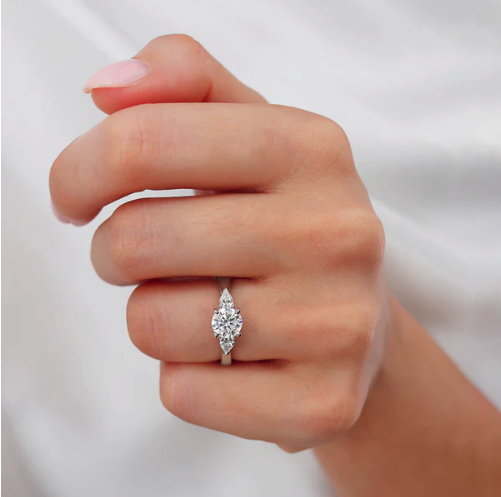
The trilogy engagement ring is one of the most enduring symbols of British romance. Composed of three stones that sit side by side in perfect symmetry, the design is both delicate and deeply expressive. Each stone carries meaning, and when placed together they form a narrative that has captivated British couples for centuries. In 2026, the trilogy ring is not only experiencing a revival but is being reinterpreted as a reflection of personal history, emotional nuance and cultural sophistication. To understand why this design continues to resonate, one must look back to its origins and explore how it has been adopted, adapted and modernised throughout British jewellery history.
Trilogy rings occupy a rare space in the world of engagement jewellery. Their symbolism is unmistakable. Unlike solitaires or halo settings, which emphasise brilliance or spectacle, the trilogy ring communicates a story. It speaks to the past, the present and the future, or, in some interpretations, friendship, love and fidelity. This layering of meaning gives the design its emotional density, something that couples continue to treasure today. As Vogue UK observed in its exploration of sentimental jewellery, pieces that carry narrative depth are increasingly sought after by modern wearers who value emotional connection as much as visual beauty.
Origins in European Romanticism
The history of the trilogy ring can be traced to the romantic traditions of eighteenth and nineteenth century Europe. The Enlightenment had sparked a cultural shift, encouraging people to express affection more openly. Sentimental jewellery became intensely popular, from acrostic pieces that spelled out messages using gemstone initials to lover’s knots and lockets containing miniature portraits.
According to The Guardian, the late Georgian and Victorian eras saw the rise of symbolic jewellery as an artistic language. These were decades in which romance, domesticity and poetic expression dominated public taste, and jewellers responded by creating pieces that could hold emotional significance. It was during this period that three stone rings emerged as meaningful tokens. They offered a way to represent a couple’s shared past, their commitment to the present and the future they hoped to build together.
The design’s appeal lay in its subtlety. Unlike ornate cluster rings or heavily embellished Victorian pieces, the trilogy ring did not require opulence to communicate depth. It was elegant, understated and easy to personalise with preferred gemstones.
The British Royal Influence
Although the trilogy ring predates the twentieth century, royal influence helped cement its popularity in the UK. The British monarchy has long served as an axis for jewellery trends. From Queen Victoria’s snake engagement ring, symbolic of eternal love, to Princess Diana’s iconic sapphire, royal jewellery choices have repeatedly shaped public taste.
The involvement of the royal household in British cultural identity means that jewellery choices featured in the public eye often become reference points for style. As BBC News has noted, major royal engagements continue to produce global surges in jewellery interest. Trilogy rings featured in royal collections and aristocratic family heirlooms further validated the design’s symbolism, reinforcing its association with timeless romance and continuity.
By the mid twentieth century, trilogy rings were no longer reserved for elite households. Their refined symmetry appealed to couples across Britain, and the design began appearing in engagement announcements, wedding photographs and fine jewellery showcases nationwide.
The Post-War Boom and Mid-Century Modernity
After the Second World War, engagement rings became more widely accessible. Diamond advertising campaigns and a growing economy encouraged couples to formalise relationships with diamond jewellery. Trilogy rings blossomed during this era because they offered sophistication without extravagance. They also aligned with the period’s clean modern aesthetic.
The trilogy ring fit neatly into this shift towards modern romance. Its three stones created a sense of dynamism, yet the design remained understated, geometric and elegant. It was a ring that could be worn daily while still conveying depth and sentiment. As The New York Times later wrote in a retrospective on mid century style, the era favoured jewellery that was meaningful but not overly decorative, a balance that trilogy rings achieved perfectly.
During this time, diamonds became the preferred centre stones, though coloured gems, including emeralds, sapphires and rubies, remained popular among those who sought individuality. Trilogy rings straddled tradition and personalisation with ease.
Symbolism and Sentiment: The Heart of the Trilogy Ring
The trilogy ring has endured because of its capacity to hold meaning in a way that is both intimate and universal. Each stone can represent one of several interpretations, which gives couples the freedom to apply their own story.
The most well known interpretation is the timeline of a relationship: past, present and future. This framework has resonated strongly with couples for more than 150 years. It speaks to memory and commitment, grounding the relationship in shared experience while looking towards longevity. As Cosmopolitan UK has reported, millennials and Generation Z increasingly choose jewellery that reflects personal narrative rather than tradition, making the trilogy ring a natural fit for contemporary romantic ideals.
Another interpretation is friendship, love and fidelity, a Victorian sentiment that remains deeply touching. Some couples reinterpret these themes in ways that reflect their own values, such as trust, partnership and growth. The trilogy ring’s greatest strength is that it does not dictate meaning but creates a framework for couples to insert their own symbolism.
Styles and Stone Combinations Through the Ages
Because trilogy rings carry inherent symbolism, they have been produced in a wide range of styles across eras. Victorian versions often paired diamonds with rubies, emeralds or sapphires, reflecting the era’s love of colour and symbolism. Edwardian trilogy rings featured delicate filigree and platinum settings that emphasised lightness and purity.
Art Deco jewellers embraced the trilogy shape by pairing emerald cuts, Asscher cuts or step cut diamonds to create bold, architectural silhouettes. These geometric designs have had a lasting impact, resurfacing in twenty first century interpretations as part of the contemporary fascination with clean, angular aesthetics.
Trilogy rings also became popular as anniversary gifts, as couples marked milestones with additional gemstones or updated designs. The trilogy format allowed for personal interpretation and evolution, making it suitable not only for engagements but also for commemorating marriage and family.
The Contemporary British Revival
In 2026, trilogy engagement rings are experiencing a new wave of appreciation across the UK. The rise of sentimental jewellery, combined with the cultural influence of celebrity engagements, has brought the design back into mainstream focus. As Vogue UK recently noted, couples are searching for engagement rings that feel emotionally resonant rather than conspicuously luxurious, and trilogy rings offer exactly that balance.
The renewed interest in British craftsmanship has played a significant role in this revival. The UK’s artisanal heritage, particularly in London’s Hatton Garden and Birmingham’s Jewellery Quarter, has contributed to a resurgence in bespoke fine jewellery. According to The Financial Times, British buyers are increasingly turning to custom design services to create engagement rings that reflect personal stories. Trilogy rings lend themselves naturally to this trend because couples can choose the shapes, colours and proportions that best reflect their relationship.
There is also a growing trend toward mixing gemstone shapes within trilogy rings, such as pairing an oval centre stone with pear side stones or combining baguettes with round brilliant cuts. This experimentation feels modern and expressive yet still respects the design’s heritage.
Modern Representation and Cultural Significance in 2026
Today’s trilogy engagement ring is not simply a romantic emblem but a cultural statement. It sits at the intersection of tradition and modernity, bridging the sentimentality of historic Britain with the individualism of contemporary love. Couples now see trilogy rings as profound expressions of identity. They are selecting combinations that mirror shared values, aesthetic preferences and personal histories.
This modern approach to trilogy rings is also influenced by popular culture. Celebrity engagements frequently feature multi stone designs, and their visibility plays a significant role in shaping UK consumer interest. As BBC Culture has reported, social media has further amplified these trends, with platforms like Instagram and Pinterest showcasing endless variations of trilogy rings to global audiences.
Sustainability has become another central theme. Younger British consumers are aware of the environmental impact of gemstone mining and are drawn to jewellery that aligns with ethical values. Trilogy rings lend themselves to this shift because their symbolism flows naturally into contemporary ideas about meaningful, conscious luxury.
A Design That Endures
The trilogy engagement ring’s enduring popularity is not incidental but a reflection of its deep emotional resonance and design adaptability. Its three stones form a harmonious balance that appeals to the human eye, while its symbolism adapts effortlessly to changing cultural contexts. In the UK, where jewellery has long held both artistic and sentimental significance, the trilogy ring feels uniquely at home.
Whether chosen for its historical meaning, its poetic symbolism or its clean, timeless aesthetics, the trilogy ring stands as a testament to love that honours the past, embraces the present and looks towards the future.