How UK Engagement Ring Spending Has Changed Over the Last 10 Year
Engagement ring spending in the UK has never been static, but the past decade has seen more change than any period in recent memory. Shifts in consumer values, economic conditions, ethical awareness and design preferences have reshaped not only how much people spend, but how they think about value itself. Looking back over the last ten years reveals a gradual move away from rigid spending rules towards a more nuanced, intentional approach.
In the early 2010s, engagement ring spending in the UK was still heavily influenced by inherited norms. The idea of a recommended spend, often expressed as a multiple of monthly salary, lingered despite growing scepticism. While many buyers privately questioned these benchmarks, they remained part of the cultural conversation.
Coverage in The Telegraph during this period frequently referenced traditional spending expectations, reflecting a market still anchored to long-standing narratives around sacrifice and status. Engagement rings were widely framed as financial milestones as much as emotional ones.
Around 2013 and 2014, the average UK engagement ring spend was commonly reported to fall between £2,000 and £3,000. These figures varied widely by region and demographic, but they reinforced the idea that a certain financial threshold carried symbolic weight. Spending less was often perceived as unconventional, even if quietly common.
At the same time, early signs of change were emerging. Couples were increasingly marrying later, often after years of cohabitation. This shift began to alter priorities. Rings were no longer seen as markers of financial readiness alone, but as reflections of established partnerships.
Analysis from The Office for National Statistics shows that the average age at first marriage continued to rise throughout the 2010s. As couples entered engagement with greater financial independence, they were less inclined to follow prescriptive spending rules.
Design preferences during the early part of the decade remained relatively traditional. Round brilliant diamonds dominated the UK market, accounting for the majority of centre stones. Their popularity was reinforced by decades of marketing and their association with maximum sparkle.
Princess cut diamonds also held significant market share, particularly among buyers seeking a contemporary feel within a familiar framework. Their clean lines and geometric shape aligned with early 2010s tastes, which favoured modernity without straying too far from convention.
By the mid-2010s, however, engagement ring spending began to reflect broader economic pressures. Wage stagnation, rising housing costs and uncertainty following the 2016 EU referendum influenced consumer behaviour. Buyers became more cautious, questioning not only how much to spend, but why.
Reporting from BBC News during this period highlighted how major life purchases were increasingly shaped by financial pragmatism. Engagement rings were no exception. Couples began prioritising affordability alongside meaning, rather than treating spending as a test of commitment.
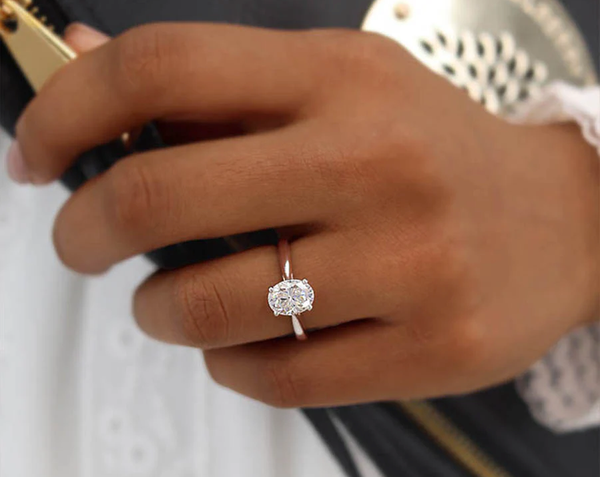
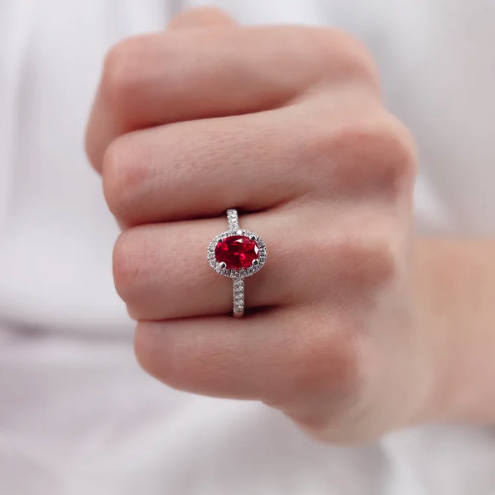
This shift coincided with growing interest in alternative diamond shapes. Oval diamonds gained popularity, offering the appearance of size without the cost associated with round stones. Their elongated form appealed to buyers seeking both value and elegance.
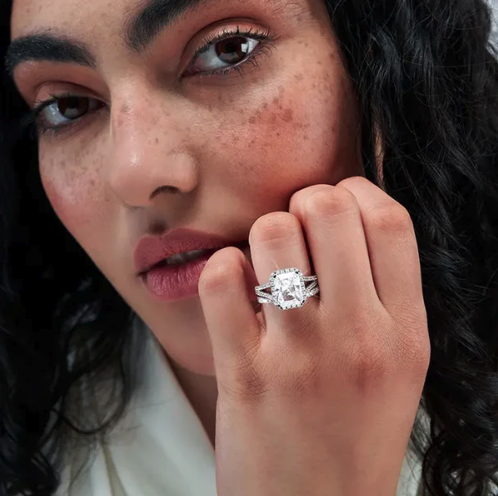
Emerald cut diamonds also experienced renewed interest. Their understated brilliance and emphasis on clarity aligned with a growing preference for subtlety over spectacle. Choosing an emerald cut often signalled confidence rather than conformity.
The rise of social media during the latter half of the decade further complicated spending behaviour. Engagement rings became highly visible, shared widely across platforms. While this visibility sometimes fuelled comparison, it also broadened exposure to diverse styles and budgets.
Features in Vogue UK began to reflect this diversity, showcasing engagement rings that prioritised design and individuality over size alone. This editorial shift subtly reinforced the idea that spending less did not equate to caring less.
By the late 2010s, the conversation around engagement ring spending had shifted noticeably. Buyers were less interested in averages and more interested in alignment. What mattered was whether the ring felt right within the context of their life.
The emergence of lab grown diamonds played a significant role in this recalibration. Initially met with scepticism, lab grown stones gained credibility as understanding improved. They challenged the assumption that higher spend automatically meant higher value.
Coverage in The Guardian explored how ethical considerations were reshaping consumer behaviour, particularly among younger buyers. Engagement rings became part of a broader conversation about sustainability and transparency.
This ethical lens influenced spending patterns in complex ways. Some buyers chose to spend less overall, prioritising values over size. Others maintained similar budgets but allocated them differently, investing in design, craftsmanship or bespoke elements.
Diamond shape trends continued to evolve alongside these changes. Pear and marquise shapes experienced renewed interest, offering distinctive silhouettes that stood out from traditional choices. Their revival reflected a growing appetite for individuality.
As the 2020s approached, engagement ring spending entered a new phase. The COVID-19 pandemic disrupted traditional purchasing behaviours, accelerating existing trends rather than creating entirely new ones. With fewer in-person proposals and celebrations, priorities shifted further.
Reporting from Financial Times noted how consumers redirected spending towards items with lasting significance during periods of uncertainty. Engagement rings, as enduring symbols, retained importance even as budgets were reassessed.
During this period, average spending figures became less meaningful. The range widened dramatically. Some buyers spent significantly less than previous norms, while others chose to invest more selectively. The idea of a typical spend became increasingly obsolete.
Diamond shapes during the early 2020s reflected this fragmentation. Oval diamonds continued their ascent, becoming one of the most popular shapes in the UK. Their versatility suited both minimalist and statement designs.
Cushion cuts also gained renewed popularity, offering a balance between vintage charm and modern softness. Their adaptability made them appealing to buyers seeking warmth and character.
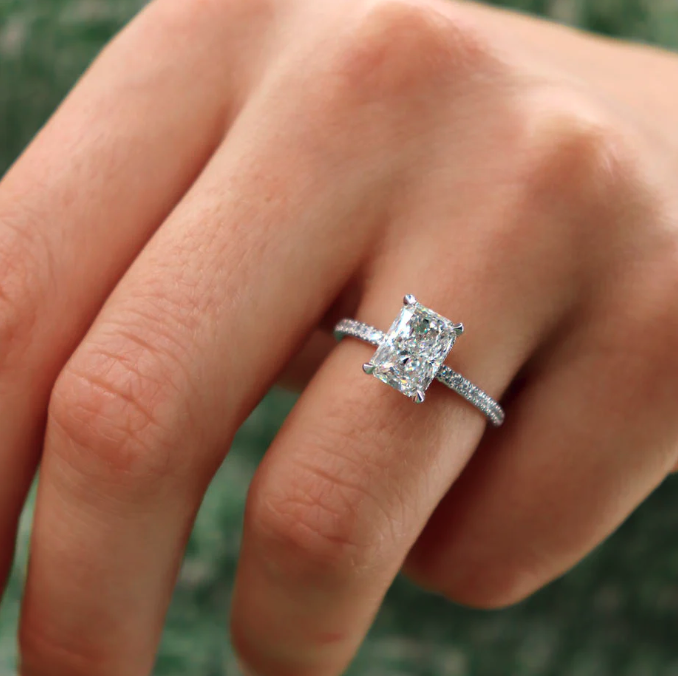
Step cuts such as emerald and Asscher gained further traction among design-led consumers. Their architectural quality aligned with a broader move towards restraint and longevity in jewellery design.
By the mid-2020s, engagement ring spending was less about meeting expectations and more about expressing intention. Buyers were increasingly open about budgets, discussing priorities openly within relationships.
Analysis from Harvard Business Review has shown that modern consumers derive satisfaction from purchases that align with personal values rather than external validation. Engagement rings exemplify this shift.
Brands specialising in lab grown diamonds and contemporary design, such as Lily Arkwright, became more prominent within this landscape. Their positioning reflects a market where spending is judged by thoughtfulness rather than tradition.
Today, UK engagement ring spending exists on a broad spectrum. Some buyers prioritise affordability and ethical sourcing. Others focus on craftsmanship and bespoke design. What unites them is a departure from rigid rules.
Diamond shape preferences now reflect personal style more than status. Round diamonds remain popular, but they no longer dominate unchallenged. Elongated shapes, step cuts and unconventional settings all coexist.
The past decade has shown that engagement ring spending is not simply a financial decision. It is a cultural one, shaped by shifting values, economic realities and evolving definitions of romance.
Looking ahead, it is unlikely that spending norms will re-solidify. If anything, the trend points towards greater flexibility. Future buyers are expected to continue prioritising alignment over averages.
The history of the last ten years suggests that confidence, rather than cost, has become the true measure of engagement ring value. Spending has become more personal, more transparent and more intentional.
In that sense, the evolution of UK engagement ring spending tells a broader story. It reflects how modern relationships balance tradition with autonomy, symbolism with practicality.
What has changed most is not how much people spend, but why they spend it. Engagement rings have moved from being financial milestones to expressions of shared values.
That shift is likely to define the next decade just as profoundly as it has shaped the last.