Is It Better to Buy an Engagement Ring Online or In-Store in the UK?
For generations, buying an engagement ring in the UK meant stepping into a jeweller’s showroom, speaking quietly across glass counters and trusting tradition to guide one of life’s most important purchases. Yet in 2026, that familiar ritual is being questioned. British couples are increasingly torn between the tactile reassurance of the high street and the convenience, transparency and control offered by online shopping.
This shift is not simply about technology. It reflects changing attitudes to money, trust, ethics and personal choice. As relationships evolve, so too does the way couples approach engagement rings. The question many now ask is not where they should buy, but how they want to buy.
The Emotional Weight of the Decision
An engagement ring is unlike any other purchase. It carries emotional, cultural and symbolic weight, often representing months or years of planning and expectation. According to relationship researchers cited by the BBC, proposals remain one of the most emotionally significant milestones in British life, regardless of changing social norms.
This emotional significance is precisely why the buying process itself matters. For some, the calm formality of an in-store consultation provides reassurance. For others, the freedom to research privately and compare options online feels more empowering.
The Traditional In-Store Experience
Walking into a jeweller’s shop still holds a sense of ceremony. There is the immediate opportunity to see stones sparkle under controlled lighting, to try rings on the hand and to ask questions face to face. Many buyers feel this personal interaction builds trust.
Retail analysts writing for the Financial Times note that in-store jewellery purchases benefit from sensory engagement. Weight, scale and texture can be experienced directly, which helps some buyers feel confident in their decision.
However, this experience is not without drawbacks. Prices on the high street often reflect overhead costs such as rent and staffing. Selection may be limited, and time pressure can influence decisions. As consumer behaviour experts highlighted in a Guardian report, in-store environments can subtly encourage faster purchasing, even when buyers intend to browse.
The Rise of Online Engagement Ring Shopping
Online engagement ring shopping has grown steadily over the past decade, but the last few years have accelerated this trend dramatically. A report by BBC Business confirms that British consumers now research major purchases online first, even when they intend to buy in person.
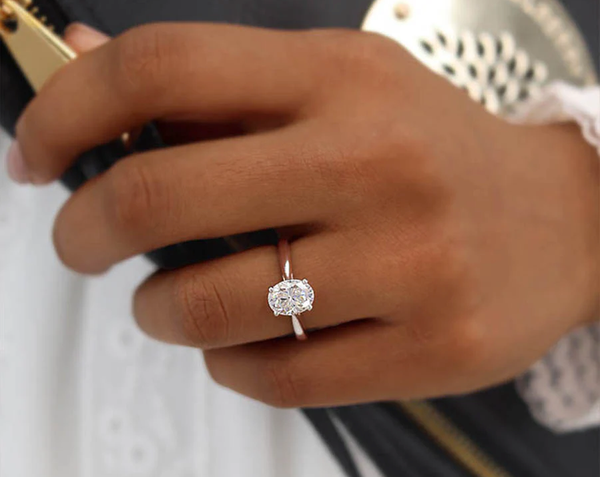
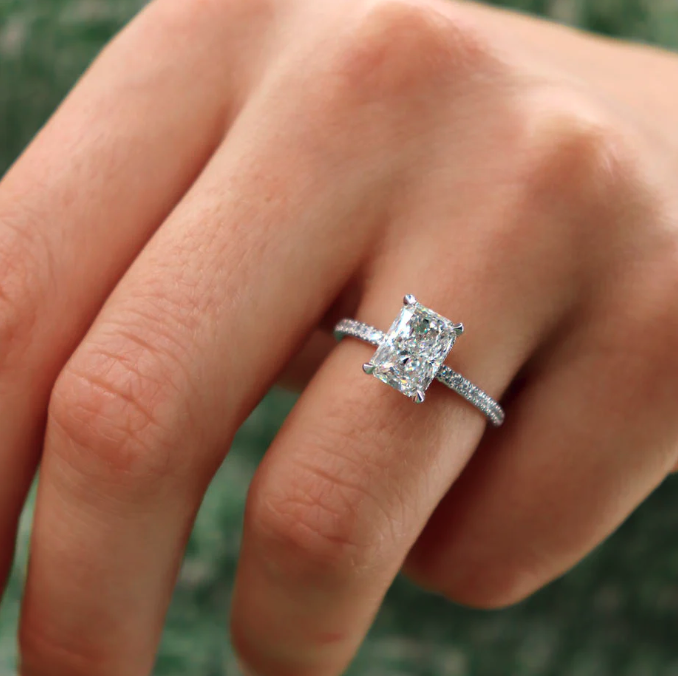
For engagement rings, the online model offers several advantages. Detailed filters allow buyers to compare cut, colour, clarity and carat side by side. Educational resources help demystify diamond grading. Pricing is often more transparent, making it easier to understand where money is being spent.
Fashion editors at Vogue UK have observed that digital platforms have also broadened aesthetic choice. Buyers are no longer limited to what a local shop stocks. Instead, they can explore contemporary settings, vintage inspired designs and alternative gemstones without geographical constraint.
Trust and Transparency in 2026
Trust has become the central issue in the online versus in-store debate. Historically, in-person shopping was considered safer. Today, that assumption is being challenged.
Consumer watchdogs referenced by Which? report that online retailers now frequently offer clearer returns policies and more comprehensive documentation than some physical stores. Certification, high resolution imagery and independent reviews allow buyers to verify quality without stepping outside their home.
At the same time, in-store trust varies widely. While some jewellers provide exemplary service, others rely heavily on sales language that can obscure pricing structures or gemstone quality. As the New York Times has reported in its analysis of luxury retail, modern consumers increasingly prefer data over persuasion.
Returns, Resizing and Aftercare
One of the most significant differences between online and in-store purchasing lies in what happens after the ring is bought.
Traditionally, buyers assumed that returning an engagement ring would be easier in person. Yet many UK high street jewellers impose strict limits on returns, especially once resizing has occurred. Consumer rights experts writing for the Guardian warn that return policies can vary dramatically and are not always clearly communicated.
Online retailers, responding to buyer hesitation, often provide extended returns periods and detailed aftercare information. This has reshaped confidence levels. According to a survey cited by BBC News, extended return windows are now one of the top three factors influencing online jewellery purchases.
Ethics and Information Access
Ethical considerations play a growing role in engagement ring decisions. British buyers increasingly want to understand where gemstones come from, how metals are sourced and what environmental impact their purchase has.
Online platforms typically provide far more educational content on these topics. Long form guides, certification explanations and sourcing disclosures are often just a click away. Environmental reporting by the Financial Times highlights how transparency has become a competitive advantage in luxury markets.
In contrast, in-store explanations depend heavily on staff training and time availability. Some shops excel, while others provide only surface level information.
The Influence of Social Media and Research Culture
Another reason online buying has gained traction is the way British couples research engagement rings today. Pinterest boards, Instagram saves and TikTok explainers shape expectations long before a purchase is made.
Cultural commentators at Cosmopolitan UK note that modern buyers often arrive at the decision stage already knowing the style, shape and even the stone size they want. For these buyers, the online environment feels like a natural extension of their research journey.
In-store experiences can feel redundant when buyers already know what they want. Conversely, those who prefer discovery and conversation may still value a physical visit.
Cost and Perceived Value
Cost remains a decisive factor. Online retailers frequently undercut traditional shops due to lower operating costs. This does not necessarily mean lower quality. Instead, it often reflects a different business model.
The Financial Times has explored how digital luxury brands are redefining value by focusing on craftsmanship rather than storefront prestige. For engagement rings, this means more budget can go towards the stone or setting rather than retail overheads.
However, some buyers are willing to pay a premium for immediate gratification or face to face reassurance.
So Which Is Better in 2026?
There is no universal answer. The better option depends on personality, priorities and expectations.
For buyers who value research, control, transparency and extended decision time, online shopping often provides a superior experience. For those who value tactile reassurance, human interaction and tradition, the in-store route may still feel right.
What has changed is the assumption that one is inherently safer or better than the other. In 2026, both channels can offer excellent experiences when approached thoughtfully.
The Future of Engagement Ring Buying
Industry analysts writing for the New York Times suggest that the future lies in hybrid experiences. Buyers may research online, consult digitally and finalise purchases with minimal friction. Physical shops may evolve into consultation spaces rather than sales floors.
What remains constant is the emotional importance of the ring itself. Whether bought online or in store, British couples want confidence, clarity and meaning.
Conclusion
The question of whether it is better to buy an engagement ring online or in store no longer has a simple answer. Instead, it reflects broader shifts in how British consumers think about trust, value and autonomy.
Online shopping offers control, information and flexibility. In-store shopping offers immediacy and tradition. In 2026, the best choice is the one that aligns with how you want to experience one of life’s most meaningful purchases.