Moissanite vs Lab Grown Diamonds: Which Engagement Stone Will Reign Supreme in 2026?
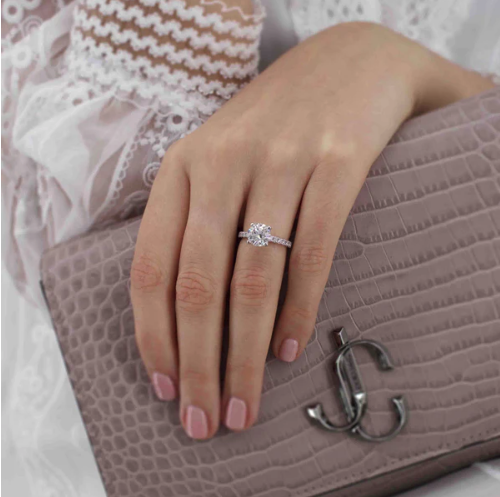
The debate between moissanite and lab grown diamonds has become one of the defining conversations in modern engagement ring culture. What began as a niche comparison driven by price has evolved into a much broader discussion about values, aesthetics, symbolism and long-term confidence. As we move into 2026, the question is no longer which stone is cheaper or brighter, but which one aligns more closely with how couples now think about commitment.
Both moissanite and lab grown diamonds emerged as alternatives to mined diamonds during a period of growing ethical awareness and shifting luxury priorities. However, despite often being grouped together, they occupy very different emotional and cultural positions. Understanding which stone is likely to dominate in 2026 requires looking beyond surface comparisons and into how engagement rings are actually being chosen today.
For much of the past decade, engagement ring decision-making has been undergoing a quiet transformation. Couples are more informed, more involved and more intentional. They are researching materials, questioning legacy norms and prioritising stones that feel aligned with their values rather than inherited expectations. Within this context, moissanite and lab grown diamonds have followed very different trajectories.
Moissanite entered the mainstream jewellery market as a compelling visual alternative. Its brilliance, which exceeds that of diamond in certain lighting conditions, made it immediately attractive to buyers seeking sparkle. Early coverage in publications such as Forbes positioned moissanite as a disruptive stone, particularly appealing to value-conscious consumers who wanted visual impact without traditional diamond pricing.
However, sparkle alone has never been enough to secure long-term dominance in the engagement ring market. Engagement rings are not trend jewellery. They are symbolic objects, expected to hold emotional, cultural and aesthetic relevance for decades. This is where the distinction between moissanite and lab grown diamonds becomes more pronounced.
Lab grown diamonds entered the market with a different promise. Rather than offering an alternative look, they offered continuity. Chemically, physically and optically identical to mined diamonds, lab grown stones challenged the assumption that rarity must be geological to be meaningful. This distinction has proven critical.
Scientific reporting from institutions such as the Gemological Institute of America has consistently confirmed that lab grown diamonds share the same crystal structure and properties as mined diamonds. This has allowed them to be recognised, graded and valued within the same frameworks that have governed diamond jewellery for generations.
Moissanite, by contrast, is a different gemstone entirely. While beautiful in its own right, it does not share diamond’s material identity. This difference has shaped how each stone is perceived, particularly in the context of engagement rings, where symbolism often matters as much as appearance.
Cultural perception has played a significant role in shaping the trajectory of both stones. Lab grown diamonds have increasingly been framed as modern diamonds rather than substitutes. Coverage in The Financial Times has explored how lab grown diamonds appeal to consumers who want ethical clarity without redefining what a diamond represents.
Moissanite, meanwhile, has tended to occupy a different narrative space. It is often discussed as an alternative to diamond rather than a form of diamond. This framing has influenced buyer confidence, particularly among those who place importance on tradition, resale perception and long-term symbolism.
As we approach 2026, engagement ring culture has become more emotionally literate. Buyers are less interested in shortcuts and more interested in alignment. The stone they choose is expected to feel honest, intentional and future-facing.
This is where lab grown diamonds have gained significant momentum. They allow couples to choose a diamond, with all its historical and cultural associations, while aligning with modern ethical and environmental considerations. This balance has proven powerful.
Editorial analysis in Vogue UK has highlighted how lab grown diamonds have become increasingly accepted within high fashion and fine jewellery contexts. This acceptance matters. It signals legitimacy and longevity rather than novelty.
Moissanite, despite its advantages, has struggled to cross this same cultural threshold. Its visual characteristics, particularly its intense fire, can sometimes read as less subtle. For some buyers, this becomes a drawback rather than a benefit. As engagement ring design in 2026 leans towards restraint and proportion, excessive sparkle can feel out of step with prevailing aesthetics.
Design commentary in Wallpaper* has noted a broader move towards quieter luxury across fashion and jewellery. In this environment, stones that mimic diamond’s balanced brilliance rather than exceeding it often feel more aligned with contemporary taste.
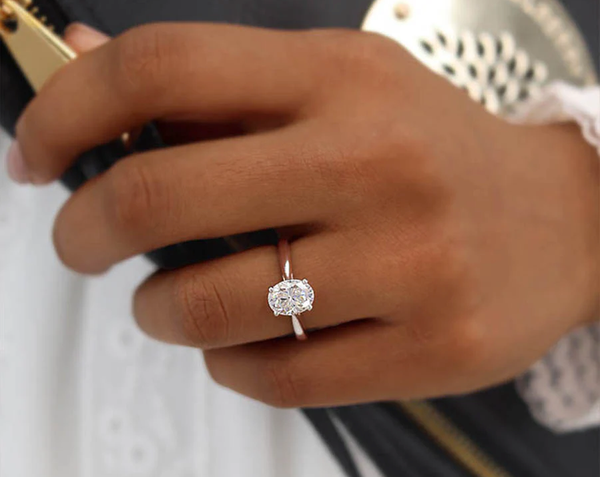
Another key factor influencing which stone will reign supreme in 2026 is versatility. Lab grown diamonds perform identically to mined diamonds across all settings, cuts and styles. They can be used in classic solitaires, step cuts, pavé designs and bespoke creations without compromise.
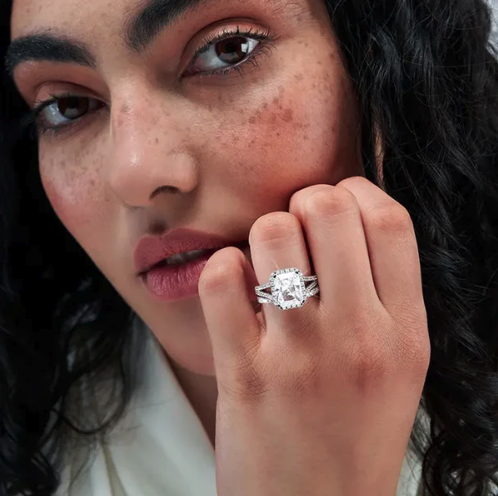
Moissanite, while durable, interacts differently with light and proportion. In certain cuts, particularly step cuts such as emerald or Asscher, its optical properties can appear less refined. This limits its versatility within design-led collections, which increasingly favour these cuts.
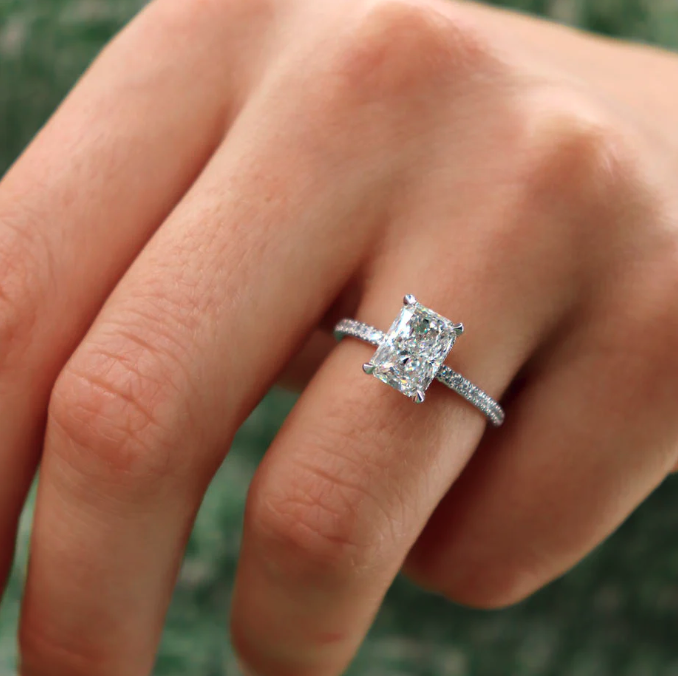
Engagement ring trends reported by Harper’s Bazaar UK show growing interest in elongated and step-cut diamonds, styles where lab grown diamonds excel. This alignment with trend direction gives lab grown stones a significant advantage.
Longevity also plays a role. While moissanite is hard and suitable for daily wear, its long-term cultural positioning remains less defined. Lab grown diamonds benefit from being embedded within centuries of diamond symbolism, even as their origin differs.
This matters to many buyers, particularly in the UK, where engagement ring traditions still carry emotional weight. Choosing a lab grown diamond allows couples to modernise without disconnecting from cultural continuity.
Economic considerations further reinforce this shift. As lab grown diamond technology has advanced, pricing has become more accessible without sacrificing quality. This allows buyers to invest in design, craftsmanship and personalisation rather than simply carat weight.
Brands such as Lily Arkwright reflect this evolution, focusing on lab grown diamonds within contemporary engagement ring designs that prioritise proportion, ethics and long-term wearability. This positioning mirrors broader consumer behaviour heading into 2026.
Market analysis from McKinsey & Company has shown that modern luxury consumers value transparency and alignment over novelty. Lab grown diamonds fit naturally within this framework. They offer clarity about origin while preserving the emotional language of diamond jewellery.
Moissanite continues to appeal to a specific segment of buyers, particularly those prioritising cost efficiency and maximum sparkle. It is unlikely to disappear. However, its role is increasingly defined rather than expansive.
In contrast, lab grown diamonds are becoming integrated rather than alternative. They are appearing in fine jewellery collections, editorial shoots and bespoke commissions in ways that signal permanence rather than trend.
Cultural reporting in The Guardian has explored how ethical consumption is reshaping luxury expectations. Lab grown diamonds, positioned as ethical diamonds rather than substitutes, align closely with this shift.
By 2026, engagement ring culture values confidence over compromise. Buyers want to feel certain about their choices, both emotionally and socially. Lab grown diamonds offer that reassurance. They allow couples to choose a diamond without caveats.
Moissanite, while beautiful, still requires explanation. For some, that explanation is empowering. For others, it introduces hesitation. In an era where engagement rings are chosen collaboratively and worn confidently, that distinction matters.
This is not a judgment on quality, but on cultural momentum,
Looking ahead, the stone most likely to reign supreme in 2026 is the one that best reflects how couples want to feel. Confident, intentional and future-facing without abandoning meaning.
Lab grown diamonds have reached that position.
They bridge tradition and innovation, ethics and elegance, symbolism and practicality. They feel like a natural evolution rather than a departure.
Moissanite will continue to have a place, particularly for buyers seeking brilliance and value. But when it comes to defining the engagement ring landscape of 2026, lab grown diamonds are poised to lead.
Not because they are louder or cheaper, but because they feel right for this moment.
And in modern engagement ring culture, that feeling matters more than ever.