Most Common Engagement Ring Questions Asked Online
Why Engagement Ring Questions Dominate Online Search
Few purchases create as much anxiety, confusion and curiosity as an engagement ring. Even confident shoppers suddenly find themselves wrestling with questions about diamonds, metals, ethics and budgeting. The result is one of the most consistently searched jewellery topics on the internet.
According to BBC News, searches relating to engagements peak every winter and early spring, aligning with proposal seasons across the UK. Meanwhile Financial Times reports that younger buyers increasingly rely on online research before speaking to a jeweller, creating a digital-first buying culture that has reshaped the industry.
In 2026, the most common engagement ring questions asked online tell a broader story about modern relationships, financial priorities and ethical values.
“How much should I spend on an engagement ring?”
This is consistently the number one engagement-related search question in the UK.
The old so-called “three months’ salary rule” is now widely rejected. As The Guardian points out, the rule originated from 1930s diamond advertising, not tradition.
Modern couples are far more pragmatic. Searches indicate buyers are looking for transparency rather than rules, with questions such as:
- “Is £1,000 enough for an engagement ring?”
- “What is the average engagement ring cost in the UK?”
- “Should we set a ring budget together?”
- Most financial experts, including those cited by the BBC, now emphasise affordability and shared decision-making rather than arbitrary amounts.
“Are lab-grown diamonds real?”
This question has surged dramatically in the last five years.
Despite widespread press coverage, many buyers still ask whether lab-grown diamonds are real. The short answer is yes. As confirmed by Forbes and the Gemological Institute of America (GIA), lab-grown diamonds have the same optical, physical and chemical properties as mined diamonds.
What drives the question is uncertainty. Consumers want reassurance that a ring will be meaningful and enduring.
This question has become especially common among environmentally conscious buyers, who also search for:
- “Are lab diamonds sustainable?”
- “Do lab-grown diamonds hold value?”
In 2026, high-quality jewellers selling lab-grown diamonds remain one of the UK’s fastest-growing luxury sectors.
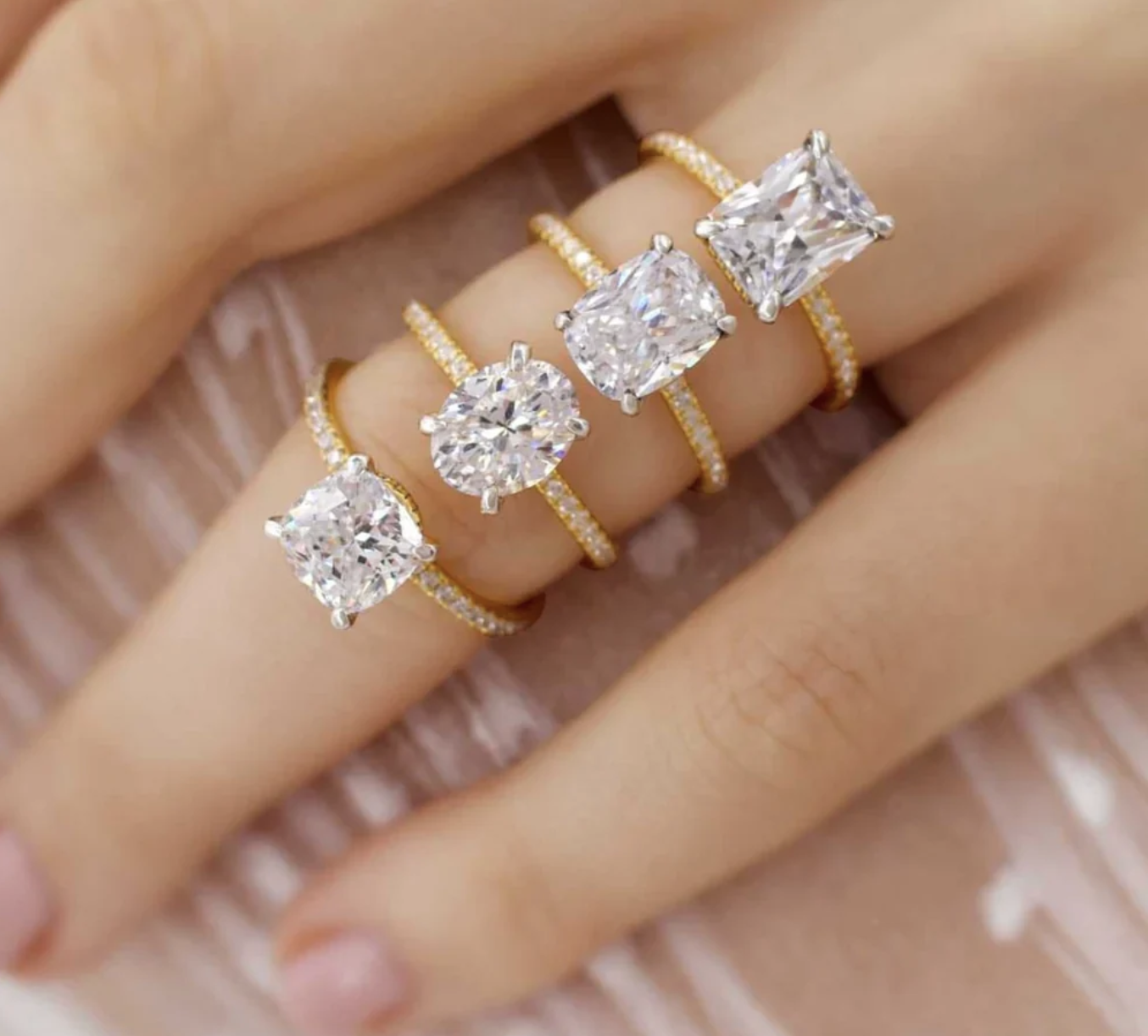
“What diamond shape looks best?”
Shape is one of the most searched aesthetic questions on Google.
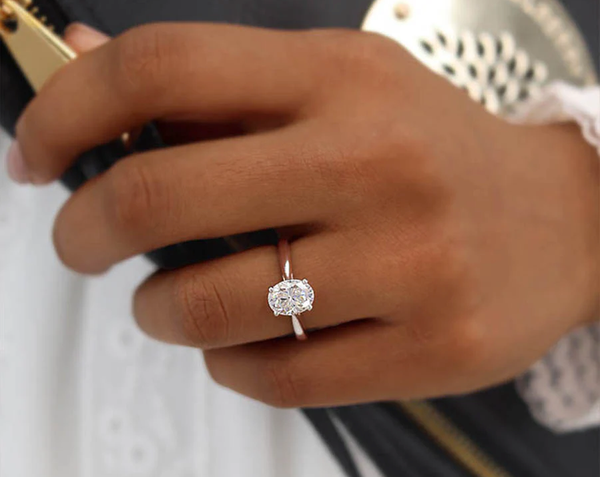
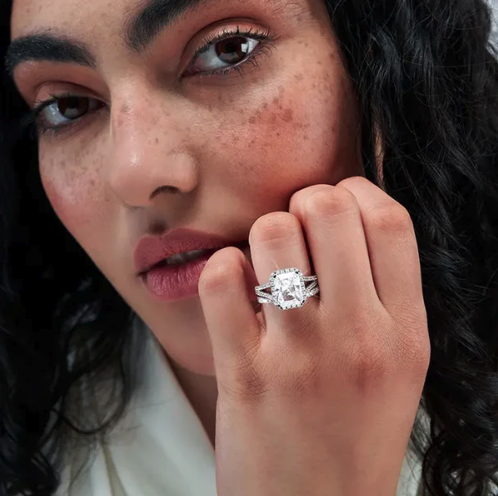
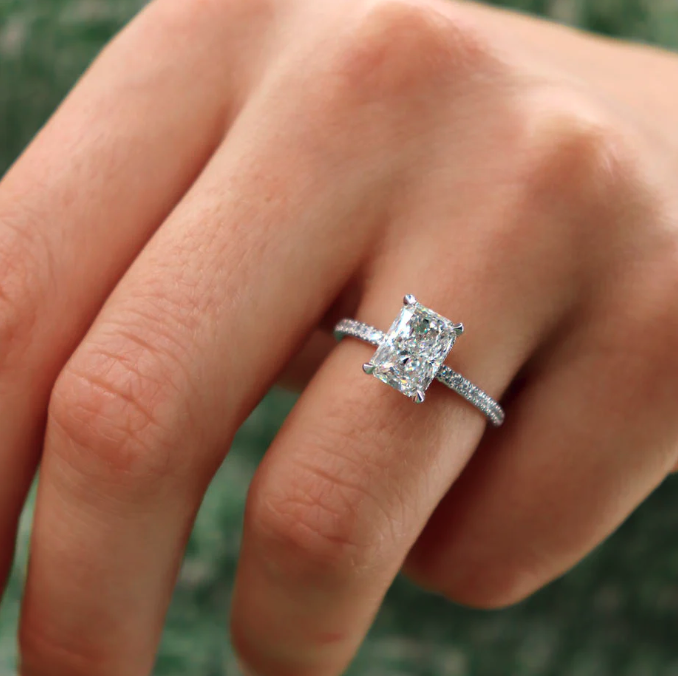
In 2026, search interest in non-traditional shapes continues to rise. According to Vogue UK, elongated stones such as oval, emerald and marquise have overtaken the classic round brilliant for the first time, driven by celebrity influence and digital trends.
Other popular search queries include:
- “What diamond shapes look bigger?”
- “Which diamond shape is the most brilliant?”
- “Best diamond shape for small hands?”
Shapes now signal personality as much as style, transforming the question from design choice to self-expression.
“What is the difference between clarity and colour?”
Despite widespread guides, the fundamentals of the 4Cs remain among the top questions online.
Buyers often ask:
- “Is clarity or colour more important?”
- “Can you see inclusions with the naked eye?”
- “What is the best diamond grade for engagement rings?”
The GIA’s widely referenced guides explain that both clarity and colour affect brilliance and overall appearance, but many consumers struggle to interpret certification reports.
As Financial Times notes, the modern buyer is far more research-driven yet no more confident in deciphering technical gemstone language. This fuels persistent online searching.
“What is the difference between platinum and white gold?”
Metal choice is one of the most common sources of confusion for UK buyers.
The Google data consistently shows repeated questions such as:
- “Is platinum worth it?”
- “Does white gold yellow over time?”
- “Which metal is stronger?”
As BBC Lifestyle highlights, the rise in white metals stems partly from their clean, modern aesthetic and their association with celebrity culture.
Platinum remains the premium option for longevity, while white gold appeals to budget-conscious shoppers who still want a bright, contemporary look.
“How do I choose a ring size without them knowing?”
Proposal planning is changing, but secrecy remains important.
This question trends every December and again in early February before Valentine’s Day. Modern suggestions found online include measuring existing rings or asking friends, but accuracy remains the primary concern.
As The Guardian explains, couples increasingly shop together, but there is still a strong romantic appetite for surprise proposals.
This creates a uniquely stressful search pattern for buyers who want the moment to feel magical without risking the wrong size.
“Which engagement ring styles are the most popular?”
Search trends show a growing curiosity about longevity and fashion. According to Vogue UK and Elle UK, the most searched styles in 2026 include:
- solitaire rings
- oval diamonds
- emerald cuts
- hidden halos
- minimalist bands
- vintage and art deco inspired rings
Vintage-inspired settings have surged after strong coverage in lifestyle media and rising interest in sustainability.
“How do I know the diamond is certified?”
Trust is one of the most searched themes in engagement-related queries.
Common follow-up questions include:
- “Is GIA certification the best?”
- “How do I avoid fake diamonds?”
- “What paperwork should I get with a ring?”
As Forbes and GIA emphasise, reputable certification remains the most reliable assurance of authenticity and quality.
The question is particularly common among first-time buyers and those purchasing online.
“Should I choose natural or lab-grown diamonds?”
This question reflects a major cultural and ethical shift.
A decade ago, the majority of rings were mined. In 2026, lab-grown diamonds dominate Google searches due to affordability and sustainability.
As The Guardian explains, younger buyers are heavily motivated by ethics, transparency and environmental impact.
Online questions reveal that couples are seeking reassurance not only about quality but also about what each choice symbolises.
“What engagement ring suits my partner’s personality?”
This question has dramatically risen with the rise of personalisation. Modern buyers want rings that reflect individuality. Search terms include:
- “engagement rings for creative people”
- “classic style engagement ring ideas”
- “unique ring ideas for modern women”
As Vogue UK observed, engagement rings have moved away from uniform trends and towards expression, identity and emotion.
This shift ties directly to modern relationships becoming more collaborative, thoughtful and personal.
What These Questions Reveal About Modern Love
The most common engagement ring questions asked online reveal more than uncertainty. They highlight the evolving values of British couples:
- a desire for transparency
- ethical considerations
- individuality
- education
- emotional significance
According to BBC Culture, younger generations increasingly view jewellery as storytelling rather than symbolism alone.
The search patterns reflect this cultural shift beautifully.
Conclusion
Engagement ring questions are among the most frequently searched jewellery topics online because the purchase is deeply emotional, financially significant and symbolically important.
The rise of lab-grown diamonds, sustainability, personalisation and quiet luxury has transformed what couples prioritise. As British relationships evolve, so do their questions, with curiosity and care taking centre stage.
Online search behaviour continues to provide a fascinating window into modern romance, framed through diamonds, metals, meaning and shared values.