Nothing Lasts Forever: How a Netflix Documentary Reframed Diamonds Without Ending Their Meaning
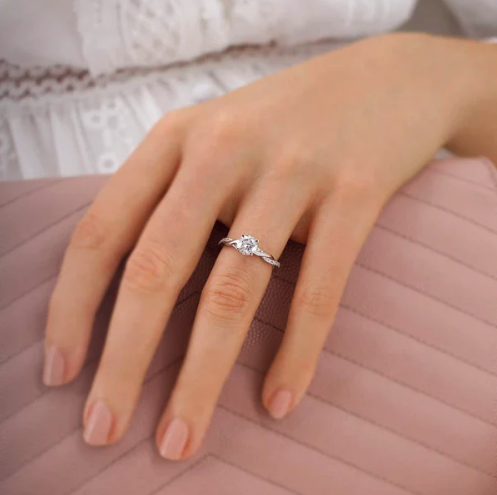
When Nothing Lasts Forever premiered on Netflix, it entered a jewellery landscape already undergoing quiet but significant change. The documentary did not arrive as an isolated critique, nor did it attempt to dismantle the emotional role diamonds play in modern life. Instead, it accelerated a conversation that had been gathering momentum for years, one centred on transparency, technology and the idea that luxury no longer needs a single narrative.
Rather than presenting diamonds as obsolete, the documentary challenged the assumption that there is only one valid way to understand them. In doing so, it reshaped how both natural and lab grown diamonds are discussed, not as opposing forces, but as parallel choices shaped by personal values and priorities.
Critical response from The Guardian framed the documentary as a cultural reckoning rather than an exposé. It highlighted how the film tapped into broader anxieties around authenticity and trust in luxury industries, while stopping short of dismissing diamonds themselves as symbols of commitment.
For much of the twentieth century, diamonds occupied a carefully protected cultural position. Their value was communicated through a tightly controlled narrative that emphasised rarity, permanence and emotional inevitability. That narrative proved remarkably effective, but it left little space for innovation or nuance.
Nothing Lasts Forever disrupted that certainty by making visible what had long existed beneath the surface. Lab grown diamonds were no longer presented as fringe or experimental. They were placed directly alongside natural diamonds, forcing a more honest discussion about origin, meaning and value.
Analysis published by The Atlantic observed that the documentary’s strength lay in its refusal to dictate conclusions. Viewers were invited to interrogate their assumptions rather than adopt a prescribed stance, an approach that resonated strongly with contemporary audiences.
One of the most significant outcomes of the film has been a shift in language. Lab grown diamonds are no longer routinely framed as alternatives or substitutes. They are increasingly discussed as legitimate choices with distinct advantages, particularly in terms of consistency, precision and technological innovation.
This shift has been underpinned by scientific clarity. For decades, the Gemological Institute of America has confirmed that lab grown diamonds are chemically, physically and optically identical to natural diamonds. The documentary did not introduce this information, but it amplified public awareness of it, reducing misunderstanding and reframing perception.
At the same time, the documentary did not erode the appeal of natural diamonds. For many consumers, geological history remains deeply meaningful. The idea that a diamond formed over billions of years beneath the earth continues to carry emotional weight, especially in the context of engagement, legacy and inheritance.
Writing in The Financial Times, commentators noted that the film encouraged consumers to articulate their preferences more clearly. For some, that meant reaffirming a connection to natural diamonds. For others, it meant embracing lab grown stones as expressions of modernity. In both cases, the decision became more intentional.
For the natural diamond industry, the impact of the documentary was not collapse but recalibration. Increased scrutiny prompted a stronger emphasis on provenance, traceability and craftsmanship. Rather than relying on abstract ideas of rarity, the conversation shifted towards tangible origin stories and accountability.
Reporting from Reuters showed how parts of the natural diamond sector responded by investing further in traceability initiatives and transparent supply chain communication. This response suggested resilience and adaptation rather than defensiveness.
Lab grown diamonds, meanwhile, emerged from the documentary with increased confidence. They began to be framed less as ethical talking points and more as products of advanced manufacturing. For many consumers, this association with innovation enhanced their appeal rather than diminishing it.
Technology analysis from MIT Technology Review has explored how advanced material science is reshaping perceptions of luxury. In this context, lab grown diamonds sit comfortably alongside other precision engineered products where innovation is viewed as a virtue.
A broader consequence of the documentary has been the recognition that diamond value is multi-dimensional. Financial worth, emotional symbolism, ethical considerations and personal identity all play a role. No single factor now dominates the conversation.
This reflects wider consumer behaviour. Research discussed by McKinsey & Company indicates that modern consumers prioritise alignment with personal values over traditional status markers. The diamond industry is increasingly shaped by this mindset.
Fashion and culture publications have echoed this shift. Coverage has become more educational and less prescriptive, allowing readers to engage with diamonds on their own terms.
Editorial features in Vanity Fair have presented both natural and lab grown diamonds as culturally relevant, framing choice itself as a marker of modern luxury rather than adherence to tradition.
At the retail level, the documentary’s influence is visible in the quality of dialogue. Customers arrive more informed and more confident, asking nuanced questions about sourcing, production and longevity. This has encouraged a more consultative approach, centred on guidance rather than persuasion.
Viewing modern diamond jewellery collections, such as those available through Lily Arkwright, reflects this shift clearly. The focus is on enabling informed choice, supporting customers in selecting stones that align with their values and lifestyle rather than promoting a single narrative.
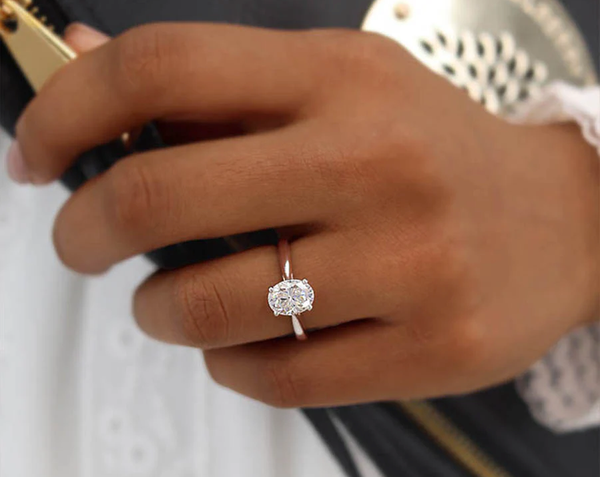
The documentary has also reshaped engagement ring culture. Ring selection is increasingly collaborative, with couples discussing preferences openly and treating the diamond choice as part of a shared decision making process.
Social research referenced by YouGov suggests that shared purchasing decisions are becoming more common among younger couples. In this context, choosing a diamond becomes part of a broader conversation about partnership, priorities and identity.
Another lasting effect of Nothing Lasts Forever is the reframing of ethics and innovation as compatible rather than conflicting ideas. Both natural and lab grown diamonds are increasingly evaluated through transparent frameworks rather than emotional rhetoric.
Commentary from Fast Company has noted that industries evolve most successfully when they embrace openness rather than defensiveness. The diamond sector appears to be following this path.
Crucially, the documentary did not weaken the symbolism of diamonds. Love, commitment and continuity remain central. What changed is the understanding that symbolism does not require uniformity.
A diamond chosen with awareness and intention carries meaning precisely because it reflects personal values. In this sense, knowledge enhances symbolism rather than diminishing it.
As The Economist has observed, markets become healthier when consumers are informed rather than directed. By encouraging curiosity instead of compliance, Nothing Lasts Forever contributed to a more resilient diamond industry.
Looking ahead, the documentary’s long term impact appears constructive. It did not end diamonds. It expanded the ways they can be understood.
Natural diamonds continue to resonate with those drawn to rarity and geological history. Lab grown diamonds appeal to those who value innovation and precision. Both exist within a broader ecosystem defined by choice.
Ultimately, the legacy of Nothing Lasts Forever is clarity.
It shifted the conversation from what consumers should buy to why they choose what they choose.
And in an industry built on meaning, that shift has strengthened rather than diminished the place of diamonds in modern life.