Pear Shape Diamonds: Why They Are the Most In-Demand Engagement Ring Shape for 2026
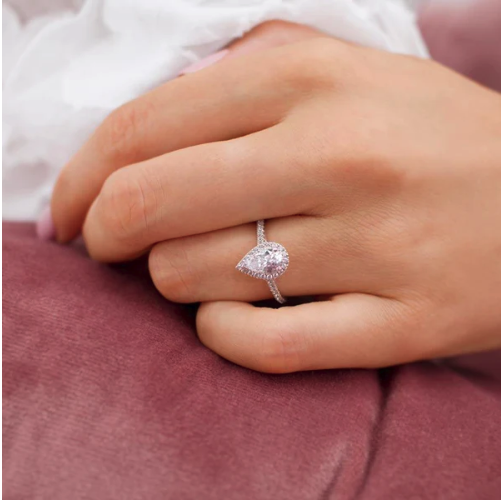
By 2026, the pear shape diamond has moved decisively from niche preference to cultural signal. Once considered a romantic alternative to more traditional cuts, it has become one of the most sought-after engagement ring shapes in the UK. Its rise is not accidental, nor is it driven by a single trend cycle. Instead, the renewed demand for pear shape diamonds reflects deeper shifts in taste, values and confidence around engagement ring design.
To understand why the pear shape has reached this moment, it is necessary to look beyond current fashion and into the way diamond shapes have historically functioned as markers of era, attitude and aspiration. Diamond cuts have always told a story. In 2026, the pear shape tells one of individuality, balance and quiet assurance.
The pear shape diamond, sometimes referred to as the teardrop, combines elements of the round brilliant and marquise cuts. Its hybrid form allows it to offer brilliance, elongation and softness in equal measure. Historically, this balance has made it appealing but not dominant. In previous decades, the market favoured clarity of message. Round meant classic. Princess meant modern. The pear shape sat somewhere between, admired but rarely prioritised.
That positioning has shifted dramatically.
According to historical records cited by the Gemological Institute of America, the pear shape was first developed in the 15th century by Flemish polisher Lodewyk van Bercken. It was an early demonstration of technical innovation, made possible by advancements in diamond polishing. From the outset, the pear shape was associated with experimentation rather than convention.
For centuries, pear shaped diamonds appeared intermittently in royal collections and high jewellery, often set as pendants or earrings rather than engagement rings. Their asymmetry made them expressive, but that same quality kept them outside rigid traditions.
During the mid to late twentieth century, engagement ring culture became increasingly codified. The round brilliant diamond dominated, supported by decades of marketing and its association with maximum sparkle. Alternative shapes existed, but they were framed as secondary.
The pear shape, while admired, was often seen as too individual for mass adoption.
That perception began to change gradually in the 2010s. As engagement ring culture loosened, buyers became more open to shapes that felt personal rather than prescriptive. Elongated cuts such as oval, marquise and pear began to gain traction, particularly among buyers seeking visual presence without adhering to traditional hierarchies.
Editorial jewellery coverage in Vogue UK during the late 2010s began to highlight pear shape diamonds as elegant, directional choices rather than alternatives. This subtle reframing positioned the pear shape not as a deviation, but as a confident selection.
By the early 2020s, the shift accelerated. Engagement rings were no longer judged primarily by size or symmetry, but by proportion, wearability and design coherence. The pear shape excelled in all three areas.
One of the key reasons pear shape diamonds resonate so strongly in 2026 is their ability to elongate the finger. The tapered point creates a lengthening effect that feels flattering without appearing forced. This quality has become increasingly desirable as buyers prioritise how rings look in everyday wear rather than staged imagery.
Design analysis in Financial Times How To Spend It has explored how modern luxury favours balance and restraint over overt display. Pear shape diamonds align closely with this philosophy. They offer presence without heaviness and distinction without excess.
Another factor driving demand is versatility. Pear shape diamonds adapt seamlessly to a wide range of settings. They can be oriented point up or point down. They work in solitaire designs, halo settings and modern east-west orientations. This flexibility allows designers to create rings that feel tailored rather than templated.
Historically, certain diamond shapes dictated specific setting styles. The pear shape resists that limitation. Its asymmetry invites creativity rather than restriction.
This creative freedom has been embraced by contemporary jewellers. In 2026, pear shape diamonds are as likely to appear in minimalist, low-profile settings as they are in more expressive designs. The shape no longer signals a single aesthetic. It signals choice.
Cultural commentary in The Guardian has noted how modern consumers increasingly gravitate towards objects that reflect individuality rather than conformity. Engagement rings are part of this shift. The pear shape, with its distinctive silhouette, offers recognition without uniformity.
The resurgence of the pear shape is also linked to broader changes in how symmetry is perceived. For much of the twentieth century, symmetry was equated with perfection. As design culture has evolved, asymmetry has been reinterpreted as character.
The pear shape occupies a unique position between symmetry and asymmetry. Its rounded end offers softness and familiarity, while its pointed tip introduces tension and movement. This duality resonates with modern buyers who value nuance over absolutes.
Fashion commentary in Harper’s Bazaar UK has explored how contemporary aesthetics increasingly embrace irregularity as a form of sophistication. Pear shape diamonds reflect this sensibility, offering visual interest without visual chaos.
Another reason pear shape diamonds have become the most in-demand shape for 2026 is their compatibility with modern lifestyles. Their elongated form allows for lower profile settings that sit comfortably on the hand. When set thoughtfully, pear shape diamonds feel secure and wearable, aligning with the expectation that engagement rings are worn daily.
This practical consideration has become central to purchasing decisions. Engagement rings are no longer occasional jewellery. They are constant companions. Shapes that support comfort alongside beauty naturally rise in popularity.
The pear shape also benefits from evolving attitudes towards symbolism. Traditional diamond narratives focused heavily on perfection and permanence. Contemporary narratives prioritise growth, individuality and intention.
Cultural analysis from BBC Culture has highlighted how modern expressions of commitment increasingly value authenticity over idealised imagery. The pear shape, with its organic silhouette, feels aligned with this shift.
In terms of historical shape evolution, the rise of the pear shape in 2026 mirrors the earlier ascent of the oval diamond. Both shapes gained popularity as buyers sought alternatives to the round brilliant that offered similar brilliance with a different visual rhythm.
However, where the oval maintains symmetry, the pear introduces directionality. This directional quality allows the ring to feel intentional in how it sits on the hand. Many wearers report feeling that the pear shape interacts more dynamically with movement than symmetrical cuts.
This interaction becomes particularly meaningful in modern settings, where design is expected to respond to the wearer rather than dominate them.
Technological advancements have also supported the pear shape’s rise. Improvements in cutting precision have reduced issues historically associated with pear shape diamonds, such as uneven shoulders or light leakage near the point. Today’s well-cut pear shape diamonds exhibit excellent brilliance and balance.
The Gemological Institute of America has documented how advances in diamond cutting have expanded the viability of complex shapes. As cutting standards improved, shapes like the pear became more consistent and visually reliable.
Ethical considerations further amplify the pear shape’s appeal. As buyers increasingly consider lab grown diamonds, the pear shape offers excellent value in terms of visual size relative to carat weight. This allows for expressive design without excessive resource use.
Brands such as Lily Arkwright often feature pear shape diamonds prominently within their collections, reflecting demand from buyers who prioritise contemporary design, ethical sourcing and individuality. The pear shape sits naturally within this modern framework.
Celebrity influence has also played a role, though in a subtler way than previous decades. Rather than dictating trends outright, high-profile pear shape engagement rings have contributed to normalisation. They have shown that the shape works across styles, from minimalist to statement.
Media coverage in publications such as Elle UK has highlighted pear shape diamonds as elegant and directional rather than unconventional. This shift in language matters. It reframes the shape as confident rather than alternative.
In 2026, demand for pear shape diamonds is also supported by their adaptability across metals and band styles. They pair equally well with yellow gold, platinum and mixed metal designs. Their silhouette complements both slim and more substantial bands.
This adaptability makes the pear shape future-proof. As personal style evolves, the ring remains relevant. This long-term perspective increasingly influences engagement ring choices.
Market insight from McKinsey & Company has shown that modern luxury consumers prioritise longevity and adaptability over trend alignment. Engagement rings are no exception. Shapes that age well naturally rise in demand.
Looking ahead, the pear shape’s dominance in 2026 does not signal the disappearance of other cuts. Rather, it reflects a market that values plurality. The pear shape has risen because it offers something distinct without demanding compromise.
Its appeal lies in balance. It is expressive but restrained. Romantic but modern. Distinctive but wearable.
Historically, diamond shape popularity has always mirrored cultural confidence. When buyers feel constrained, they choose safety. When they feel empowered, they choose expression. The rise of the pear shape suggests a moment of confidence.
Engagement rings in 2026 are less about proving value and more about expressing identity. The pear shape aligns perfectly with that intention.
It allows buyers to step slightly outside tradition without rejecting it entirely. It signals thoughtfulness rather than rebellion.
That is why the pear shape diamond is not simply fashionable in 2026. It is representative.
It represents a generation of buyers comfortable with nuance, individuality and balance.
And that is why, as we move through 2026, the pear shape has become the most in-demand engagement ring shape in the UK.