Ring Sizing Explained: How to Get the Right Fit and Avoid Costly Mistakes
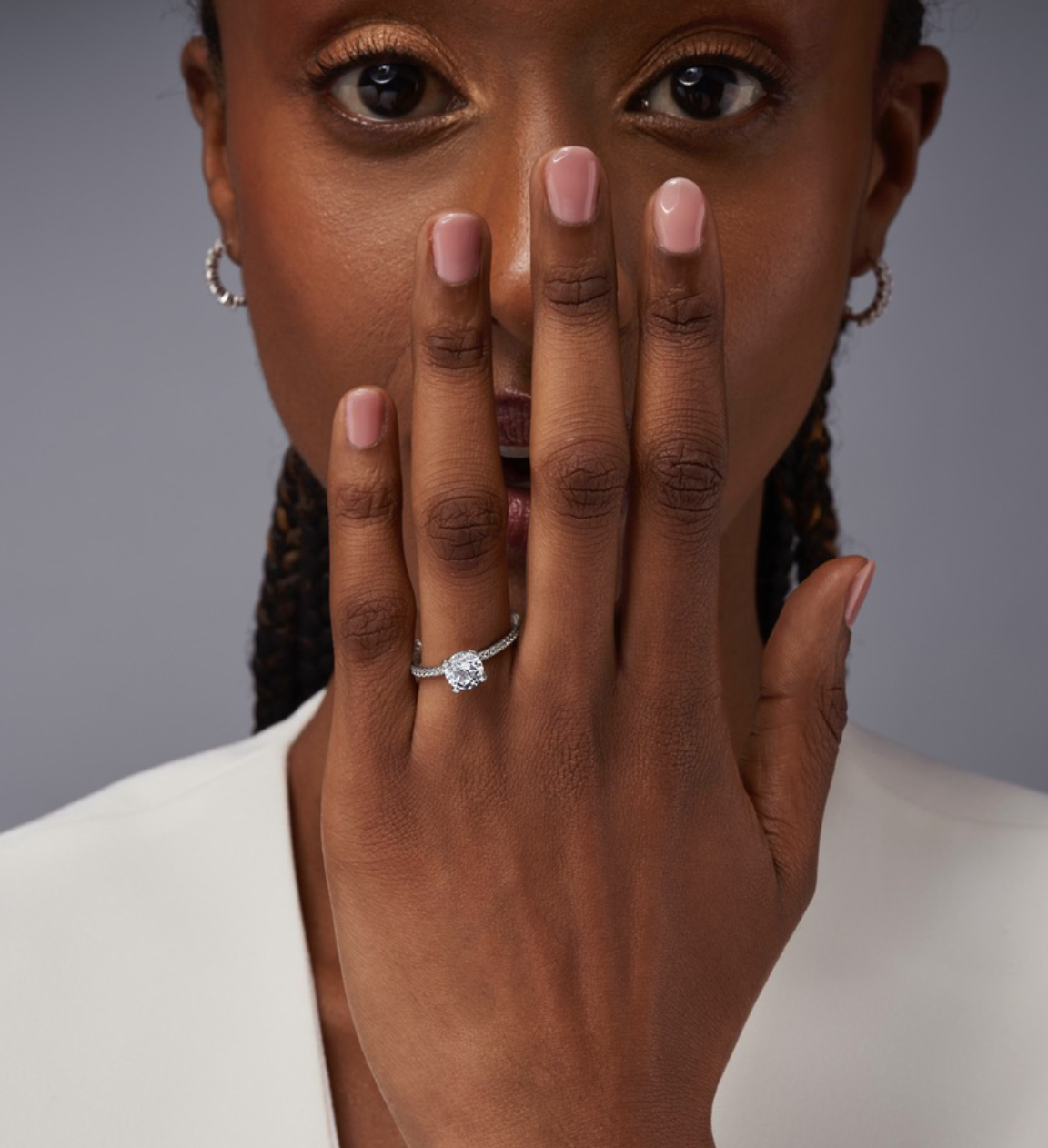
Ring sizing is one of the most underestimated steps in choosing a piece of fine jewellery. It is often treated as a technical detail to be solved quickly, yet it plays a defining role in comfort, wearability and long-term satisfaction. In 2026, as engagement rings and fine jewellery are increasingly designed for everyday wear, getting the size right matters more than ever.
A ring that fits properly should feel secure without being restrictive, comfortable throughout the day and easy to forget you are wearing. Achieving that balance requires more than a quick guess or a one-off measurement. Understanding how ring sizing works, what influences finger size and how to measure accurately can prevent disappointment and unnecessary adjustments later on.
To begin, it helps to understand why ring sizing is not as straightforward as many people expect.
Finger size is not fixed. It fluctuates naturally due to temperature, hydration, time of day and even long-term lifestyle changes. Medical guidance published by The NHS explains that fluid retention and circulation can cause fingers to swell or contract throughout the day, particularly in response to heat or physical activity. This means a ring that fits perfectly in the morning may feel tight in the evening.
Temperature is one of the most significant variables. Cold causes fingers to contract, while warmth causes them to expand. Research into circulation from Harvard Health Publishing notes that extremities such as fingers are especially sensitive to temperature changes, which is why sizing during extreme weather can lead to inaccuracies.
This variability is one of the reasons why professional jewellers rarely recommend measuring ring size first thing in the morning or after prolonged exposure to cold. Midday, when the body is at a more stable temperature, often provides the most reliable baseline.
Another commonly overlooked factor is hand dominance. The dominant hand is typically slightly larger than the non-dominant hand due to greater muscle use. Educational guidance from The British Society for Surgery of the Hand confirms that repeated use can influence finger circumference over time. This means a ring intended for the right hand may require a different size than one worn on the left.
Understanding these fundamentals helps explain why ring sizing is best approached as a process rather than a single action.
Professional ring sizing remains the most accurate method available. Visiting a jeweller allows for measurement using calibrated metal sizing tools, which reflect how a finished ring will actually feel. Unlike printable charts or string methods, professional sizers account for the thickness and rigidity of metal rather than relying on flexible materials.
Guidance from The Gemmological Association of Great Britain emphasises that metal ring sizers provide the most reliable results because they replicate real-world wear conditions. Plastic or paper tools can stretch or compress, leading to inaccuracies of half a size or more.
When being sized professionally, it is important to try multiple sizes. A ring should slide over the knuckle with slight resistance and sit comfortably at the base of the finger without feeling loose. The knuckle itself can complicate sizing, particularly for those with prominent joints. In such cases, a ring must be large enough to pass over the knuckle but snug enough not to rotate excessively once in place.
This balance is one reason why sizing is as much about feel as it is about numbers.
Ring width also has a significant impact on fit. Wider bands feel tighter than narrow ones at the same size because they cover more surface area on the finger. Jewellery education resources from GIA explain that wider rings often require a slightly larger size to achieve the same comfort level.
For example, a slim solitaire band may fit comfortably at one size, while a wider band with the same internal diameter may feel restrictive. This is particularly relevant in 2026, as design trends continue to favour broader bands and sculptural profiles.
Lifestyle should also be factored into sizing decisions. Hands that are regularly exposed to physical work, exercise or temperature changes may experience more frequent fluctuations in finger size. Occupational health research published by The Health and Safety Executive notes that repetitive hand use and manual activity can affect joint size and circulation over time.
For those with active lifestyles, prioritising comfort and ease of wear becomes especially important. A slightly more forgiving fit may be preferable to a perfectly snug size that feels restrictive during activity.
At-home ring sizing methods are widely used, but they require caution. Printable charts, measuring tapes and string methods can provide a rough estimate, but they are prone to error if not used carefully. Variations in printer scaling, string tension and measurement technique can all affect accuracy.
Consumer guidance from Which? advises treating at-home sizing tools as preliminary rather than definitive. If using a printable chart, it is essential to confirm that the print scale is accurate and to measure multiple times for consistency.
One of the most reliable at-home methods involves measuring an existing ring that fits well. By placing the ring over a printed sizing chart or measuring its internal diameter with a ruler, it is possible to estimate size more accurately than measuring the finger itself. However, this method assumes the existing ring is worn on the same finger and hand.
International sizing differences can also cause confusion. Ring sizes vary between UK, US and European systems. Conversion charts are helpful, but they should always be used carefully. Jewellery trade resources from The National Association of Jewellers recommend confirming which sizing system is being used before ordering or resizing a ring.
In the UK, letter sizes are standard, while many international retailers use numerical systems. A mismatch here can lead to costly errors.
Another factor that influences fit is the shape of the ring’s interior. Some rings feature a comfort-fit profile, meaning the inside edge is slightly rounded rather than flat. This design allows the ring to slide on and off more easily and often feels more comfortable during prolonged wear.
Design insights from The Victoria and Albert Museum highlight how subtle changes in form can significantly affect wearability. Comfort-fit interiors are particularly beneficial for wider bands or rings intended for daily use.
When purchasing a ring without the opportunity to try it on, such as for a surprise proposal, it is often advisable to size slightly larger rather than smaller. A ring that is too large can usually be resized down more easily than one that is too small, especially if the design includes gemstones around the band.
However, not all rings can be resized indefinitely. Intricate settings, full eternity bands and certain structural designs have limitations. This makes accurate sizing from the outset even more important.
Modern jewellery collections, including those featuring lab diamond jewellery, are often designed with longevity and adaptability in mind, but sizing accuracy remains essential for comfort and confidence.
Seasonal timing can also influence sizing accuracy. Fingers tend to swell more in summer and contract in winter. Advice from The British Heart Foundation notes that warmer temperatures increase blood flow to extremities, which can affect finger circumference. Measuring during moderate temperatures often yields the most reliable result.
It is also worth considering future changes. Weight fluctuations, pregnancy and ageing can all affect finger size. While it is impossible to predict every change, choosing a size that feels comfortable rather than tight allows for greater adaptability over time.
Psychological research discussed by Psychology Today suggests that physical comfort plays a significant role in emotional attachment to personal objects. Jewellery that feels uncomfortable is less likely to be worn, regardless of its beauty or significance.
Ultimately, the best ring sizing approach combines professional measurement, awareness of personal variables and a willingness to prioritise comfort over precision. A perfectly sized ring should feel secure, unobtrusive and natural.
In 2026, as jewellery becomes increasingly personal and worn as part of everyday life, ring sizing is no longer a minor detail. It is a foundational element of satisfaction.
Taking the time to get it right ensures that the ring you choose not only looks right, but feels right, today and for years to come.