The Future of Fine Jewellery and the Rise of Lab Diamond Craftsmanship
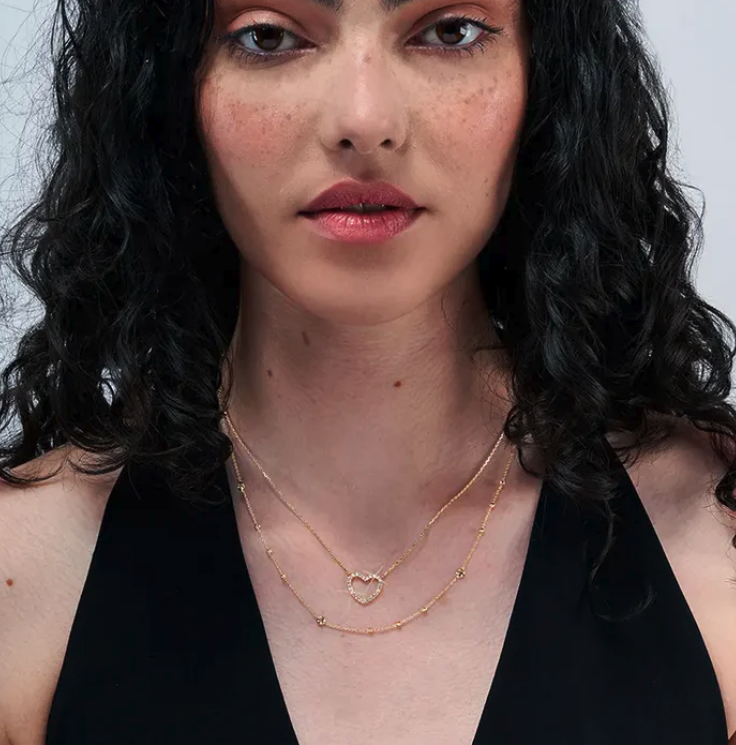
Fine jewellery has always reflected the values of its time. From ancient goldwork shaped by ritual and power, to diamond jewellery defined by twentieth century ideals of status and permanence, each era leaves a visible imprint on how jewellery is made and understood. In 2026, fine jewellery is entering another clear transition. Lab diamonds are no longer positioned at the edges of the industry. They are increasingly central to how modern fine jewellery is designed, purchased and worn.
This shift is not about replacing tradition. It is about expanding it. Lab diamonds are reshaping fine jewellery not by diminishing craftsmanship or meaning, but by opening new creative, ethical and practical possibilities that align with how people live today.
To understand why lab diamonds are shaping the future of fine jewellery, it helps to first consider how diamonds came to occupy their current cultural position.
Diamonds have been admired for centuries, but their association with fine jewellery as we understand it today is relatively recent. Geological research from The Natural History Museum explains that diamonds were first valued for hardness and durability long before brilliance or romance became part of their story. For much of history, diamonds were rare curiosities rather than symbols of love.
The modern diamond jewellery narrative took shape in the twentieth century, shaped by industrial mining, global distribution and mass marketing. Cultural analysis from BBC Culture has explored how advertising reframed diamonds as emotional necessities, embedding them into ideas of commitment and luxury.
This period also established a hierarchy around diamond sourcing. Natural origin became synonymous with value, while alternatives were framed as inferior. For decades, consumers accepted this framing largely because there was little accessible information to challenge it.
That information gap no longer exists.
Scientific understanding has transformed how diamonds are evaluated. Research published by Nature confirms that lab grown diamonds are chemically, physically and optically identical to mined diamonds. They share the same crystal structure, hardness and optical behaviour. From a material perspective, there is no functional distinction.
This scientific clarity has allowed lab diamonds to move beyond the category of alternative and into the category of fine material.
As a result, fine jewellery design has begun to change.
Traditionally, fine jewellery design was often constrained by rarity and cost. Designers worked within narrow parameters, particularly when using larger or higher quality diamonds. Lab diamonds remove many of these constraints, allowing design decisions to be led by proportion, balance and intention rather than limitation.
Design analysis from Dezeen highlights how contemporary jewellery increasingly prioritises form, wearability and architectural balance over maximal display. Lab diamonds support this approach by making high quality stones more accessible for experimental and refined design.
This freedom is especially visible in fine jewellery categories beyond engagement rings. Earrings, bracelets and necklaces are increasingly designed with presence and coherence in mind, rather than simply showcasing the largest possible stone.
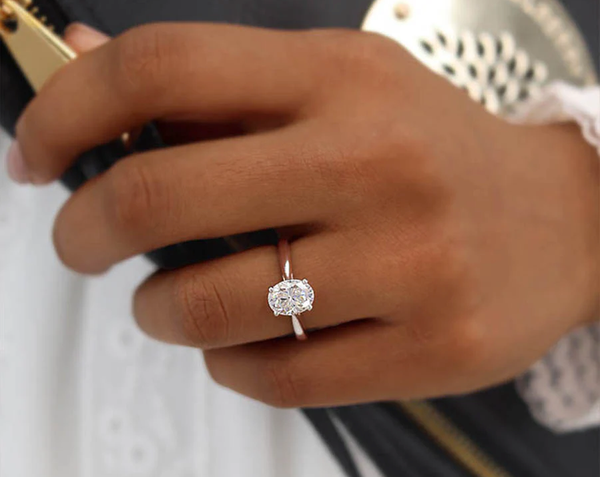
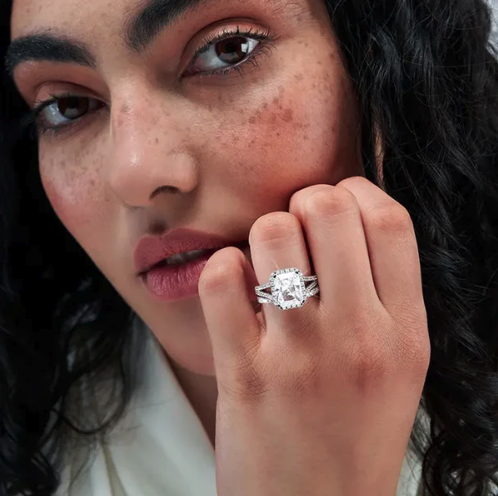
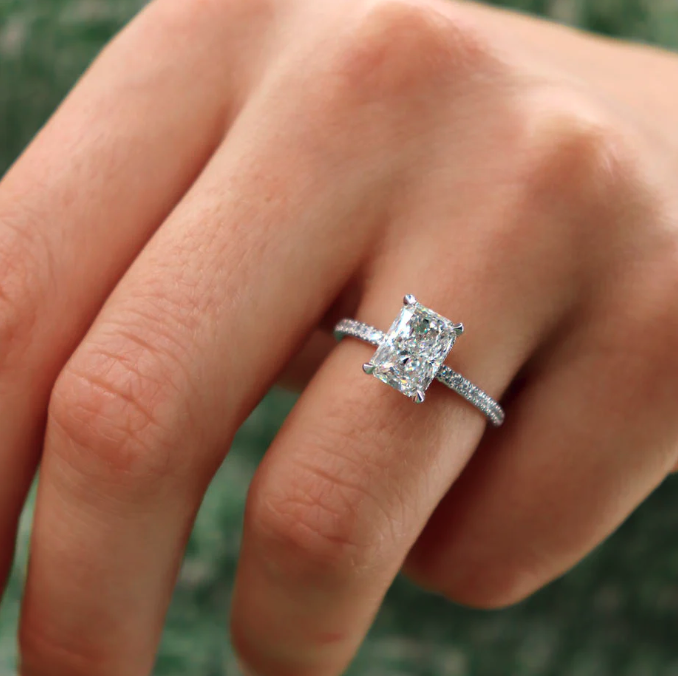
The growing prominence of lab diamond fine jewellery reflects this shift. Pieces are designed to be worn regularly, integrated into daily life rather than reserved for rare occasions. This aligns with broader changes in how luxury is understood.
Market insight from The Financial Times notes that modern luxury consumers increasingly value relevance and longevity over exclusivity for its own sake. Jewellery that fits seamlessly into everyday life is perceived as more luxurious than jewellery that feels ceremonial or impractical.
Lab diamonds support this evolution by making durability and refinement accessible without excess.
Ethics and transparency are also shaping the future of fine jewellery. Many buyers now expect to understand where materials come from and how they are produced. This expectation is not limited to environmental impact. It extends to labour practices, supply chain clarity and long term responsibility.
Reporting from National Geographic has explored how increased awareness of mining practices has influenced consumer attitudes towards jewellery sourcing. While responsible mining initiatives exist, lab diamonds offer a level of traceability that aligns naturally with contemporary ethical expectations.
This transparency does not replace emotional meaning. It reframes it. For many buyers, knowing the origin of a diamond adds confidence rather than detracts from romance.
The rise of lab diamonds has also shifted how fine jewellery is valued emotionally. Historically, value was closely tied to scarcity. Rarity was equated with worth. Modern buyers are increasingly questioning this assumption.
Cultural research from The British Academy suggests that value is now more often associated with intention and alignment than with scarcity alone. In this context, lab diamonds are not seen as lesser, but as deliberate.
This reframing has encouraged a more nuanced understanding of luxury. Luxury becomes about choice rather than constraint.
Fine jewellery made with lab diamonds also reflects changes in how jewellery is worn. Pieces are no longer expected to remain untouched or carefully stored. They are worn across work, travel and informal settings.
Workplace culture research from Harvard Business Review highlights how personal expression increasingly intersects with professional identity. Jewellery that is durable, versatile and understated often fits more naturally into modern professional environments.
Lab diamonds support this wearability by allowing designs that prioritise comfort and resilience without sacrificing visual refinement.
Another important aspect of the future of fine jewellery is longevity. Jewellery is increasingly viewed as something that should evolve with the wearer, not remain static.
Psychological research discussed by Psychology Today suggests that emotional attachment to objects strengthens when those objects integrate easily into daily routines. Jewellery that feels too precious to wear often loses emotional relevance over time.
Lab diamond fine jewellery encourages use rather than preservation. Pieces are designed to be lived in, not protected from life.
The shift towards lab diamonds has also encouraged more informed consumers. Buyers are no longer satisfied with surface level narratives. They want to understand materials, processes and implications.
Educational resources from The Gemological Institute of America have contributed to this by making gem science accessible to the public. As consumers become more knowledgeable, simplistic hierarchies lose credibility.
This has led to a more balanced conversation between natural and lab grown diamonds. Rather than framing one as superior, the focus has shifted to suitability, values and personal meaning.
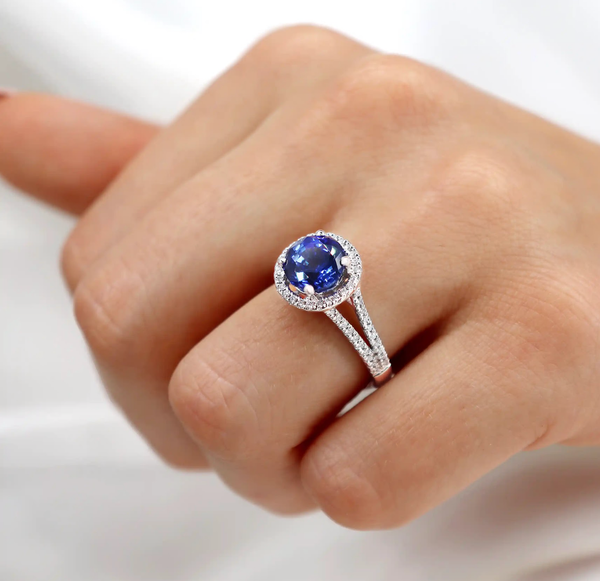
Fine jewellery brands that embrace this perspective tend to present lab diamonds not as replacements, but as part of a broader material palette.
Exploring contemporary collections such as those found under lab diamond fine jewellery reflects this approach. Pieces are designed with the same attention to craftsmanship, proportion and finish traditionally associated with fine jewellery, while offering modern clarity around sourcing and intent.
Importantly, the future of fine jewellery with lab diamonds does not erase natural diamonds from the conversation. Natural diamonds continue to hold meaning for those drawn to geological history and rarity.
What has changed is the assumption that fine jewellery must be anchored to one material narrative.
Industry analysis from McKinsey & Company suggests that consumers increasingly expect choice rather than prescription. Brands that support informed decision making build stronger long term trust.
Fine jewellery is no longer about proving worth through material scarcity. It is about expressing values through considered design.
This evolution is also influencing how jewellery is passed down. Heirlooms are increasingly defined by emotional resonance rather than origin story alone. A piece worn and loved for decades carries meaning regardless of how the diamond was formed.
Museum commentary from The Victoria and Albert Museumhas explored how jewellery acquires cultural value through use, context and memory rather than material origin alone. Lab diamond jewellery participates fully in this tradition.
Looking ahead, the future of fine jewellery will likely be defined by flexibility. Pieces will be designed to adapt, stack, layer and evolve with the wearer.
Lab diamonds support this adaptability by removing unnecessary constraints. Designers can prioritise proportion, harmony and wearability without compromise.
The future of fine jewellery being made with lab diamonds is not a break from luxury. It is a refinement of it.
It reflects a world where knowledge is accessible, values are diverse and confidence comes from understanding rather than adherence to tradition.
In 2026, fine jewellery is no longer defined by where a diamond comes from alone. It is defined by how thoughtfully it is chosen, how beautifully it is made and how confidently it is worn.
Lab diamonds are not the future because they are new. They are the future because they align with how modern luxury is lived.