The History of the Yellow Sapphire: Meaning, Myth and the Rise of Modern Innovation
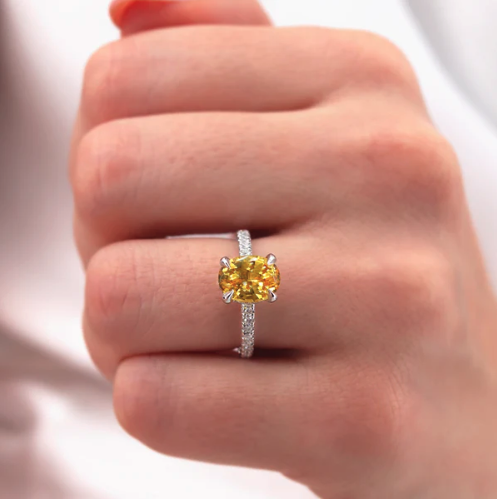
Yellow sapphires have been admired for thousands of years, yet they remain one of the most quietly sophisticated gemstones in fine jewellery. Neither as immediately recognisable as blue sapphires nor as culturally dominant as diamonds, yellow sapphires have always appealed to those drawn to symbolism, intellect and warmth rather than spectacle. Their history spans ancient belief systems, evolving gemmology and, more recently, scientific innovation through lab grown creation.
Understanding the yellow sapphire requires looking beyond colour alone. It is a story shaped by geology, spirituality, craftsmanship and changing attitudes towards what makes a gemstone valuable.
Sapphires belong to the corundum family, a crystalline form of aluminium oxide. While blue sapphires dominate popular imagination, corundum occurs naturally in a wide range of colours. Yellow sapphires derive their colour primarily from trace amounts of iron incorporated during crystal formation. The result is a spectrum that ranges from pale lemon through to deep golden hues.
Natural yellow sapphires have been known and revered for millennia. Some of the earliest documented references originate in South Asia, particularly in India and Sri Lanka, where yellow sapphires were associated with knowledge, prosperity and divine favour. In Vedic astrology, yellow sapphire, known as Pukhraj, is linked to the planet Jupiter and believed to promote wisdom, clarity and success.
Cultural artefacts and interpretations held by the British Museum show how gemstones in ancient societies were not viewed as decorative objects alone. They were believed to carry metaphysical properties and cosmic influence. Yellow sapphires were worn as talismans, chosen for their perceived ability to align intellect and fortune.
In the ancient Mediterranean world, yellow sapphires were valued, though often misunderstood. Greek and Roman writers frequently grouped gemstones by colour rather than mineral composition. As a result, yellow sapphires were sometimes confused with topaz or citrine.
Research published by the Smithsonian National Museum of Natural History explains that early gem classification relied heavily on visual appearance and hardness testing. Stones that resisted scratching and retained lustre were prized, even if their precise mineral identity was unclear.
During the Middle Ages, yellow sapphires acquired new layers of meaning within European thought. Medieval lapidaries attributed moral and intellectual virtues to gemstones, linking colour with spiritual symbolism. Yellow stones were associated with illumination, discernment and truth.
Manuscripts preserved by the British Library describe yellow gemstones as aids to clear thinking and protection against deception. While blue sapphires were associated with heaven and faith, yellow sapphires were linked to earthly wisdom and judgement.
The Renaissance marked a turning point in gemstone understanding. Advances in science and observation led to more accurate differentiation between gemstone species. Yellow sapphires emerged as distinct from topaz, recognised for their durability and subtle brilliance.
Improved cutting techniques allowed yellow sapphires to display greater light return, enhancing their appeal in jewellery. Their colour was often described as golden rather than vivid, lending itself to refined, intellectual design rather than ostentatious display.
Jewellery collections examined by the Victoria and Albert Museum show yellow sapphires used in rings, pendants and brooches, often paired with diamonds or pearls. Their warmth softened structured designs and added nuance to classical compositions.
The nineteenth century expanded access to natural yellow sapphires through new mining discoveries, particularly in Sri Lanka. These stones were admired for their clarity and consistent colour, and they became increasingly sought after by European jewellers.
Victorian jewellery placed great emphasis on symbolism and sentiment. Yellow sapphires were associated with optimism, loyalty and intellectual partnership, qualities that resonated with the era’s ideals of marriage and companionship.
Gemstone research from the Natural History Museum documents how Victorian gemmology refined classification systems, firmly establishing yellow sapphire as a recognised and desirable variety of corundum.
In the early twentieth century, yellow sapphires occupied a quieter but deliberate niche. While diamonds and blue sapphires dominated mainstream jewellery, yellow sapphires appealed to those seeking individuality and warmth. Their colour complemented the geometric designs of the Art Deco era, particularly when set against platinum or white metals.
Design analysis from the Metropolitan Museum of Art shows yellow sapphires used to soften architectural jewellery, adding warmth and contrast without undermining modernist clarity.
The latter half of the twentieth century introduced a profound shift in gemstone history through scientific advancement. The development of lab grown gemstones transformed how sapphires could be produced, controlled and understood.
Lab grown yellow sapphires are chemically, physically and optically identical to natural sapphires. Created using controlled processes that replicate natural crystal growth, they offer remarkable consistency in colour, clarity and structure.
Educational resources from the Gemological Institute of America explain that lab grown sapphires share the same crystal lattice and physical properties as natural stones. The difference lies solely in origin, not in composition or performance.
The rise of lab grown yellow sapphires has reshaped how this gemstone is perceived in modern jewellery. What was once geographically limited and unpredictable can now be produced with precision, supporting intentional design and consistent quality.
From a design perspective, lab grown yellow sapphires allow jewellers to work with specific colour tones, from soft lemon to rich golden hues. This control aligns with contemporary aesthetics that value balance, subtlety and purpose.
Cultural commentary in Vogue has noted a renewed appreciation for coloured gemstones as expressions of individuality. Yellow sapphires offer warmth and optimism without departing from the heritage of fine jewellery.
There is also a philosophical shift underpinning the acceptance of lab grown stones. As consumers become more informed, transparency, innovation and scientific progress are increasingly valued alongside tradition.
Analysis published by the World Economic Forum highlights how technological innovation is redefining luxury by expanding choice rather than diminishing meaning. Lab grown sapphires exemplify this evolution, offering an alternative that complements natural gemstones rather than replacing them.
Symbolically, yellow sapphires continue to represent clarity, intellect and optimism. Whether formed over millions of years beneath the earth or grown through modern science, their meaning remains remarkably consistent.
In contemporary jewellery, yellow sapphires are often chosen by those who value distinction without excess. Their colour feels luminous rather than commanding, confident rather than conventional.
Looking ahead, the future of yellow sapphires appears secure. As colour regains prominence in fine jewellery and innovation continues to reshape production, yellow sapphires occupy a compelling middle ground between heritage and progress.
They connect ancient belief systems with modern technology, natural rarity with scientific precision.
From sacred talisman to contemporary gemstone, the yellow sapphire has evolved without losing its identity.
It remains a stone defined not by trend, but by meaning.
A gemstone of light, intellect and quiet confidence, shaped by history and ready for the future.