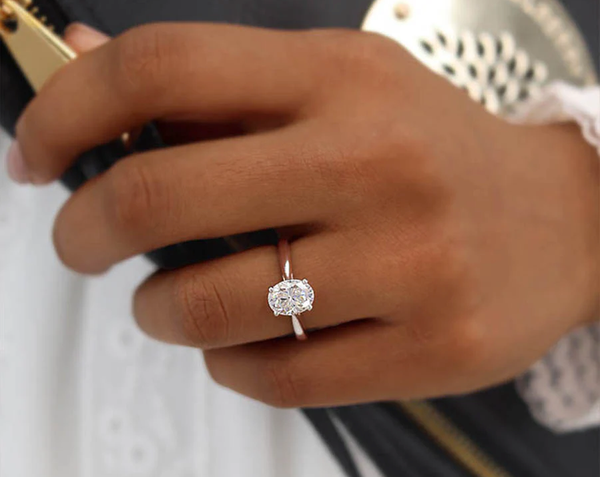
The Journey of a Diamond: From Deep Earth to Dazzling Ring
A diamond’s brilliance hides an extraordinary origin. Long before it sparkled in a ring box, it existed deep within the Earth, shaped by natural forces beyond imagination.
According to the GIA, diamonds form when carbon atoms are compressed under immense heat and pressure more than 100 miles below the surface. Their story is one of transformation — from raw element to symbol of love.
The Birth of a Diamond
Billions of years ago, carbon atoms in the Earth’s mantle were exposed to conditions so extreme that they crystallised into diamond. Temperatures reached over 1,200°C, while pressure forced the atoms into a tightly packed lattice structure that makes diamonds the hardest material known to science.
These crystals remained buried for millions of years until volcanic activity brought them closer to the surface through kimberlite and lamproite pipes.
As The BBC explains, only certain volcanic events have the power to carry diamonds intact from the mantle to the surface. This rarity is part of what makes natural diamonds so valuable.
From Mine to Market
Once discovered, rough diamonds are carefully extracted from ore and transported for cutting and grading. Expert cutters then determine how best to shape each stone to maximise its sparkle.
The GIA emphasises that a diamond’s cut — more than any other factor — defines its beauty. Through precise polishing, rough stones are transformed into brilliant gems.
As The Guardian notes, the artistry of diamond cutting remains one of the most skilled crafts in jewellery, blending science, mathematics and design.
The Rise of Lab-Grown Diamonds
In the 21st century, diamond formation no longer belongs solely to nature. Scientists now replicate the Earth’s process in laboratories using High Pressure High Temperature (HPHT) and Chemical Vapour Deposition (CVD) methods.
The BBC reports that lab-grown diamonds are gaining popularity in the UK due to their lower environmental impact and transparent sourcing. They are identical to natural diamonds in structure and composition, representing modern innovation meeting ancient beauty.
From the Earth to Your Finger
Whether mined or lab-grown, each diamond undergoes grading, certification and setting before becoming part of an engagement ring. The GIA ensures consistency in evaluation through its globally recognised 4Cs system.
When you look at a diamond ring, you are seeing more than sparkle. You are witnessing a journey that began billions of years ago beneath the Earth’s crust.
Conclusion
Diamonds are more than symbols of romance; they are pieces of the planet’s history.
As The Guardian beautifully summarises, every diamond represents a moment of cosmic coincidence — forged under pressure, perfected by craftsmanship, and cherished as a token of love.