The Return of the Toi et Moi Ring: Why UK Couples Love Two Stone Designs in 2026
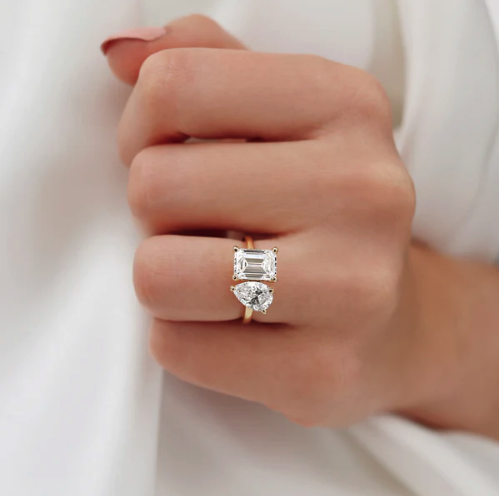
There are few designs in jewellery that feel as simultaneously historic and modern as the Toi et Moi ring. The name translates from French to “You and Me”, a romantic phrase that has echoed through centuries of art, literature and aristocratic jewellery design. In 2026, this centuries old style has surged back into British fashion with remarkable force, becoming one of the most requested engagement ring styles among Gen Z and millennial couples. Its symbolism resonates in an era that values individuality and meaningful connection, and its aesthetic appeals to those who appreciate sculptural elegance and subtle symbolism.
The Toi et Moi ring is not new, although its revival feels distinctly contemporary. It rose to prominence during the eighteenth and nineteenth centuries, becoming popular in France during the Napoleonic period. Over the years, it has appeared on the hands of royals, actors and musicians, evolving through every style era without losing its central meaning. In 2026, its return feels less like a comeback and more like a reclamation of an idea that has always belonged to love stories.
According to Vogue UK, British couples are rethinking what an engagement ring should say about their relationship. Instead of following strict traditions, many are choosing designs that represent partnership, equality and individuality. The Toi et Moi ring, with its paired gemstones and mirrored structure, embodies the idea of two people meeting as equals. Its design holds symbolism that feels authentic and deeply relevant to modern relationships.
A Love Story Written in Gemstones
Every Toi et Moi ring carries two stones, often contrasting in colour, shape or origin. The stones can sit side by side or intertwine as if leaning toward each other. The composition suggests duality and unity, a balance of differences and similarities. It is a ring that embraces individuality while celebrating partnership.
As The Guardian has noted, younger British couples increasingly value jewellery that reflects emotional depth rather than tradition for tradition’s sake. Engagement rings are no longer about adhering to the expectations of previous generations. Instead, couples want a ring that feels personal and narrative driven.
The Toi et Moi design easily accommodates this sentiment. A couple may choose birthstones, complementary gemstone colours, or shapes that echo their personalities. Some choose one natural diamond paired with one lab grown diamond, reflecting a modern blending of heritage and sustainability. Others choose a coloured gemstone alongside a traditional white diamond, creating a ring that feels both classic and artistic.
The design allows extraordinary creative variation, which is why jewellery historians often describe it as one of the most adaptable engagement ring styles ever created.
A Design with Royal and Historical Significance
The Toi et Moi ring has deep roots in European romantic history. Perhaps the most famous example is the engagement ring Napoleon Bonaparte gave to Joséphine de Beauharnais in 1796. The ring featured a pear shaped blue sapphire beside a matching pear shaped diamond, a pairing that represented passion and loyalty. As BBC Culture has written, the ring has since become a symbol of French romantic tradition and remains one of the most iconic royal engagement rings ever created.
Throughout the Victorian and Edwardian eras, the Toi et Moi design flourished again. It aligned with the sentimental jewellery styles of the nineteenth century, when symbolism and emotional significance were paramount. Couples viewed jewellery as a secret language and the two stone format offered endless opportunities for coded meaning.
By the early twentieth century, the design had evolved into Art Nouveau and Art Deco variations. These movements emphasised geometry, fluidity and artistic expression, and the Toi et Moi structure proved perfectly suited to both. It appeared in European design houses, Hollywood jewellery collections and couture ateliers, each interpreting the style through its own aesthetic lens.
The Celebrity Influence: A Modern Revival
In recent years, the Toi et Moi ring has become a celebrity favourite, accelerating its resurgence among the wider public. When celebrities embrace a style with deep historical roots, it often signals a broader cultural shift. The Toi et Moi ring is no exception.
One of the most famous modern examples belongs to pop icon Ariana Grande, whose engagement ring features a tilted oval diamond paired with a delicate pearl. The combination is both modern and deeply personal, a detail highlighted by Cosmopolitan UK when exploring the meaning behind celebrity jewellery choices.
Another defining moment came when actor and style icon Megan Fox received a Toi et Moi ring featuring an emerald paired with a diamond. The ring was widely discussed for its symbolism and striking design, with coverage from The New York Times emphasising how the two stone format creates a powerful visual narrative.
This dual stone style has also appeared on royal figures, aristocratic families and stars across the fashion world. In each case, the symbolism remains the same. Two stones represent two souls, two journeys and two lives intertwining.
Why British Couples Are Choosing It in 2026
The renewed popularity of the Toi et Moi ring is tied closely to broader cultural attitudes. Modern couples prioritise equality, partnership and authenticity, values that the ring’s design communicates effortlessly. According to BBC News, younger consumers in the UK have redefined luxury as something personal, meaningful and ethically aligned with their values. This shift extends naturally to fine jewellery and engagement rings.
Additionally, British couples increasingly value individuality and creative freedom. Traditional single stone settings can feel limiting to those who want their engagement ring to express personal meaning or shared symbolism. The Toi et Moi ring allows unparalleled customisation. Every decision, from stone shape to colour pairing, tells part of a story.
There is also a practical element to this revival. The design allows for balance in proportions, meaning couples can choose a combination of sizes and styles that suit their lifestyle and budget. This flexibility aligns well with the financial awareness that Financial Times describes as a defining trait of millennial and Gen Z luxury buying habits.
A Symbol of Duality and Equality
Perhaps the most compelling reason for the Toi et Moi ring’s return is its symbolism. Unlike traditional solitaires, which place a single stone at the centre, the Toi et Moi layout visually represents partnership. It shows two stones standing together rather than one being elevated above the other.
In a cultural landscape where equality and mutual respect are considered foundational values, this quiet symbolism feels particularly resonant. It is not simply a design choice but also a philosophical expression of what modern love means.
As Vogue UK observed in a recent feature on engagement ring trends, couples are seeking rings that reflect their emotional identity rather than societal expectations. The Toi et Moi ring perfectly embodies that movement, offering symbolism that feels sincere and artistically compelling.
Conclusion: A Romantic Tradition Reborn for a New Era
The Toi et Moi ring is one of the rare jewellery styles that spans centuries without ever losing its emotional urgency. In 2026, its resurgence reflects the values of a generation that celebrates individuality, equality and love as a partnership rather than a hierarchy.
Its history is rich, its symbolism timeless and its aesthetic endlessly adaptable. Whether inspired by Napoleon and Joséphine, by Hollywood icons or by modern British minimalism, the ring continues to resonate with couples who want something meaningful and expressive.
As long as people fall in love and seek a symbol that resonates on a deeper emotional level, the Toi et Moi ring will remain not just a trend but a timeless talisman of connection.