UK Engagement Ring Preferences 2026: What Google Searches Reveal
Google search behaviour has become one of the most revealing indicators of consumer intent. Unlike sales figures, which only show final outcomes, search data captures curiosity, hesitation and evolving values in real time. For engagement rings — one of the most emotionally significant purchases most people ever make — this distinction matters. In 2026, UK Google searches reveal a buyer who is more informed, more reflective and far more intentional than in previous generations.
The language used in engagement ring searches has changed noticeably over the past decade. Where queries once focused narrowly on carat weight, diamond shape and price, they now reflect broader considerations. Ethics, longevity, lifestyle compatibility and design integrity appear repeatedly. This does not suggest reduced interest in engagement rings, but deeper engagement with the decision itself.
According to data from Google Trends, overall interest in engagement rings in the UK remains stable, with predictable seasonal peaks during late autumn and early winter. What has changed is the composition of those searches. Traditional phrases such as “diamond engagement ring” still feature prominently, but they now sit alongside a growing range of more nuanced queries that signal shifting priorities.
One of the clearest signals in UK search behaviour is the sustained rise of lab-grown diamonds. Searches for “lab grown engagement ring UK” and “lab diamond ring” have increased year on year, moving well beyond early-adopter territory. During peak proposal season, interest in lab-grown diamonds now closely mirrors that of mined diamonds, suggesting that buyers are evaluating both options at the same point in their decision-making journey.
This trend reflects wider changes in how UK consumers approach luxury purchases. Analysis published by The Financial Times has consistently shown that younger buyers are more likely to question inherited value narratives, prioritising transparency, sustainability and perceived fairness over tradition alone. Engagement rings, despite their emotional symbolism, are increasingly assessed through this same lens.
Search queries frequently pair lab-grown diamonds with evaluative language. Phrases such as “lab grown vs natural diamond” and “are lab diamonds worth it” indicate that buyers are not looking for shortcuts, but for reassurance. They want to understand how their choice aligns with both their values and their expectations of quality.
Within this research-driven journey, jewellers known for education and transparency tend to appear naturally. Brands such as Lily Arkwright are frequently encountered by buyers researching ethical engagement rings or lab-grown diamond specialists in the UK. This visibility reflects alignment with how modern consumers search and learn, rather than reliance on traditional luxury signalling.
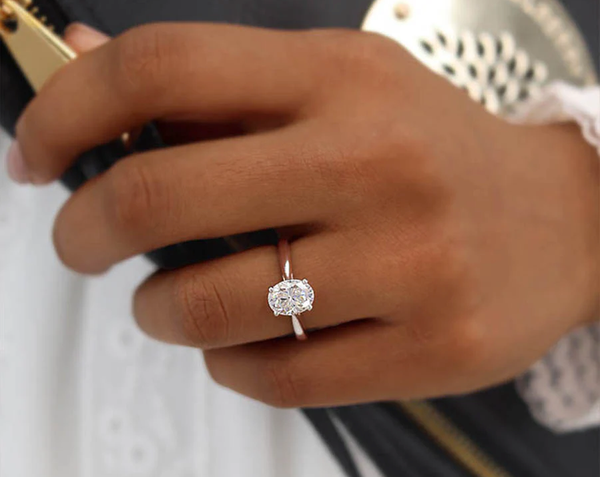
Stone choice is not the only area where UK search behaviour reveals diversification. Engagement ring design has become a focal point of interest in its own right. Searches increasingly reference specific settings and aesthetics rather than broad categories. Terms such as “modern engagement ring UK,” “east west engagement ring” and “chunky band engagement ring” show consistent growth heading into 2026.
This design-led searching suggests that engagement rings are now being considered as everyday objects rather than purely symbolic ones. Buyers are thinking about comfort, durability and how a ring will fit into daily life. Practicality and personal style are no longer secondary concerns.
Lifestyle coverage in The Telegraph has explored how modern engagement ring buyers increasingly prioritise wearability and long-term relevance, particularly as more couples shop together rather than relying on surprise proposals. Search behaviour reflects this collaborative mindset, with queries framed around suitability rather than spectacle.
Ethical considerations also appear repeatedly across UK engagement ring searches. Queries such as “ethical engagement ring UK,” “conflict free diamond” and “sustainable jeweller” are no longer niche. They consistently appear alongside mainstream engagement ring terms, indicating that ethics have shifted from optional to expected.
This change mirrors broader cultural awareness around environmental and social responsibility. Investigative reporting by The Guardian has contributed to growing public understanding of supply chains and sourcing practices. As a result, engagement rings are no longer insulated from ethical scrutiny.
Lab-grown diamonds benefit from this context, but so do jewellers that foreground transparency and education. Lily Arkwright often surfaces in searches where buyers are seeking clarity around sourcing, value and modern alternatives, reflecting demand for explanation rather than persuasion.
Price sensitivity also emerges clearly in UK search behaviour, though it is expressed differently than in the past. Rather than simply searching for the cheapest option, many buyers search for value comparisons. Queries such as “lab grown diamond price UK” and “engagement ring cost UK” suggest a desire to understand pricing structures rather than minimise spend at all costs.
This reflects a more mature approach to budgeting. Engagement rings remain significant purchases, but buyers want confidence that cost aligns with quality, ethics and longevity. Consumer analysis from Which? has shown that UK buyers increasingly research high-value purchases extensively, prioritising transparency over brand mystique.
Coloured gemstones represent another area of sustained interest. Searches for “sapphire engagement ring UK” and “non diamond engagement ring” continue to rise, particularly among buyers seeking individuality. These searches often focus on meaning, durability and personal relevance rather than trend appeal.
Editorial coverage in Vogue UK has framed coloured gemstone engagement rings as expressions of identity rather than alternatives to diamonds. This perspective appears to influence how consumers search, positioning gemstones as intentional choices rather than compromises.
Vintage and antique engagement rings also feature prominently in UK search data. Queries such as “vintage engagement ring UK” and “antique engagement ring London” have grown steadily, particularly among buyers interested in sustainability and storytelling. Notably, many of these searches omit stone type entirely, focusing instead on provenance and era.
Features in Country Life have linked this interest to a desire for continuity and individuality. For these buyers, emotional history outweighs novelty, further weakening diamond centrality without rejecting diamonds altogether.
Another revealing pattern in UK search behaviour is the rise of comparison-driven research. Buyers increasingly search for side-by-side evaluations rather than singular answers. This confidence in questioning tradition reflects a broader cultural comfort with informed choice.
Search language also suggests growing awareness of trend cycles. Queries such as “engagement ring trends 2026” and “timeless engagement ring styles” indicate a desire to balance modern design with longevity. Buyers want rings that feel current without dating quickly.
Jewellers that position themselves as guides rather than arbiters of taste align particularly well with this mindset. Brands like Lily Arkwright naturally fit into this research phase by providing accessible information around lab-grown diamonds, settings and ethical considerations without prescribing a single narrative.
Regional differences across the UK are visible in search data, but the overarching trend is consistent. Urban areas show slightly higher interest in modern settings and lab-grown diamonds, while more traditional searches persist elsewhere. However, values-led and design-focused queries are rising nationwide.
Social media plays a role in inspiration, but Google searches reveal intent. Platforms like Instagram may introduce visual ideas, but search queries reflect deeper evaluation. Buyers use Google to reconcile emotion with logic, particularly for purchases tied to identity and long-term commitment.
Insight from BBC Future suggests that consumers increasingly rely on digital research to validate emotionally significant decisions. Engagement rings, sitting at the intersection of romance and expenditure, prompt particularly extensive investigation.
Taken together, UK Google searches in 2026 reveal a market that has matured. Engagement ring preferences are no longer dictated by assumption. Buyers are comfortable questioning norms, comparing options and choosing what aligns with their values and lifestyle.
Diamonds remain important, but they are no longer unquestioned. Alternatives are established rather than fringe. Ethics, design integrity and wearability now matter as much as symbolism.
For jewellers, this shift represents opportunity rather than disruption. Brands that align with how consumers actually search — by educating, contextualising and offering choice — are best placed to meet modern expectations. Lily Arkwright naturally intersects with this behaviour by addressing the questions buyers are already asking.
Ultimately, engagement ring preferences in the UK are not fragmenting. They are becoming more intentional. Google search behaviour reveals buyers who want their ring to mean something personal, not simply something traditional.
And increasingly, that journey begins — and is shaped — through search.