What Band Width Should Your Engagement Ring Be? A UK Guide
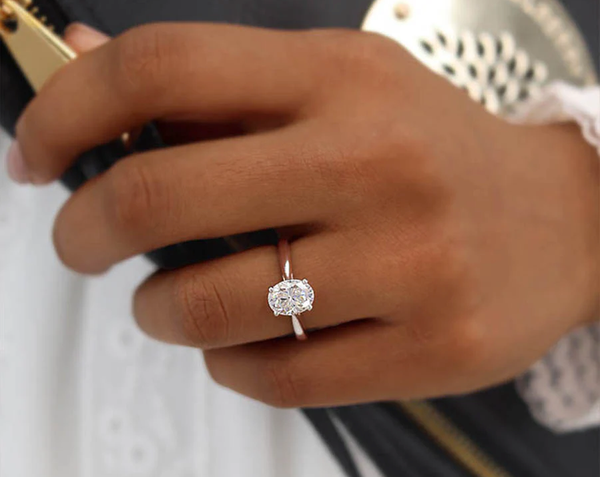
Band width is one of the most underestimated decisions in engagement ring design. While centre stones, settings and metal choices tend to dominate conversation, the width of the band quietly determines how a ring looks, feels and wears over time. In many ways, band width is the backbone of the ring — structurally, visually and emotionally.
In recent years, UK engagement ring buyers have become far more design-literate. Rather than asking only what looks beautiful on the day of the proposal, couples increasingly want to know what will feel right years down the line. Band width plays a central role in that longevity.
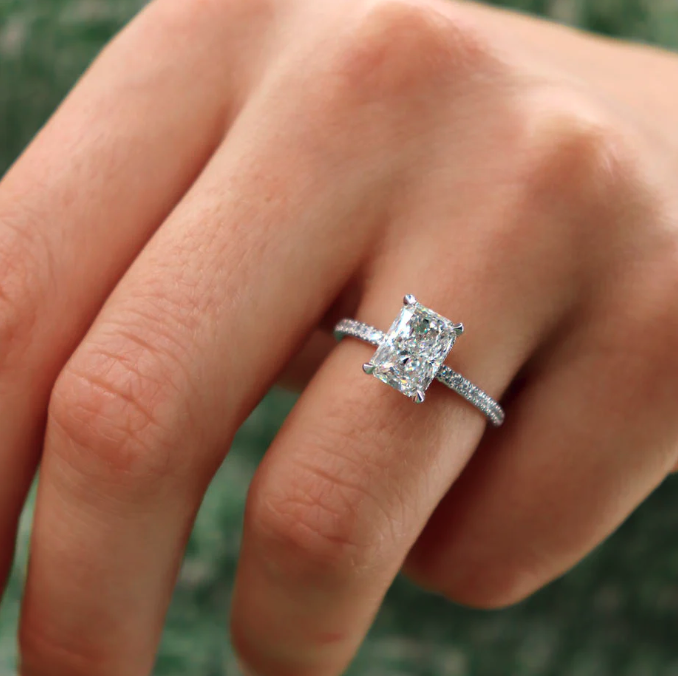
Despite this, many buyers still default to very thin bands without fully understanding the implications. Ultra-slim bands may look delicate online, but in real life they can feel out of proportion, wear faster and struggle to support certain stone sizes. As engagement ring design continues to evolve, band width is finally receiving the attention it deserves.
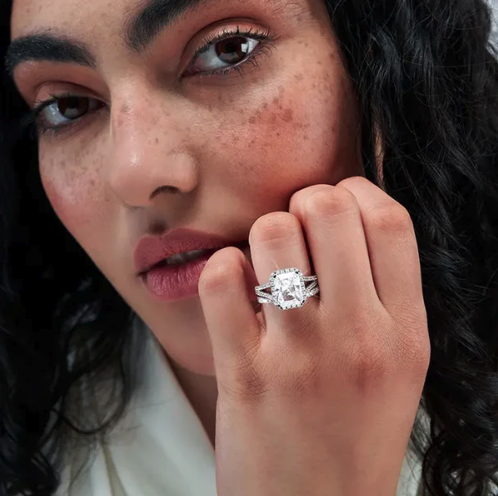
One of the most important factors in choosing band width is the size of the centre stone. A ring must feel balanced. When the band is too thin relative to the stone, the design can look top-heavy, visually unstable or even unfinished. This imbalance becomes more noticeable over time, particularly as tastes shift towards bolder, more confident jewellery.
Jewellery designers often stress that the band should visually anchor the stone rather than disappear beneath it. Coverage in Vogue UK has explored how proportion — not just size — defines whether a ring feels refined or fragile. A well-chosen band width creates harmony between the stone and the setting.
From a technical standpoint, most jewellers advise that an engagement ring band should never be thinner than 1.5mm. Below this point, durability becomes a concern. Bands thinner than 1.5mm are more prone to bending, warping and long-term wear, particularly for rings worn every day.
This guidance is not about aesthetics alone. Engagement rings are not occasional jewellery. They are worn while working, travelling and living. A band that is too thin may look elegant initially but can compromise the integrity of the ring over time.
That said, there are circumstances where a slightly slimmer band can work. Some petite designs may suit a band width of around 1.65mm, particularly if the centre stone is small and the wearer has very fine fingers. In these cases, the key factor is proportion. The band must still feel capable of supporting the stone visually and structurally.
Jewellers often caution that even at 1.65mm, the ring must be crafted carefully. Metal choice, setting style and stone size all become more critical. This is why many buyers who initially gravitate towards ultra-thin bands ultimately opt for something slightly wider once they understand the long-term considerations.
For this reason, a band width of 2mm is widely recommended as a reliable standard. It offers an ideal balance between elegance and durability. At 2mm, a band feels refined without being fragile and substantial without being heavy. It supports a wide range of stone sizes and settings comfortably.
Editorial jewellery coverage in The Telegraph has noted that modern engagement ring buyers increasingly prioritise longevity alongside appearance. The 2mm band has become something of a quiet benchmark, offering reassurance without sacrificing style.
This width also provides flexibility. A 2mm band works equally well with solitaires, hidden halos and more architectural settings. It feels contemporary without chasing trends, making it particularly appealing to couples who want a ring that will not date.
Brands such as Lily Arkwright frequently recommend 2mm bands for engagement rings precisely because they balance wearability, proportion and modern aesthetics. The result is a ring that feels considered rather than compromised.
In recent years, however, engagement ring trends have continued to move beyond the 2mm baseline. Bands measuring 2.4mm and above are becoming increasingly popular, particularly among buyers drawn to stronger, more sculptural silhouettes.
This shift reflects broader changes in jewellery taste. As fashion has embraced bolder proportions — from tailoring to accessories — engagement rings have followed. Wider bands feel confident and intentional rather than purely delicate.
Features in Harper’s Bazaar UK have highlighted the return of substantial jewellery as a marker of modern luxury. In engagement rings, this translates into bands that feel present on the hand rather than barely there.
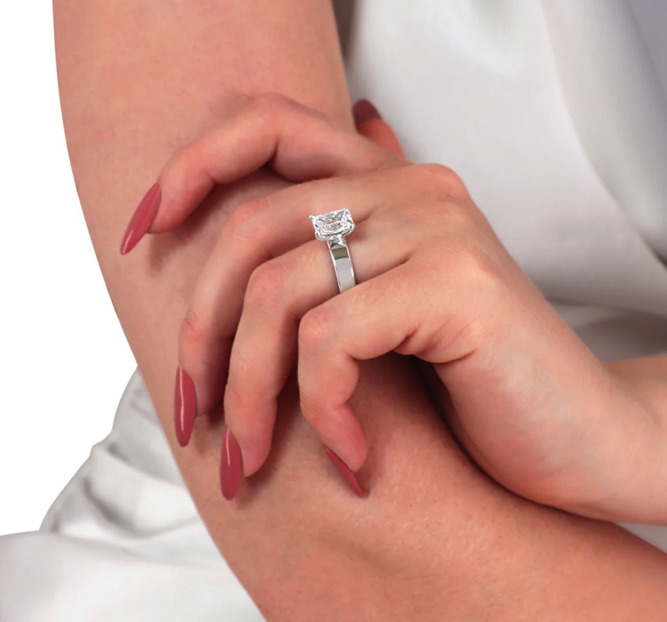
Bands measuring 2.4mm, 2.7mm or even 3mm create a very different visual language. They emphasise form and structure, often allowing the centre stone to sit lower and feel more integrated into the design. The ring becomes a complete object rather than a stone perched on a wire-thin base.
This trend also aligns with the rise of chunky engagement rings. Once considered unconventional, chunkier bands are now firmly in the mainstream. They appeal to buyers who want their ring to feel bold, wearable and unapologetically modern.
Chunky bands also offer practical advantages. They distribute weight more evenly, feel secure on the finger and tend to age exceptionally well. Over time, they maintain their presence rather than thinning or losing definition.
Cultural analysis in BBC Culture has explored how contemporary luxury increasingly favours solidity and intention over fragility. The popularity of wider engagement ring bands reflects this shift perfectly.
Stone size plays a particularly important role here. As centre stones increase in size, wider bands often create better balance. A large stone paired with a very thin band can look disproportionate, whereas a wider band grounds the design and enhances its impact.
This does not mean that larger stones require excessively thick bands, but it does mean that proportion matters more than ever. A 2.4mm or wider band can make even a substantial stone feel elegant rather than overpowering.
Lab-grown diamonds have also influenced band width preferences. Buyers choosing lab-grown stones often prioritise design integrity and balance over sheer carat weight. This has encouraged more thoughtful choices around band width, with many opting for slightly wider bands to create harmony.
Jewellers such as Lily Arkwright often pair lab-grown diamonds with 2mm and wider bands to ensure the ring feels modern, well-balanced and future-proof. The focus remains on proportion rather than extremes.
Another factor to consider is finger size and hand shape. Wider bands can actually feel more flattering on many hands, particularly when designed with soft edges or subtle contouring. The idea that thin bands are always more flattering is increasingly outdated.
As engagement ring design continues to evolve, band width is becoming a deliberate choice rather than an afterthought. Buyers are asking better questions, seeking long-term satisfaction rather than fleeting trends.
Ultimately, the “right” band width depends on balance. It depends on the size of the stone, the style of the setting, how the ring will be worn and how it should feel in years to come. However, certain guidelines exist for a reason.
Choosing band width is not about following rules blindly. It is about understanding why those rules exist — and deciding how to apply them thoughtfully.
When chosen well, band width does not draw attention to itself. It simply makes everything else feel right.