What First-Time Engagement Ring Buyers Wish They’d Known
For most people, buying an engagement ring is not something they grow up practising. It is a first and often only experience, shaped by emotion, expectation and a sense that the decision carries lasting weight. That combination makes it uniquely challenging. While many buyers feel confident once the ring is chosen, hindsight often brings clarity. Looking back, there are patterns in what first-time engagement ring buyers wish they had understood earlier.
One of the most common reflections is that the process felt more emotionally charged than expected. Many buyers enter the experience believing it will be straightforward. Choose a diamond, pick a setting, propose. In reality, engagement rings sit at the intersection of personal identity, financial commitment and long-term symbolism. That combination creates pressure, particularly for those navigating it for the first time.
A frequent realisation is that there is far more choice than anticipated. Shapes, settings, metals, band widths, stone types and ethical considerations all compete for attention. Without context, this abundance can feel overwhelming rather than empowering. Many buyers later admit they underestimated how much guidance they would want at the outset.
Editorial coverage in Vogue UK has explored how modern engagement ring buyers are increasingly design-literate, but not necessarily design-confident. Exposure to social media and celebrity rings creates familiarity without understanding. First-time buyers often recognise styles visually but struggle to articulate why one ring feels right and another does not. This gap between inspiration and decision-making is a recurring source of uncertainty.
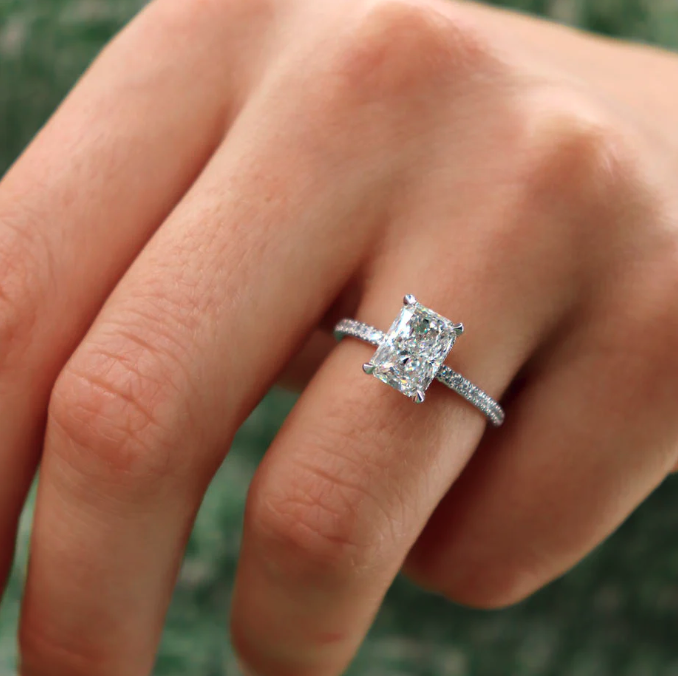
Another common reflection is that many buyers focused too heavily on the centre stone at the expense of the overall design. Carat weight, in particular, dominates early research. In hindsight, buyers often wish they had spent more time thinking about proportion. A diamond does not exist in isolation. Its impact depends on how it sits within the ring as a whole.
Proportion affects everything from visual balance to comfort. Buyers frequently realise after wearing their ring for some time that the band, setting height and overall silhouette matter just as much as the stone itself. Rings that photograph beautifully do not always feel as satisfying in daily life. This is a lesson many only learn after the fact.
The importance of wearability is another recurring theme. First-time buyers often imagine the engagement ring as a symbolic object rather than an everyday one. In reality, it becomes part of daily routine. Rings that feel too delicate, too high or too impractical can begin to feel intrusive rather than joyful.
The Telegraph has published features examining how engagement rings have shifted from occasional jewellery to daily companions. This change has influenced buyer expectations, but many first-time purchasers only fully appreciate it once the ring is worn continuously. Comfort, stability and practicality become far more important than initially anticipated.
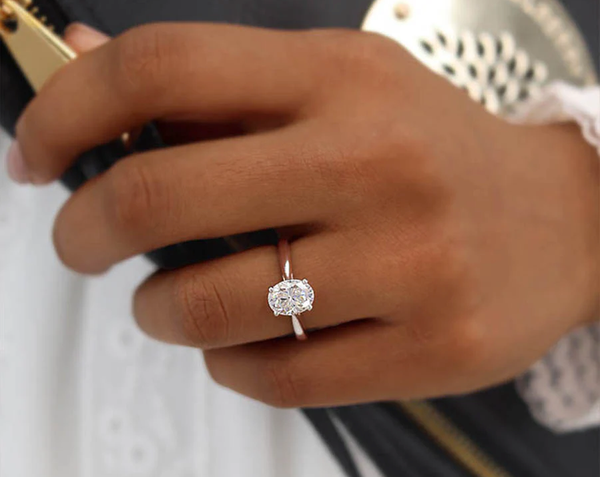
Many buyers also wish they had understood earlier how much band width influences both appearance and longevity. Slim bands are often perceived as elegant and modern, yet over time, some wearers feel they look insubstantial or age less well. First-time buyers frequently underestimate how the band anchors the entire ring.
Closely related to this is the realisation that trends move faster than expected. Styles that feel current at the time of purchase can quickly become dated. Buyers often reflect that rings chosen for balance and restraint tend to feel more satisfying long-term than those chosen primarily for trend appeal.
Financial Times – How To Spend It has explored the concept of quiet luxury and how it manifests in jewellery. The emphasis is increasingly on design integrity rather than spectacle. First-time engagement ring buyers often wish they had encountered this perspective earlier, before assuming that more visible detail equated to greater value.
Another insight that emerges repeatedly is around ethics and sourcing. Many buyers admit they only began thinking seriously about diamond origin and sustainability after starting their search. In hindsight, they wish they had educated themselves earlier, before feeling emotionally attached to a specific ring or stone.
This is particularly true in the context of lab-grown diamonds. First-time buyers often encounter lab-grown stones mid-process and feel uncertain about how to evaluate them. Some later express regret that they did not explore this option from the beginning, when design and budget flexibility might have felt broader.
Brands such as Lily Arkwright have gained visibility among first-time buyers precisely because they address this educational gap. By focusing on lab-grown diamonds and modern design principles, they often appear during the research phase rather than at the point of final purchase. For many buyers, discovering such brands earlier would have reframed their entire approach.
Another widely shared reflection is that proposals themselves are less rigid than buyers expect. Many first-time purchasers operate under the assumption that the ring must be a complete surprise. After the fact, some wish they had involved their partner more in the decision-making process.
This does not necessarily mean sharing every detail, but it often means discussing preferences, lifestyle and values. Rings chosen with some level of collaboration tend to feel more aligned with the wearer. Buyers frequently acknowledge that their anxiety stemmed from trying to make the perfect choice alone.
Cultural analysis from BBC Culture has highlighted how modern relationships increasingly favour shared decision-making over traditional surprises. Engagement rings are no exception. First-time buyers often recognise too late that asking questions does not diminish romance, but can enhance meaning.
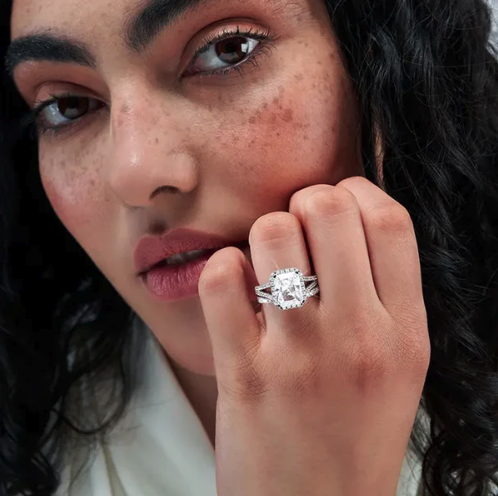
Another lesson buyers wish they had known relates to hand shape and finger size. Rings do not exist in a vacuum. How a design looks on one hand can differ dramatically on another. Many buyers later admit they relied too heavily on images rather than seeing how proportions translate in real life.
This realisation often ties back to band width, stone shape and setting height. A design that feels understated on one hand can feel overpowering on another. First-time buyers frequently wish they had prioritised trying on a wider range of styles rather than fixating early on a single look.
There is also a recurring theme around long-term identity. Engagement rings are often chosen at a specific life stage, yet they are worn through many. Buyers sometimes reflect that their tastes evolved faster than expected. Rings chosen for versatility tend to adapt better to these shifts.
Harper’s Bazaar UK has explored how jewellery that allows room for personal evolution often becomes more cherished over time. First-time buyers often wish they had thought less about who they were at the moment of purchase and more about who they might become.
Another common reflection concerns maintenance. Engagement rings require care, yet many first-time buyers underestimate this. High-set stones, intricate detailing and very slim bands can demand more upkeep. Buyers often wish they had asked more questions about long-term care before committing.
This is not about avoiding refinement, but about understanding trade-offs. A ring can be beautiful and practical, but first-time buyers often discover this balance only after living with their choice.
The emotional aspect of ring buying is another area where hindsight offers clarity. Many buyers put immense pressure on themselves to get everything right. In retrospect, they wish they had allowed themselves more flexibility and less perfectionism.
Psychological research discussed in Psychology Today suggests that major symbolic purchases often carry disproportionate emotional weight. Engagement rings fall squarely into this category. First-time buyers often realise later that the meaning of the ring grows from the relationship, not the precision of the initial choice.
There is also a growing awareness that engagement rings are not static objects. They exist alongside wedding bands, anniversaries and evolving personal style. Buyers frequently wish they had thought more about how the ring would sit within a future collection of jewellery.
Design-led jewellers often encourage thinking holistically about a ring’s future, not just its present. Buyers who adopt this mindset early tend to report greater long-term satisfaction.
Another lesson concerns expectations around budget. First-time buyers often feel pressure to spend according to perceived norms rather than personal comfort. In hindsight, many wish they had focused more on value alignment than arbitrary benchmarks.
Media narratives have long shaped engagement ring spending expectations, but these narratives are shifting. The Guardian has explored how younger generations are redefining what meaningful spending looks like. First-time buyers often realise too late that financial strain does not enhance symbolism.
Perhaps the most significant reflection shared by first-time engagement ring buyers is that confidence grows with knowledge. The more informed buyers feel, the less anxious the process becomes. Many wish they had allowed themselves more time to learn before making decisions.
Education does not remove emotion from the process. Instead, it grounds it. Buyers who understand design, proportion and practicality tend to make choices that feel right both immediately and years later.
In the end, what first-time engagement ring buyers wish they had known is not a single rule or shortcut. It is that there is no single correct choice, only informed ones. Rings chosen with intention, balance and understanding tend to become more meaningful over time, not less.
The engagement ring itself does not need to carry the full weight of the proposal, the relationship or the future. When buyers realise this, the process often becomes less daunting and more enjoyable.
And that, more than anything, is the lesson most wish they had learned sooner.