Why Green Diamonds Are Being Reframed as Earth-Toned Luxury in 2026
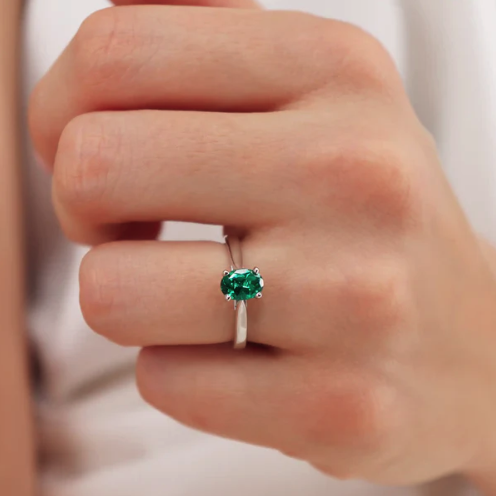
In 2026, green diamonds are no longer framed as curiosities or outliers within fine jewellery. Instead, they are increasingly understood as expressions of earth-toned luxury, valued for their depth, restraint and connection to nature. This reframing reflects a broader shift in how luxury itself is defined. Brilliance and scale still matter, but they are no longer the only markers of desirability. Tone, intention and emotional alignment now play an equally important role.
Green diamonds appeal precisely because they resist spectacle. Their colour feels organic rather than performative, rooted in landscape and geology rather than flash. In a cultural moment shaped by information overload and visual excess, jewellery that feels grounded and calm carries growing appeal.
Fashion commentary from Vogue has highlighted how earth-led palettes have moved decisively into luxury fashion and interiors, favouring muted greens, mineral tones and natural textures. This shift has extended naturally into fine jewellery, where colour is increasingly used to create mood rather than command attention. Green diamonds sit comfortably within this aesthetic, offering richness without intensity.
From a gemmological perspective, green diamonds are among the rarest naturally occurring diamond colours. Their green hue is typically caused by exposure to natural radiation during formation, which alters the diamond’s crystal lattice over time. Unlike treated or coated stones, this colour is intrinsic, embedded within the diamond’s structure rather than applied externally.
Scientific explanation from the Gemological Institute of America outlines how natural green diamonds develop their colour through prolonged interaction with radioactive minerals in the earth. This slow, geological process reinforces the idea that green diamonds are shaped by time and environment rather than intervention, adding depth to their narrative.
Despite their rarity, green diamonds historically occupied a marginal position in the market. For much of the twentieth century, colourless diamonds dominated cultural ideals of perfection, while vivid fancy colours such as pink and yellow drew attention through intensity. Subtle green tones did not fit neatly into either category.
That hierarchy has shifted. Analysis in the Financial Times has observed that modern luxury increasingly favours understatement over excess. Confidence is now communicated through restraint, and colour that feels nuanced rather than dominant has become a marker of taste. Green diamonds align naturally with this redefinition.
Design movements have played a significant role in this reframing. Jewellery designers are drawing inspiration from architecture, landscape and material honesty. Clean lines, sculptural forms and tactile finishes are prioritised over ornamental complexity. Green diamonds complement this approach, acting as tonal anchors rather than decorative statements.
Design reporting from Dezeen has explored how contemporary jewellery mirrors architectural thinking, valuing structure, balance and material integrity. Green diamonds integrate seamlessly into this design language, offering visual calm within considered forms.
Cultural attitudes towards individuality have also influenced the rise of green diamonds. Consumers are increasingly confident in making choices that reflect personal values rather than external expectation. In jewellery, this has opened space for stones that feel distinctive without being overtly unconventional.
Commentary from The Guardian has highlighted how younger luxury consumers prioritise authenticity and self expression over conformity. Green diamonds appeal within this context because they offer rarity without relying on traditional status signals.
Crucially, the reframing of green diamonds does not position them in opposition to classic colourless diamonds. Instead, it expands the language of diamond choice. Colourless stones continue to symbolise clarity, continuity and tradition for many. Green diamonds simply offer an alternative expression, one grounded in nature and individuality.
This emphasis on choice reflects a wider cultural shift. Coverage from BBC Culture has explored how consumers increasingly resist prescriptive luxury narratives, preferring to define value on their own terms. Green diamonds thrive in this environment because they invite interpretation rather than instruction.
From a fashion perspective, green diamonds also align with the move away from trend-led consumption. Their colour does not feel seasonal or reactive. Instead, it feels enduring, capable of ageing gracefully alongside the wearer.
Editorial features in Harper’s Bazaar have noted that jewellery colour trends are shifting towards emotionally grounding tones. Green, in particular, is associated with balance, growth and renewal, qualities that resonate strongly in engagement and heirloom jewellery.
The language used to describe green diamonds has evolved alongside these shifts. Rather than being labelled unusual or unconventional, they are increasingly discussed in terms of tone, mood and materiality. The phrase earth-toned luxury reflects a desire to move away from novelty driven framing towards something more considered.
This reframing mirrors how materials are discussed across luxury sectors. Analysis from The Economist has observed that premium products now derive value from narrative and context rather than rigid benchmarks. Green diamonds exemplify this approach, carrying stories shaped by geology, time and intention.
Technological advancement has also supported this shift. Improved cutting and grading techniques allow green diamonds to be presented with greater confidence, ensuring that colour is celebrated without compromising performance. This has helped reposition green diamonds as refined choices rather than risky ones.
Education plays an important role here. Resources from the Natural History Museum have helped demystify how diamonds form and why natural colour variation occurs. Increased understanding supports appreciation, allowing consumers to engage with green diamonds from a place of knowledge rather than uncertainty.
Green diamonds also sit comfortably within the wider embrace of earth inspired palettes across design disciplines. Interiors, fashion and architecture have all leaned into greens and mineral tones as antidotes to overstimulation. Jewellery reflects this desire for visual calm and material honesty.
Reporting from Wallpaper* has explored how luxury design increasingly draws from landscape and natural materials. Green diamonds, with their geological origins and muted elegance, feel intrinsically aligned with this philosophy.
At a retail level, the reframing of green diamonds encourages more meaningful conversations. Rather than selling against size or clarity benchmarks, discussions focus on tone, feeling and long term relevance. This approach builds confidence rather than comparison.
Exploring contemporary diamond jewellery collections, such as those available through Lily Arkwright, reflects this emphasis on considered choice. Green diamonds are positioned as part of a broader spectrum, allowing individuals to select stones that align with their aesthetic and values.
Importantly, positioning green diamonds as earth-toned luxury does not impose hierarchy. It does not suggest that subtlety is superior to brilliance or that colour is more meaningful than clarity. Instead, it reinforces the idea that luxury is plural.
Sociological research discussed by Pew Research Center suggests that modern consumers derive satisfaction from autonomy in decision making. In jewellery, that autonomy is expressed through colour choice, symbolism and personal narrative.
Looking ahead, green diamonds are likely to continue gaining quiet momentum. Their appeal is not driven by trend cycles but by alignment with deeper cultural values around grounding, individuality and longevity.
They offer an option that feels thoughtful rather than reactive. In an era defined by access to information and freedom of choice, that thoughtfulness carries weight.
Green diamonds in 2026 are not being reframed because they are new. They are being reframed because the way we define luxury has evolved.
Luxury now values tone over volume, meaning over mandate and choice over prescription.
In that landscape, green diamonds feel not alternative, but entirely at home.