Why Lab-Grown Diamonds Have Changed Engagement Ring Design in the UK
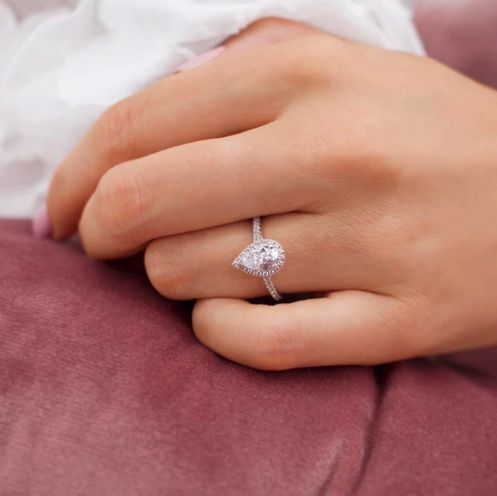
For a long time, lab-grown diamonds were discussed almost exclusively in terms of cost. They were positioned as a way to access larger stones for less money, framed as a pragmatic alternative rather than a design revolution. That framing no longer reflects reality. In the UK engagement ring market today, lab-grown diamonds have reshaped not only pricing structures, but the very way rings are designed, worn and imagined.
The shift has been gradual rather than abrupt. Early conversations focused on value comparisons and ethical debates, but as lab-grown diamonds became more widely understood and accepted, their influence began to move beyond economics. Designers, jewellers and buyers alike started to realise that changing the origin of the stone changed the possibilities of the ring itself.
At the heart of this evolution is freedom. When the cost of the centre stone becomes less restrictive, design decisions no longer need to revolve around protecting budget at all costs. This has opened the door to new proportions, new silhouettes and a more thoughtful approach to balance.
Editorial coverage in Vogue UK has noted that modern engagement rings are increasingly defined by design integrity rather than overt displays of value. Lab-grown diamonds sit comfortably within this shift. They allow designers to prioritise harmony and intention rather than compromise.
One of the most visible changes is scale. When buyers are no longer forced to choose between size and design, they can think more holistically. This does not necessarily mean bigger stones. In many cases, it means better proportion. Stones can be sized to suit the setting rather than the other way around.
Historically, engagement ring design often involved working backwards from a budget constrained diamond. The band, setting and proportions were adjusted to accommodate what was affordable. With lab-grown diamonds, designers are able to reverse that logic. The ring can be designed first, with the stone selected to complete it rather than dominate it.
This shift has had a particularly noticeable impact on band width and setting structure. Rings no longer need to rely on ultra-thin bands to make a stone appear larger. Instead, designers are embracing balance, creating rings where the band feels intentional and supportive rather than purely decorative.
The Telegraph has explored how engagement rings are moving away from exaggerated delicacy towards designs that feel grounded and wearable. Lab-grown diamonds have accelerated this movement by removing the pressure to maximise visual impact at the expense of comfort and longevity.
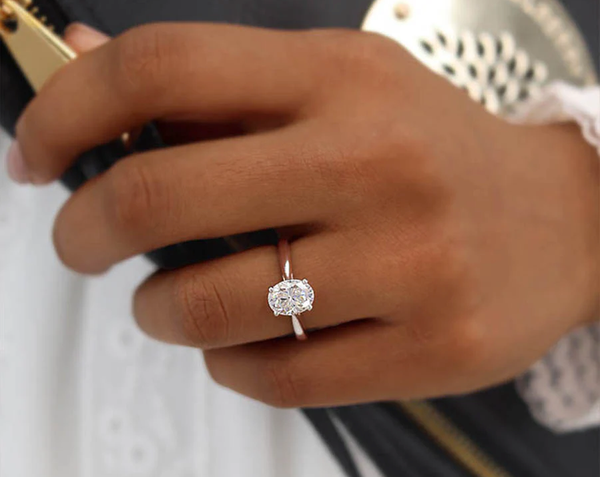
Another area where lab-grown diamonds have influenced design is setting height. High-set stones were once common because they allowed smaller diamonds to catch more light and appear larger. Today, lower-profile settings are increasingly popular, offering a more modern, wearable silhouette.
Lower settings require confidence in the stone itself. When the diamond is well cut and of high quality, it does not need elevation to perform. Lab-grown diamonds, with their consistent quality, support this design philosophy naturally.
This has changed how engagement rings interact with everyday life. Rings designed around lab-grown diamonds are often more practical, sitting closer to the finger and integrating more seamlessly into daily routines. The ring becomes something to live in rather than protect.
Coverage in Financial Times How To Spend It has highlighted how modern luxury increasingly values functionality alongside aesthetics. Engagement rings influenced by lab-grown diamonds reflect this dual priority. Beauty is no longer separate from wearability.
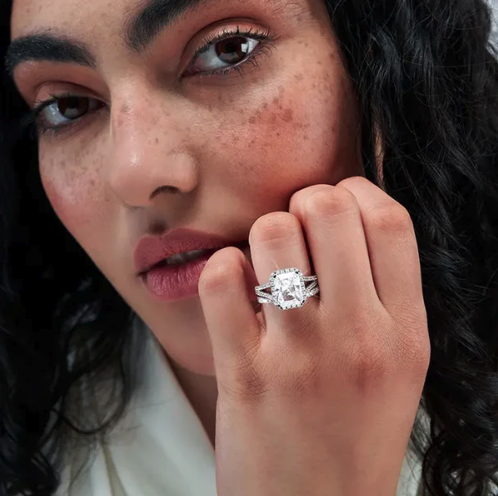
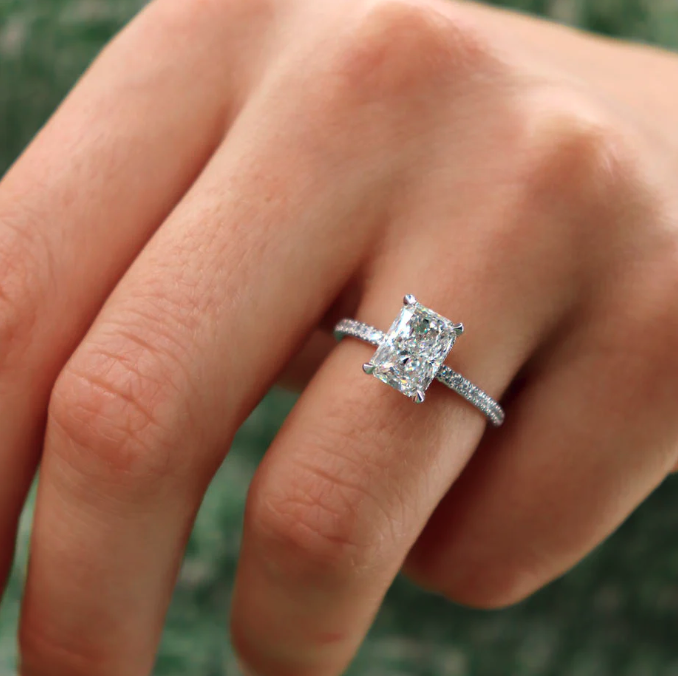
Stone shape experimentation has also increased. When cost constraints loosen, buyers feel freer to explore shapes that suit their personal style rather than defaulting to the most traditional option. Oval, emerald and pear cuts have all gained prominence, not as trends, but as expressions of individuality.
This experimentation has encouraged designers to develop settings that complement these shapes rather than forcing them into standard frameworks. East-west settings, elongated silhouettes and architectural mountings have all benefited from the flexibility lab-grown diamonds provide.
Ethics play an important role in this design shift, but not always in the way they are discussed. While sustainability and transparency are central concerns, they also influence how buyers feel about their choices. When a buyer feels aligned with the origin of the stone, they often feel more confident expressing themselves through design.
Reporting in The Guardian has shown how ethical considerations increasingly shape consumer confidence rather than simply consumer behaviour. In engagement rings, this confidence translates into bolder, more personal design choices.
Lab-grown diamonds remove some of the emotional tension that can accompany traditional diamond buying. Buyers are less preoccupied with resale value or perceived judgment and more focused on how the ring reflects their relationship. This mental shift has tangible design consequences.
Designers have responded by creating rings that feel more expressive and less constrained. Mixed metals, sculptural bands and distinctive profiles are no longer niche. They are part of a broader movement towards rings that feel intentional rather than symbolic.
Brands such as Lily Arkwright have become associated with this design-first approach. By focusing on lab-grown diamonds alongside contemporary aesthetics, they reflect a market where ethics, design and wearability are intertwined rather than treated as separate considerations.
Another subtle but important design shift relates to longevity. When buyers feel they have not compromised ethically or financially, they are more inclined to think long term. Rings are designed to age well, to sit comfortably alongside future wedding bands and to evolve with the wearer.
This long-view thinking challenges the idea that engagement rings should prioritise immediate impact. Instead, they are increasingly seen as objects that accumulate meaning through use. Design decisions reflect this by favouring durability, proportion and adaptability.
BBC Culture has explored how modern objects gain value through lived experience rather than spectacle. Engagement rings influenced by lab-grown diamonds align closely with this philosophy. Their significance grows over time rather than peaking at the proposal.
The rise of lab-grown diamonds has also influenced how designers think about symmetry and precision. With greater control over stone quality, there is less need to disguise imperfections through setting tricks. Clean lines and minimalist settings become more viable.
This has encouraged a quieter design language. Rings feel less ornate and more resolved. The emphasis shifts from embellishment to form, allowing the stone and the structure to speak together rather than compete.
Importantly, this does not mean engagement rings have become uniform. On the contrary, the removal of financial and ethical constraints has expanded the range of possible designs. Individuality thrives when compromise recedes.
Another consequence of lab-grown diamonds is a change in how buyers engage with the process itself. Design discussions move earlier in the journey. Instead of starting with carat weight, buyers start with lifestyle, taste and proportion.
This reordering of priorities changes the tone of consultations. Conversations become more collaborative and less transactional. The ring is treated as a design project rather than a purchase to optimise.
Psychological insight discussed in Psychology Today suggests that autonomy in decision making increases satisfaction with symbolic purchases. Lab-grown diamonds enhance this autonomy by removing some of the external pressures that traditionally shaped engagement ring buying.
Budget flexibility also influences design risk. Buyers are more willing to choose something distinctive when they do not feel every decision carries financial consequence. This willingness has fuelled a rise in rings that feel modern rather than referential.
Designers, in turn, feel more confident pushing boundaries. When clients are open to new ideas, the industry evolves. Lab-grown diamonds have created space for this dialogue, allowing engagement ring design to move forward rather than circle tradition.
There is also a generational aspect to this shift. Younger buyers, in particular, are less attached to inherited definitions of value. For them, meaning is derived from alignment rather than scarcity. Design follows belief.
Vogue UK has noted that contemporary luxury is increasingly defined by coherence rather than excess. Engagement rings shaped by lab-grown diamonds embody this coherence. They feel of their time rather than nostalgic.
As lab-grown diamonds continue to gain acceptance, their influence on design is likely to deepen. The conversation will move further away from price comparison and closer to creativity. Designers will have more freedom to experiment, and buyers will have more permission to choose what feels right.
The most important change may be psychological. Lab-grown diamonds have reframed what an engagement ring represents. Instead of signalling sacrifice or status, it signals intention. That intention is reflected in design choices that prioritise balance, comfort and longevity.
This reframing has quietly changed the industry. Engagement rings are no longer designed around constraints. They are designed around people.
In that sense, lab-grown diamonds have done far more than disrupt pricing. They have shifted the centre of gravity in engagement ring design itself.
The future of engagement rings looks less about proving value and more about expressing it. And in that future, lab-grown diamonds are not an alternative.
They are a catalyst.