Why Radiant Cut Diamonds Feel So At Home in Modern Engagement Rings
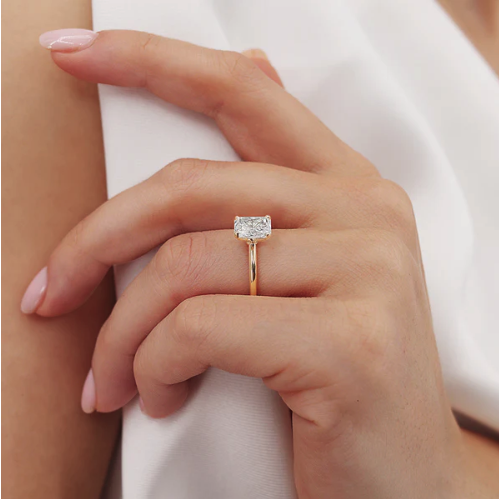
The radiant cut diamond occupies a rare and increasingly important position in contemporary engagement ring design. It feels modern without being stark, brilliant without being ostentatious and versatile without losing character. As engagement ring culture continues to move away from rigid tradition and towards personal expression, the radiant cut has quietly established itself as one of the most natural choices for modern couples.
Its appeal is not the result of a single trend or celebrity moment. Instead, it reflects a broader shift in how diamonds are worn, valued and understood. Radiant cut diamonds feel at home in modern engagement rings because they embody the balance today’s buyers are seeking. Structure paired with sparkle, confidence paired with warmth and design integrity paired with wearability.
To understand why the radiant cut resonates so strongly now, it helps to look at where it sits historically and aesthetically. Unlike older diamond cuts whose origins stretch back centuries, the radiant cut is a relatively recent innovation. It was developed in the late 1970s, designed deliberately to bridge two worlds. Its creator sought to combine the clean, architectural outline of an emerald cut with the brilliance of a round diamond.
That hybrid intention remains central to its appeal today.
Historical documentation from the Gemological Institute of America explains that the radiant cut was among the first square and rectangular diamonds to feature a brilliant-style faceting pattern. This was significant. Prior to this, step cuts and brilliant cuts were largely separate categories, each appealing to very different tastes. The radiant cut challenged that divide.
From the beginning, the radiant cut was about adaptability. It offered sharp edges without fragility, sparkle without softness and geometry without coldness. These qualities made it interesting, but for years it remained something of a connoisseur’s choice rather than a mainstream favourite.
That has changed.
Modern engagement ring aesthetics have shifted decisively towards balance. Rings are no longer expected to shout their value. Instead, they are expected to integrate seamlessly into daily life while still feeling special. This is where the radiant cut excels.
Unlike the round brilliant, which is universally recognisable, the radiant cut feels intentional. It suggests that a choice has been made rather than inherited. Yet unlike more niche cuts, it does not feel unfamiliar or challenging. This combination makes it particularly appealing to couples who want something contemporary without feeling experimental.
Design commentary in Vogue UK has noted a broader move towards engagement rings that feel architectural yet expressive. Radiant cut diamonds align perfectly with this direction. Their clean outline suits modern settings, while their faceting delivers the sparkle many buyers still desire.
One of the defining characteristics of the radiant cut is its versatility of proportion. It can be cut square or rectangular, allowing it to adapt to different hand shapes and personal preferences. This flexibility supports the modern expectation that engagement rings should feel tailored rather than templated.
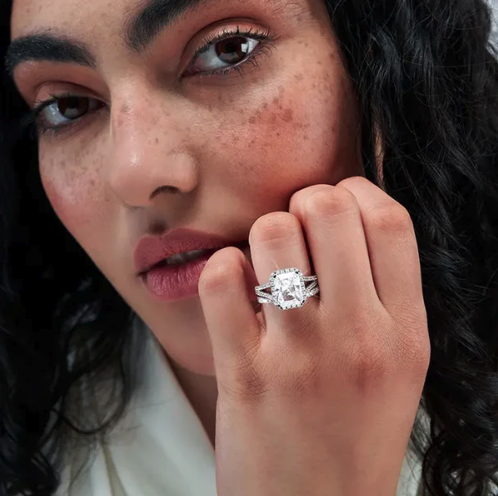
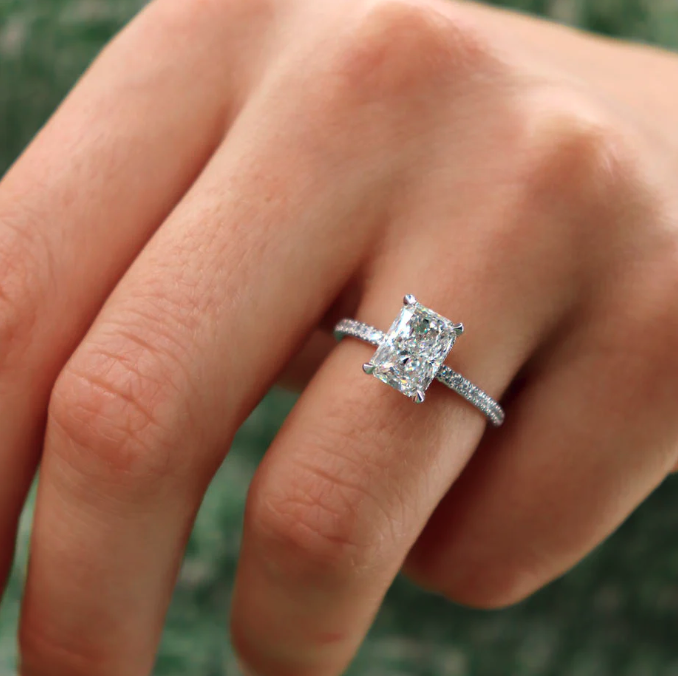
In rectangular form, the radiant cut offers elongation similar to an emerald or oval, flattering the finger and creating a sense of length. In a squarer outline, it delivers presence and symmetry without the softness of a cushion cut. This adaptability has helped the radiant cut integrate into a wide range of contemporary designs.
Another reason radiant cut diamonds feel so at home in modern engagement rings is durability. The cut features trimmed corners rather than sharp points, reducing the risk of chipping. This practical advantage has become increasingly important as engagement rings are worn constantly rather than reserved for special occasions.
Reporting in The Financial Times has highlighted how modern luxury is increasingly defined by longevity and practicality rather than overt display. Engagement rings are a prime example. Buyers want stones that can withstand everyday wear without compromising visual impact. The radiant cut delivers on both fronts.
Brilliance also plays a central role in the radiant cut’s appeal. Its faceting pattern produces strong light return, often rivaling round diamonds while offering a more structured silhouette. This balance between sparkle and shape feels particularly relevant in 2026, as buyers seek refinement rather than excess.
Jewellery analysis in Harper’s Bazaar UK has observed a growing preference for diamonds that sparkle confidently without appearing overly flashy. Radiant cuts meet this brief. They catch the light beautifully, but their geometric outline tempers the effect.
The rise of lab grown diamonds has further amplified the radiant cut’s relevance. Lab grown stones have allowed buyers to prioritise cut quality and proportion without the same budget constraints historically associated with high-performance diamonds. This has encouraged exploration beyond the traditional round brilliant.
Within this context, the radiant cut has flourished.
A high-quality radiant cut lab grown diamond offers exceptional brilliance, strong structure and modern credibility. This is why collections centred on the radiant cut lab diamond have become increasingly prominent within contemporary engagement ring design.
Retailers such as Lily Arkwright, known for their focus on modern design and ethical sourcing, reflect this shift by showcasing the radiant cut lab diamond as a central offering rather than an alternative. The cut aligns naturally with a future-facing approach to engagement rings.
Cultural attitudes have also contributed to the radiant cut’s rise. Engagement rings are no longer expected to conform to a single ideal. Instead, they are chosen collaboratively, often reflecting shared values and aesthetic sensibilities. The radiant cut’s hybrid nature makes it particularly well suited to this collaborative process.
It appeals to those who like clean lines and those who love sparkle. It satisfies a desire for structure without feeling severe. This ability to bridge tastes has become increasingly valuable as engagement ring decisions are made together rather than unilaterally.
Design-focused publications such as Wallpaper* have highlighted how contemporary jewellery often borrows from architectural principles. Radiant cut diamonds, with their straight edges and defined corners, feel inherently architectural. They sit comfortably within minimalist and sculptural settings alike.
At the same time, their brilliance prevents them from feeling austere. This balance is essential. Modern engagement rings often aim to feel confident and intentional without sacrificing romance. The radiant cut achieves this with ease.
There is also a cultural shift away from overtly gendered aesthetics in engagement rings. While diamond shapes were once heavily coded, modern buyers increasingly choose based on personal resonance rather than convention. The radiant cut’s clean geometry and sparkle-free-of-frills positioning allow it to transcend traditional gender associations.
This inclusivity has helped cement its place within modern design language.
Another factor contributing to the radiant cut’s contemporary relevance is photography. In an era where engagement rings are frequently shared visually, how a diamond performs on camera matters. Radiant cuts photograph exceptionally well, balancing sparkle with defined edges that read clearly in both still images and video.
Fashion media such as Elle UK has noted how certain diamond shapes translate more effectively across digital platforms. Radiant cuts retain their structure and light performance even under varied lighting conditions, making them particularly appealing in a visually driven culture.
Despite all of these modern advantages, the radiant cut does not feel disposable or trend-bound. Its design is rooted in technical innovation rather than fleeting fashion. This distinction is important. Engagement rings are expected to age gracefully, both aesthetically and emotionally.
Market insight from McKinsey & Company has shown that modern luxury consumers value adaptability and longevity over novelty. The radiant cut’s ability to sit comfortably within both classic and contemporary settings supports this preference.
Whether set in a simple solitaire, paired with a hidden halo or framed by a sculptural band, the radiant cut maintains its identity. It adapts without losing character.
This adaptability also supports future evolution. As personal style changes over time, the ring remains relevant. It can be restyled, reset or paired with different bands without feeling dated. This long-term flexibility is increasingly important to buyers who view engagement rings as evolving personal objects rather than static symbols.
In many ways, the radiant cut feels emblematic of modern engagement ring culture itself. It resists rigid categorisation. It blends tradition with innovation. It prioritises balance over extremes.
Cultural commentary in The Guardian has explored how modern consumers increasingly reject binaries in favour of nuance. Engagement rings are part of this movement. The radiant cut, by design, exists in the space between categories.
It is neither purely classic nor overtly modern. Neither soft nor severe. Neither understated nor extravagant. It is confident in its duality.
This confidence is precisely why the radiant cut feels so at home in modern engagement rings.
It aligns with how couples think about commitment today. Thoughtful, collaborative, expressive and grounded. It offers beauty without bravado and structure without rigidity.
As engagement ring design continues to evolve, the radiant cut is unlikely to fade. Its relevance is not tied to a single trend cycle. Instead, it reflects enduring priorities that are only becoming more pronounced.
Modern engagement rings are about clarity. Of intention, of values and of design. The radiant cut delivers all three.
That is why it does not merely appear in modern engagement rings.
It belongs there.