
Engagement Ring Mistakes Buyers Regret Most and the Bespoke Designs That Rarely Stand the Test of Time
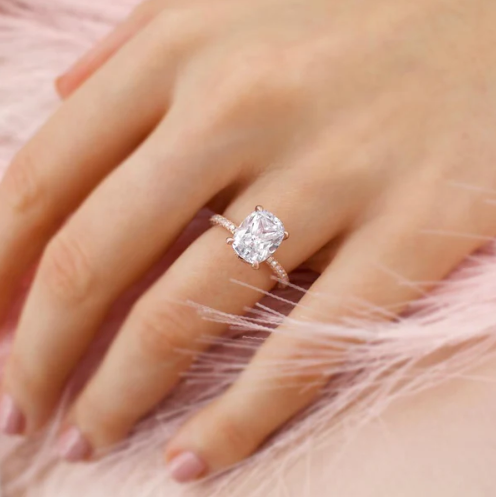
Buying an engagement ring is often portrayed as a moment driven entirely by emotion, but the reality is far more practical. An engagement ring is a piece of jewellery designed to be worn every day, exposed to knocks, pressure, temperature changes and constant movement. In 2026, many of the most common regrets buyers express have little to do with diamond size or budget and everything to do with design choices that failed under real life wear.
As bespoke engagement rings have become more popular, so too have design-led mistakes. Customisation can be a powerful tool, but when it prioritises novelty over structure, it often creates rings that look beautiful initially and struggle long term. Understanding which bespoke features to avoid is not about limiting creativity. It is about ensuring the ring is engineered to last.
One of the most common structural mistakes is choosing an extremely thin band. Ultra-delicate bands may photograph well, but they rarely offer sufficient strength for lifelong wear. Educational guidance from the Gemological Institute of America explains that thin bands are far more susceptible to bending, warping and losing their original shape over time. Once a band distorts, stone security is immediately compromised.
Bands below roughly 1.8mm are particularly vulnerable when paired with centre stones of any meaningful size. Everyday actions such as gripping, lifting or even sleeping can gradually change the band’s shape. Repeated repairs only weaken the metal further, shortening the lifespan of the ring.
High-set settings are another frequent regret. While a raised centre stone can appear dramatic, it introduces practical risks that are often underestimated. Consumer research highlighted by Which? shows that snagging on clothing and hair is one of the most common complaints among engagement ring wearers. High prongs are far more likely to catch, bend or loosen through repeated contact.
Impact exposure is also increased in high-set designs. A stone positioned further from the finger absorbs more force when knocked. Over time, this repeated stress transfers directly to the prongs, increasing the risk of the stone loosening or falling out. Lower-profile settings distribute impact more evenly and tend to perform better for daily wear.
Fancy-shaped stones introduce another layer of risk when not properly protected. Marquise, pear and heart-shaped diamonds all feature pointed ends that are structurally vulnerable. Leaving these points exposed is a common bespoke error driven by aesthetics. Research published by the American Gem Society confirms that exposed points are significantly more prone to chipping than rounded edges.
Protective V-prongs or bezel settings are essential for these shapes. Without them, even minor knocks can cause damage. Chips may start small, but they can spread over time, permanently affecting the stone’s appearance and value.
Hidden halos are often misunderstood. When engineered correctly, a halo or support rail can reinforce prongs and add stability. However, many bespoke designs place hidden halos too low, below the point where the prongs actually need support. Technical explanations from the Gemological Institute of America show that a halo positioned too low offers no structural benefit.
In these cases, the hidden halo becomes decorative rather than functional. The prongs remain unsupported at their weakest junction, increasing the likelihood of loosening over time. This creates a false sense of security while introducing long-term risk.
Pavé detailing is another area where bespoke enthusiasm often outweighs practicality. Rings featuring numerous tiny pavé stones can look intricate, but small stones are inherently more vulnerable to loss. Reporting by The Guardian on jewellery durability has noted that pavé stones are among the most frequently replaced components in engagement rings.
When pavé stones are set with minimal metal or inconsistent spacing, they loosen easily with daily wear. Over time, repeated stone loss can compromise the integrity of the band itself, leading to thinning and structural weakness.
Designs that prevent a wedding band from sitting flush are another common source of regret. Engagement rings with protruding settings or non-standard profiles often create a visible gap when paired with a wedding band. While this may seem like a minor aesthetic choice, it has practical consequences.
Guidance from the National Association of Jewellers suggests that flush-fit designs offer better comfort and more even wear over time. Gaps can trap debris, cause uneven abrasion and make the rings feel awkward when worn together. Many buyers later find themselves needing a custom wedding band to compensate.
Material choice is equally critical. Some gemstones are simply unsuitable for daily wear. Stones such as opal, moonstone and pearl have low hardness ratings and are highly sensitive to impact, moisture and temperature changes. Educational resources from the Gemological Institute of America make clear that these materials are better suited to occasional jewellery rather than engagement rings.
Despite this, bespoke designs sometimes incorporate these stones for their uniqueness without fully considering longevity. Over time, surface scratching, cracking or dulling becomes inevitable, leading to disappointment.
Metal choice can also introduce issues. While gold is widely used, not all gold alloys perform equally well. Very thin or low-density metal structures wear down more quickly. Research from the World Gold Council explains how alloy composition and metal weight influence long-term durability.
Rings designed to feel lightweight can thin further with wear, particularly along the base of the band. Once metal loss occurs, repairs become more complex and less effective.
Protruding or sharp design elements are another frequent bespoke pitfall. Intricate, artistic or gothic-inspired designs may look striking initially, but exposed metalwork often snags on knitwear, scratches surfaces and causes discomfort. Consumer behaviour analysis from the Financial Times shows that physical inconvenience is a leading reason luxury purchases lose their appeal over time.
Prong design deserves particular attention. Bulky, uneven or poorly finished prongs not only look unrefined but also increase snagging and dirt build-up. Precision finishing ensures prongs are proportionate, smooth and secure, enhancing both aesthetics and wearability.
Halo designs can also suffer when poorly executed. If the halo does not sit tightly against the centre stone, visible gaps appear. These gaps trap debris and visually reduce the size and brilliance of the main stone. Technical guidance from the Gemological Institute of America emphasises the importance of tight tolerances in halo construction.
Many of these mistakes stem from prioritising originality over longevity. Bespoke design should not ignore engineering fundamentals. The most successful custom rings are those where creativity is supported by sound structural decisions.
Jewellers who specialise in engagement rings designed for lifelong wear increasingly guide clients away from fragile trends. Brands such as Lily Arkwright focus on proportion, stone security and material performance, helping clients avoid costly design mistakes before they occur.
In 2026, buyers are becoming more educated and more discerning. A beautiful engagement ring is no longer defined solely by how it looks on the day it is given, but by how it performs years later.
Avoiding these common design pitfalls does not mean sacrificing individuality. It means choosing a ring that balances expression with endurance, beauty with strength and emotion with expertise.
An engagement ring should grow with its wearer, not demand constant repair. When bespoke design is approached with both creativity and structural intelligence, the result is a ring that remains meaningful, comfortable and secure for a lifetime.