
Rose Gold and Engagement Rings: History, Ethics and Whether It Truly Stands the Test of Time
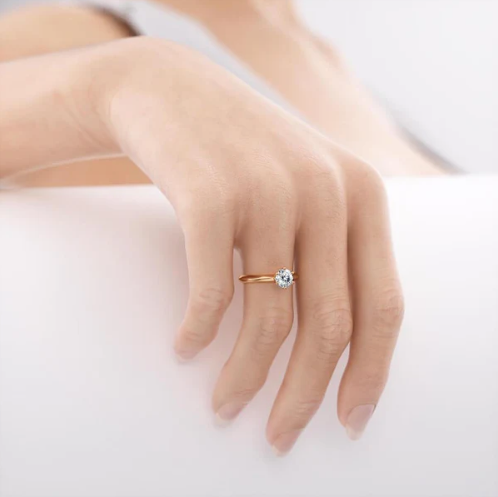
Rose gold occupies a distinctive place in fine jewellery. Softer in tone than yellow gold and warmer than white gold, it carries an emotional resonance that feels both romantic and contemporary. In recent years, rose gold engagement rings have become increasingly visible, yet questions remain. Does rose gold truly work for an engagement ring, or is it a trend-driven choice? Does its source matter? And how has modern jewellery ensured rose gold can be produced ethically and responsibly?
In 2026, rose gold is no longer viewed as an alternative or novelty metal. It is a deliberate aesthetic and emotional choice, underpinned by centuries of metallurgical experimentation and modern advances in ethical sourcing.
To understand whether rose gold is right for an engagement ring, it helps to look first at how rose gold came to exist.
Unlike yellow gold, which occurs naturally in its pure form, rose gold is the result of human innovation. It is an alloy, created by mixing pure gold with copper to achieve its distinctive pink hue. Historical research documented by the British Museum traces early gold alloy experimentation back to ancient civilisations, where gold was routinely blended with other metals to improve durability and alter appearance.
The specific formulation we now recognise as rose gold is often credited to nineteenth-century Russia. Jewellery historians cited by the Victoria and Albert Museum explain that Russian jewellers began experimenting with higher copper content gold alloys to create warmer, reddish tones. The resulting metal became known as Russian gold and was widely used in decorative arts and jewellery during the period.
From there, rose gold gradually entered European jewellery traditions, prized for its warmth and subtlety. It has periodically fallen in and out of favour, but unlike short-lived trends, it has consistently returned in moments when jewellery design emphasised emotion, craftsmanship and individuality.
What makes rose gold particularly compelling for engagement rings today is its balance of romance and resilience. The copper content that gives rose gold its colour also increases its strength. Educational material from the Gemological Institute of America explains that rose gold alloys are often more durable than yellow gold, making them well suited to rings intended for daily wear.
This durability is especially relevant in modern engagement rings, which are increasingly designed to be worn continuously rather than reserved for special occasions. Rose gold offers both visual softness and structural robustness, a combination that appeals to contemporary lifestyles.
Yet aesthetics remain a key consideration. Rose gold interacts with skin tone differently than other gold colours. Its warm undertones often complement a wide range of complexions, creating a flattering, natural effect rather than stark contrast. Fashion analysis from Vogue has noted rose gold’s ability to feel intimate and personal, qualities that resonate strongly in engagement jewellery.
Rose gold also interacts uniquely with gemstones. It can soften the appearance of diamonds, particularly those with warmer undertones, while enhancing coloured gemstones such as champagne diamonds, morganite and peach sapphires. This versatility allows rose gold to support both classic and unconventional engagement ring designs.
Despite its popularity, some buyers question whether rose gold will age well. Concerns often centre on whether the colour will fade or whether it may feel dated over time. In practice, rose gold does not lose its colour. Because the hue is created by alloy composition rather than surface treatment, it remains stable throughout the life of the ring.
Design commentary from The Telegraph has highlighted how rose gold’s perceived trendiness often reflects cultural cycles rather than material limitations. Its repeated resurgence suggests enduring appeal rather than fleeting fashion.
As interest in material origins has grown, questions around gold sourcing have become increasingly important, including for rose gold. Ethical considerations apply equally to all gold alloys, regardless of colour.
Modern gold sourcing has undergone significant transformation. Historically, gold mining has been associated with environmental damage and labour concerns. Investigative reporting by National Geographic has documented the ecological impact of unregulated gold extraction, prompting industry-wide reassessment of sourcing practices.
In response, frameworks for ethical gold sourcing have emerged. One of the most widely recognised is the Responsible Jewellery Council, which sets global standards covering mining, refining and manufacturing. Certification through such organisations helps ensure that gold is produced with greater environmental and social accountability.
Alongside responsible mining, recycled gold has become central to ethical jewellery production. Recycled gold is recovered from existing jewellery, electronic waste and industrial sources, then refined for reuse. According to the World Gold Council, recycled gold is chemically identical to newly mined gold and can be reused indefinitely without loss of quality.
For rose gold, this is particularly significant. Recycled gold can be alloyed with copper to create rose gold of the same strength, colour and durability as newly mined material. Environmental analysis published by The Guardian has shown that recycled gold requires substantially less energy and water than primary mining, reducing environmental impact while maintaining material integrity.
Modern refining technology has played a crucial role in making recycled rose gold viable at scale. Research discussed by MIT Technology Review explains how advances in metallurgical processes allow gold to be purified to extremely high standards, regardless of its original source. This ensures consistency and reliability across all gold alloys, including rose gold.
Traceability has also improved. While gold supply chains were historically opaque, digital tracking systems are beginning to offer greater transparency. Reporting by Forbes has explored how blockchain-based systems are being tested to trace precious metals from source to finished piece, helping to build trust and accountability.
For engagement rings, these developments matter emotionally as well as ethically. Jewellery often symbolises commitment and shared values. Cultural research from the British Academy suggests that modern consumers increasingly seek alignment between personal ethics and symbolic purchases. Choosing ethically sourced rose gold can deepen the meaning of an engagement ring beyond its visual appeal.
Another misconception surrounding rose gold is that it is less traditional than yellow or white gold. In reality, rose gold’s history spans more than a century in Western jewellery and far longer in alloy experimentation. Its current popularity reflects renewed appreciation rather than novelty.
Contemporary jewellery design increasingly embraces this perspective. Designers are treating rose gold as a foundational metal rather than a decorative variation, incorporating it into architectural settings and minimalist forms. Design analysis from Dezeen highlights how modern jewellery prioritises material honesty and longevity, values that align naturally with rose gold’s properties.
The rise of lab grown diamonds has further influenced perceptions of rose gold. As buyers become more comfortable with innovation and intentional material choices, rose gold feels like a natural extension of this mindset. Jewellery is no longer about adhering to inherited rules but about making informed, personal decisions.
Many modern engagement ring collections reflect this integrated approach to design and sourcing, including those found at Lily Arkwright, where metal choice, gemstone selection and craftsmanship are considered together to support long-term wear and ethical responsibility.
From a practical standpoint, rose gold engagement rings require minimal special care. Like all gold alloys, they benefit from regular cleaning and occasional professional inspection. The copper content can make rose gold slightly more reactive to chemicals, so removing rings during heavy cleaning or exposure to harsh substances is advisable, guidance echoed by the Gemological Institute of America
Looking ahead, rose gold is well positioned to remain relevant. Market analysis from McKinsey & Company indicates that consumers increasingly value materials that balance emotional appeal with responsible sourcing. Rose gold meets both criteria, offering warmth and individuality supported by modern ethical practices.
Ultimately, whether rose gold is right for an engagement ring depends less on trends and more on values. It suits those who appreciate softness over starkness, individuality over convention and intention over assumption.
Rose gold’s story is one of human ingenuity, from early alloy experimentation to modern ethical refinement. Its future lies not in fashion cycles but in its ability to adapt to contemporary expectations without losing its emotional core.
In 2026, choosing rose gold is not about standing out for the sake of it. It is about selecting a metal that reflects warmth, resilience and thoughtful design, qualities that align naturally with the meaning of an engagement ring.